
News
Stay up to date on the latest crypto trends with our expert, in-depth coverage.


TitanRWA Taps GXChain to Advance Zero-Fee, Scalable Web3 Development
BlockchainReporter·2026/04/29 23:00
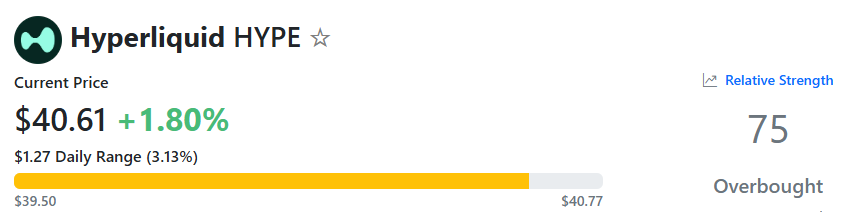
Hyperliquid (HYPE) at Risk: Here’s Why the Price May Plunge by 22%
CryptoNewsNet·2026/04/29 22:57

Dogecoin Price at Critical Inflection Point: Triangle Breakout or Harmonic Reversal Next?
CryptoNewsNet·2026/04/29 22:57
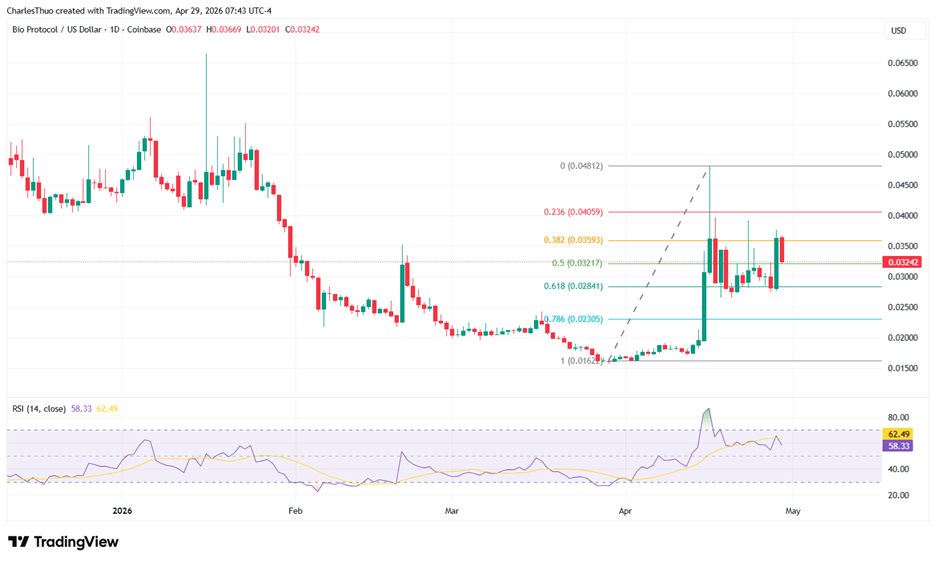
Bio Protocol price outlook: $0.045 rebound possible amid extended consolidation
CryptoNewsNet·2026/04/29 22:48
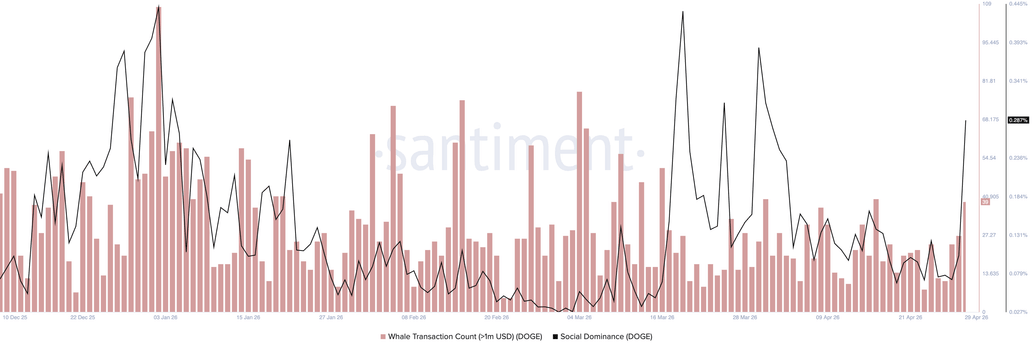
Dogecoin surges 10% as whale activity, retail interest rise
CryptoNewsNet·2026/04/29 22:45

Robinhood stock dives as crypto woes continue, costs rise: buy the dip?
CryptoNewsNet·2026/04/29 22:45

Dogecoin Compression Nears End: Big Move Brewing In Either Direction
CryptoNewsNet·2026/04/29 22:45

Solana Price Prediction: RSI Hits Historic Oversold Zone Without Bottom Signal
CryptoNewsNet·2026/04/29 22:45

ZRO trades below major averages despite recent gains, signaling continued weakness
CryptoNewsNet·2026/04/29 22:45

DEXE: Short pressure builds as price nears $12.8 – What now?
CryptoNewsNet·2026/04/29 22:45
Flash
06:28
U.S. pension funds are about to undergo passive rebalancing, with a $30 billion sell-off "already on the way".Gelonghui, June 29 — As the first half of 2026 draws to a close, major U.S. pension funds are set to launch their biannual asset rebalancing operations. Market estimates predict that a total of $30 billion worth of U.S. stock assets will be subject to compulsory selling concentrated on Monday and Tuesday of this week.U.S. public pensions, corporate defined benefit plans, and target date funds typically enforce a strict 60% equities + 40% fixed income asset allocation framework, with this ratio formally documented in institutional investment policy statements.Stock holdings in major U.S. pension funds are now significantly overweighted, while bond allocations remain substantially underweighted. Therefore, during the final two days of the semiannual settlement window, Wall Street analysts expect an unavoidable large-scale sell-off shock amounting to $30 billion.
06:27
Providing CAD 7 million in funding, Canada becomes the first G7 country to invest in mining in GreenlandGolden Ten Data reported on June 29 that mining company Greenland Resources announced on Monday that the Canadian government has provided 7 million Canadian dollars (approximately 4.93 million US dollars) in non-repayable funding for one of its molybdenum mining projects. Molybdenum is a key metal widely used in the aerospace, energy, and defense sectors, and has been jointly listed as a critical mineral by the European Union and the United States. Greenland Resources stated that Canada is the first G7 government to invest in a mining project in Greenland. Previously, former US President Trump’s attempt to gain control over Greenland was rejected by the Danish and Greenland governments, but it sparked strong interest from Western countries in the island’s rich mineral resources.
06:27
The "anti-involution" policy for live hogs has shifted towards practical implementation, and the pace of capacity reduction is expected to accelerate further in June.Golden Ten Data reported on June 29 that institutions expect the reduction in production capacity in June to continue accelerating. This expectation is mainly based on two aspects: first, the pig breeding sector continues to incur heavy losses. Since May, after a rebound in pig prices, they have reverted to a pattern of sustained, volatile declines. Since June, both self-breeding/self-raising and the raising of externally purchased piglets have experienced losses exceeding 300 yuan per head. Second, regarding piglet prices: according to Steel Union data, the price of a 7-kilogram piglet gradually stopped rising and started to fall at the end of May, and by mid-June had dropped again below 200 yuan, indicating that the sow-to-piglet segment has also entered a state of loss. The market holds significant confidence in the reduction of production capacity and the subsequent improvement in future supply and demand. Besides the economic principle that low prices stimulate demand, there are also policy-related factors. In June, policies aiming to curb "internal competition" in the pig farming sector have moved into the implementation phase, with mandatory targets already issued and the "Four Leadership" initiative put forward. The impact of these policies is expected to gradually become evident in the future.