
The Growth of Educational Technology in Universities: Will 2025 Bring Profitable Prospects?
- Global EdTech market is projected to reach $404B by 2025, driven by AI, HyFlex models, and immersive tech adoption. - AI-in-education market will surge to $32.27B by 2030 at 31.2% CAGR, enabling personalized learning through adaptive algorithms. - Farmingdale State College integrates AI with design thinking via programs like IXD and AIM, emphasizing ethical AI-human collaboration. - Strategic partnerships and zero-carbon infrastructure investments, like SUNY's $5M AI initiative, highlight scalability's i
EdTech’s Global Revolution: Growth, Innovation, and Investment
The worldwide education technology sector is experiencing rapid and profound change, fueled by advancements in technology and evolving educational strategies. Industry analysis predicts that by 2025, the EdTech market will soar to $404 billion, maintaining an impressive annual growth rate of 16% since 2019. This surge is propelled by widespread internet access, a generation of digital-first learners, and the swift integration of artificial intelligence into educational platforms. Notably, the AI segment within education is expected to expand dramatically—from $5.88 billion in 2024 to $32.27 billion by 2030—growing at an annual rate of 31.2% as institutions increasingly focus on tailored learning experiences. For investors, this intersection of technology and education, especially in higher education, presents significant opportunities as scalable, student-focused models reshape traditional learning.
The Rise of AI, HyFlex, and Immersive Learning
Artificial intelligence now forms the backbone of modern educational transformation. No longer experimental, AI-powered systems are essential tools that analyze student performance data to customize lessons, pacing, and assessments, thereby addressing individual needs and boosting engagement. Adaptive learning technologies enable schools to move away from uniform curricula, instead fostering education that is responsive to student outcomes.
Simultaneously, the HyFlex approach—which combines in-person, live online, and self-paced learning—is gaining momentum. Leading universities, such as the University of California, Berkeley, are adopting this model, utilizing technologies like Zoom Rooms and interactive digital whiteboards to broaden access while maintaining high teaching standards.
Immersive technologies, including virtual and augmented reality, are also transforming education. These tools are being used in virtual laboratories and simulations, providing practical experiences in disciplines like engineering and medicine. Such innovations not only make learning more engaging but also help address challenges like faculty shortages and the need for adaptable learning spaces.
Farmingdale State College: Pioneering Academic Innovation
Farmingdale State College stands out as a leader in integrating AI and interactive design into its academic offerings. The college’s Interaction Design (IXD) program emphasizes research centered on user experience, with courses such as IXD 312 Research Strategies teaching students to develop solutions grounded in human behavior. Alongside this, the Artificial Intelligence Management (AIM) program bridges business and computer science, featuring classes like AIM 350 Programming for AI and STS 380 Ethics, Human Society, and AI. These disciplines intersect through initiatives like the Applied Imagination AI Symposium, where faculty and students collaboratively explore the responsible integration of AI into creative processes.

One standout project, the Font-Flow exhibit, invites participants to distinguish between typography designed by AI and that created by humans, highlighting the collaborative possibilities between technology and human creativity. Such efforts underscore Farmingdale’s dedication to equipping students for a future where AI serves as a powerful tool rather than a replacement for human ingenuity.
Building for Scale: Funding and Strategic Partnerships
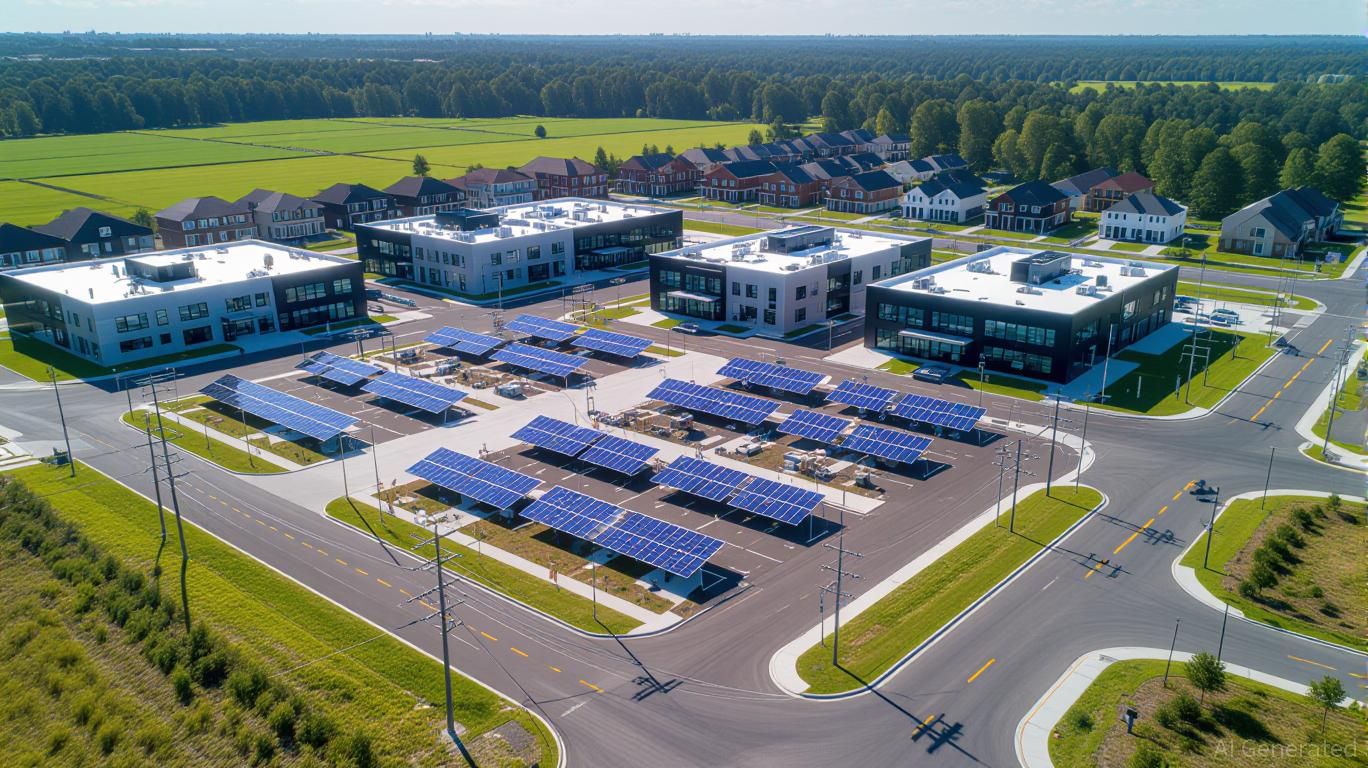
The ability to scale EdTech solutions depends on strong infrastructure and collaborative partnerships. Farmingdale’s new $75 million Computer Sciences Center, supported by the Empire State Development’s Long Island Investment Fund and the SUNY Construction Fund, exemplifies this commitment. Designed to be ready for zero net carbon operations, the center will foster interdisciplinary work, especially in AI and computing. Additionally, New York State’s $5 million investment in AI and Society departments across eight SUNY campuses signals a broader commitment to ethical and inclusive AI development.
For investors, these initiatives point to a thriving ecosystem where public and private funding align with institutional objectives. Collaborations with EdTech startups and software developers are increasingly important, as educational institutions work together to create solutions tailored to real-world challenges, such as hybrid learning and streamlining administrative processes.
Investment Strategies: Where to Focus
The EdTech sector in 2025 presents numerous avenues for investment. First, AI-powered platforms that emphasize personalization and ethical considerations are set for significant growth. Companies developing adaptive learning systems or generative AI tools for automating content and administrative tasks are especially promising. Second, institutions like Farmingdale demonstrate the value of merging AI with design thinking. Investing in organizations that bridge technical and creative disciplines—such as those offering programs that combine AI, ethics, and user experience design—could yield substantial long-term benefits.
Third, infrastructure remains a key factor. The increasing demand for environmentally sustainable facilities and cloud-based solutions makes real estate and SaaS providers in the EdTech space attractive prospects. Finally, forming partnerships with government agencies and private organizations—such as SUNY’s collaboration with the Long Island Investment Fund—highlights the importance of aligning with policy initiatives to secure funding and regulatory support.
Looking Ahead
EdTech has evolved from a niche sector to a foundational element of contemporary education. As higher education institutions continue to embrace AI, HyFlex models, and immersive technologies, the potential for scalable, student-centered platforms is immense. Farmingdale State College’s integration of AI and interactive design, backed by strategic investments and partnerships, serves as a model for success. For investors, the greatest opportunities lie in supporting ventures that not only drive technological progress but also thoughtfully address the ethical and educational challenges of a rapidly changing landscape.
Disclaimer: The content of this article solely reflects the author's opinion and does not represent the platform in any capacity. This article is not intended to serve as a reference for making investment decisions.
You may also like
Unlock Your Bitcoin’s Power: Babylon’s Breakthrough with Aave Enables Unwrapped BTC Collateral
New Directions in University Technology: Funding AI and Online Learning Solutions
- Global higher education institutions (86% by 2025) rapidly adopt generative AI, prioritizing STEM integration with $7.57B market growth driven by MIT/Stanford-scale investments. - AI-driven adaptive learning boosts test scores by 62%, reduces educator workloads by 70%, and delivers 10x ROI at institutions like Long Beach City College through automated student support systems. - Interdisciplinary AI programs (e.g., UMass Lowell's faculty grants, ASU's MyAI Builder) foster collaboration while addressing wo

Webster, NY: Revitalizing After Industry Through Targeted Infrastructure and Property Development
- Webster , NY, transformed brownfields into a 2% industrial vacancy hub via $9.8M infrastructure upgrades and NEAT industrial park development. - Strategic investments boosted residential property values by 10.1% annually and attracted high-growth sectors like semiconductors and dairy manufacturing. - Public-private partnerships, including $4.5M NY Forward grants, fueled community revitalization and 250+ high-paying jobs at fairlife® facility by 2025. - Proximity to Rochester Airport and 34kV/115kV power
EU Banks Plan 2026 Launch for New Euro-Pegged Stablecoin Under Dutch Oversight

Trending news
MoreCrypto prices
More






