
New Directions in University Technology: Funding AI and Online Learning Solutions
- Global higher education institutions (86% by 2025) rapidly adopt generative AI, prioritizing STEM integration with $7.57B market growth driven by MIT/Stanford-scale investments. - AI-driven adaptive learning boosts test scores by 62%, reduces educator workloads by 70%, and delivers 10x ROI at institutions like Long Beach City College through automated student support systems. - Interdisciplinary AI programs (e.g., UMass Lowell's faculty grants, ASU's MyAI Builder) foster collaboration while addressing wo
Transforming Higher Education: The Impact of AI and Digital Learning
The adoption of artificial intelligence and digital learning tools is fundamentally changing the way STEM and research-oriented programs operate in universities. As more institutions recognize the significant benefits these technologies offer, the emphasis is moving from trial phases to thoughtful, long-term integration. This overview explores the measurable returns and notable institutional achievements resulting from AI-driven strategies in STEM, with a focus on interdisciplinary learning and mentorship-based initiatives that respond to the evolving needs of the workforce.
Rapid Growth of AI in Universities
By 2025, an impressive 86% of universities worldwide are expected to have implemented generative AI, making higher education the leading sector in AI adoption. This trend is especially strong in STEM disciplines, where AI acts as both a research collaborator and a learning companion—helping with tasks such as creating outlines, generating ideas, and breaking down complex topics. The global market for AI in education is projected to reach $7.57 billion in 2025, fueled by significant investments in AI systems and online learning platforms.
Top-tier universities are dedicating major resources to AI integration. For instance, MIT’s Schwarzman College of Computing secured a $1 billion endowment to weave AI into all areas of study, expand its computing faculty, and advance research in ethical AI. Stanford’s Human-Centered AI Institute is another example, prioritizing collaboration across disciplines to ensure AI development benefits society at large. These efforts illustrate a larger movement: universities are establishing themselves as leaders in AI innovation while equipping students for careers shaped by artificial intelligence.
Measuring ROI: Efficiency, Engagement, and Lasting Results
The value of AI in higher education is clear in both financial and academic terms. According to a 2025 Cengage Group study, adaptive learning platforms powered by AI have boosted test scores by 62%, while automated grading tools have cut teachers’ workloads by 70%, allowing for more individualized student support. At Florida SouthWestern State College, AI-powered virtual assistants now resolve 90% of student questions without human intervention, saving over 230 staff hours and doubling course registration rates. Similarly, Long Beach City College reported a tenfold return on investment after introducing an AI assistant, recovering $1.9 million in tuition within a single year.
Long-term outcomes are equally impressive. The National Science Foundation’s S-STEM program, which blends AI-powered mentorship with group-based learning, achieved an 86% job placement rate for graduates within a year—far surpassing the 53% average for STEM graduates overall. In England, a 12-week AI course for non-STEM students led to a 34% increase in salaries three years after graduation, with 86% of participants stating their degree was a worthwhile investment. These results highlight AI’s effectiveness in improving employability and addressing skills shortages in STEM fields.
Success Stories: Interdisciplinary and Mentorship-Based AI Programs
Universities are increasingly launching interdisciplinary AI programs that incorporate mentorship. The University of Louisiana system, for example, introduced an AI literacy microcredential to help students and faculty master essential AI concepts, digital skills, and data privacy. UMass Lowell’s AI Faculty Mini-Grant Program enabled 35 faculty members to experiment with generative AI, encouraging collaboration across departments. Arizona State University expanded this approach by inviting the campus community to propose AI pilot projects, resulting in over 175 submissions and the creation of scalable solutions like MyAI Builder.
Mentorship-focused initiatives are also making a difference. Shri Vishnu Engineering College for Women in India developed a comprehensive student support system using AI chatbots and cross-functional teams to monitor academic progress and address challenges. These examples demonstrate how integrating AI with institutional support structures can create more inclusive and adaptable learning environments.
Addressing Challenges and Ethics in AI Implementation
Despite its promise, AI adoption in higher education comes with challenges, including ethical concerns, data privacy, and potential bias in algorithms. According to a 2025 UNESCO survey, only 19% of institutions have established formal AI policies, while 42% are still developing them. Overcoming these issues requires strong governance, faculty training, and transparent data management. Universities that incorporate AI literacy into their curricula—especially in first-year programs—will better prepare students to use AI responsibly and ethically.
Looking Ahead: Strategic Investments in AI Education
The future of educational technology will be shaped by institutions that emphasize AI proficiency and cross-disciplinary collaboration. With 90% of U.S. college students already using AI for academic purposes, the demand for AI-integrated programs is set to grow. Investors should consider supporting institutions that:
- Build scalable AI infrastructure (such as MIT and Stanford)
- Integrate AI literacy into academic programs (like the University of Louisiana)
- Form public-private partnerships (for example, leveraging the National Science Foundation’s $700 million annual AI research funding)
As AI becomes a cornerstone of higher education, universities that embrace these strategies will not only improve student outcomes but also ensure their own long-term financial health. For investors, the benefits of AI in higher education are now tangible and transformative.
Disclaimer: The content of this article solely reflects the author's opinion and does not represent the platform in any capacity. This article is not intended to serve as a reference for making investment decisions.
You may also like
Hyperliquid (HYPE) Price Rally: The Role of DeFi Advancements and Investor Sentiment in Driving Recent Market Fluctuations
- Hyperliquid (HYPE) surged to $59.39 in 2025 before retreating, driven by DeFi innovations and volatile market sentiment. - Technical advancements like HyperBFT consensus and USDH stablecoin attracted 73% of decentralized trading volume, while institutional partnerships stabilized the ecosystem. - Despite short-term volatility near $36, bullish RSI patterns and $3 trillion trading volume suggest potential for a $59 rebound, though sustained momentum above $43 is critical. - Analysts project HYPE could rea
The Driving Forces Behind Economic Growth in Webster, NY
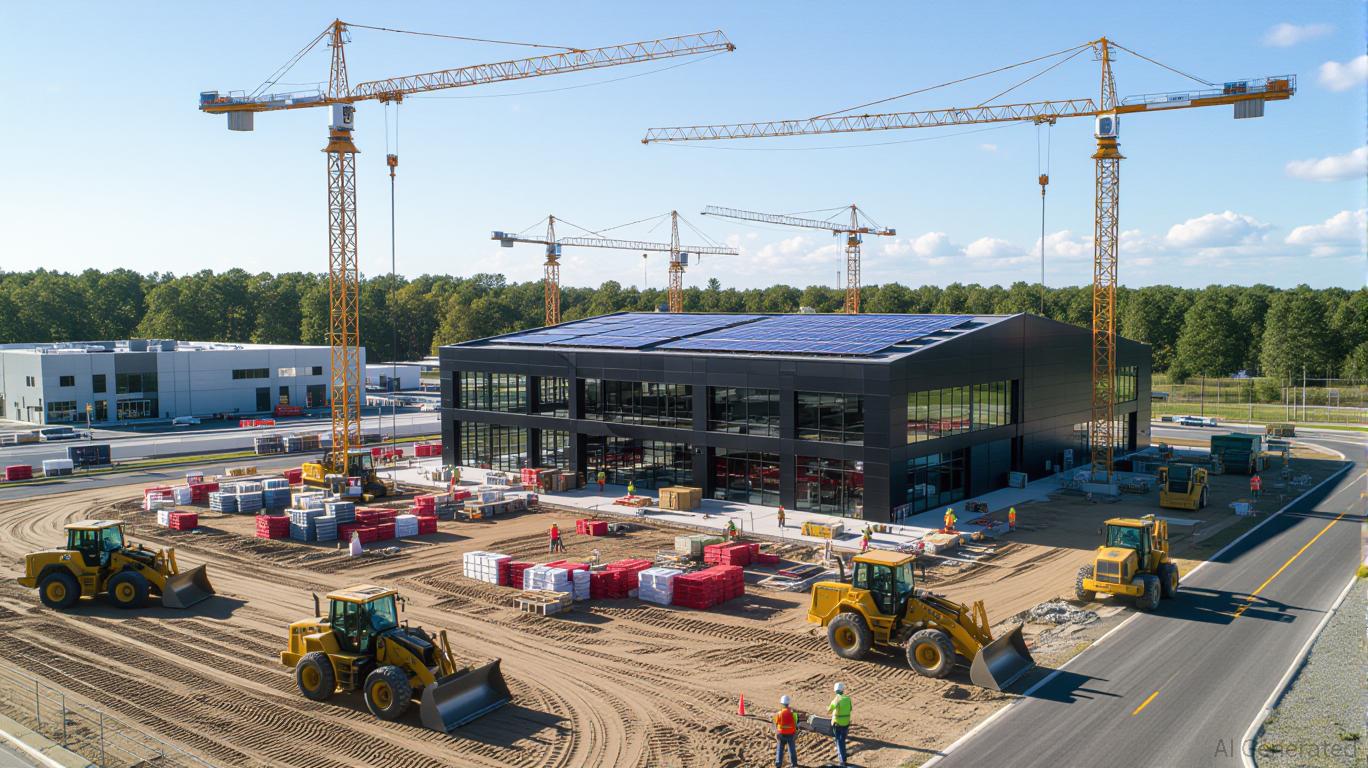
- Webster , NY, transformed a 300-acre Xerox brownfield into a high-tech industrial hub via a $9.8M FAST NY grant, boosting industrial and real estate growth. - Public-private partnerships enabled infrastructure upgrades, attracting $650M fairlife® dairy projects and 250 high-paying jobs by 2025. - Industrial vacancy rates dropped to 2%, while residential values rose 10.1% annually, highlighting synergies between infrastructure and economic development. - The model underscores secondary markets' potential
Unlocking Potential: The Impact of Targeted Grants and Public-Private Partnerships on Transforming Medium-Sized Real Estate Markets in the U.S.
- U.S. mid-sized cities leverage infrastructure investment and PPPs to drive commercial real estate growth, outpacing large cities in value creation. - Federal programs like IIJA enable upgrades in transportation and broadband, reducing business costs while boosting property values in Tampa and Grand Rapids. - PPPs in cities like Montgomery County combine affordable housing incentives with CRE development, balancing equity and economic resilience through data-driven strategies. - Market projections show $2
Modern Monetary Theory and the Transformation of International Markets: Inflation Trends, Asset Movements, and Currency Shifts in 2025
- Modern Monetary Theory (MMT) reshapes fiscal-monetary coordination, linking government spending to inflation and resource constraints in post-pandemic economies. - Central banks face challenges anchoring inflation expectations as CPI lags asset market pressures, risking self-fulfilling inflationary spirals amid eroding public trust. - Currency valuations shift with fiscal stimulus (e.g., euro's 2025 rebound) and U.S. dollar uncertainty, compounded by gold reserve diversification and rising bond yields. -

Trending news
MoreCrypto prices
More






