
News
Stay up to date on the latest crypto trends with our expert, in-depth coverage.


Weekly review calendar week 17 – 2026
CryptoValleyJournal·2026/04/25 08:18
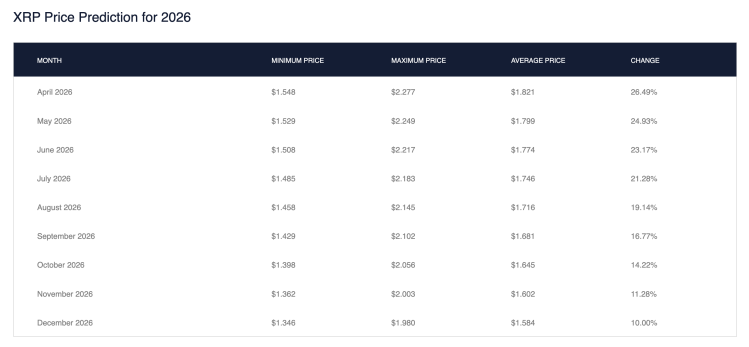
Can The XRP Price Reach $3 In 2026? Prediction Websites Show The Possibilities
Newsbtc·2026/04/25 07:45

CHZ Shows Breakout Potential, Yet 3 Risks Could Derail the Rally
Cryptonewsland·2026/04/25 07:45
$ZS — The Triangle Waits Patiently
TradingView·2026/04/25 07:21
JOBY to dump another 15% or move back up to $13?
TradingView·2026/04/25 07:21
MSFT / Microsoft Corp - Chinchilla Bounce Uptrend
TradingView·2026/04/25 07:21

Missed the APE Rally? This MultiversX (EGLD) Setup Could Trigger the Next Bullish Move
Coinsprobe·2026/04/25 07:06

SHIB Nears Breakout Point After Revisiting Powerful Support Level
Cryptonewsland·2026/04/25 06:42

UK cracks down on illegal peer-to-peer crypto trading in nationwide raids
Cointime·2026/04/25 06:22

XRP Price: What Bulls Need To Reclaim $2.90 And What Bears Must Break
Newsbtc·2026/04/25 06:09
Flash
07:55
UBS Lowers Brent Oil Price Forecast to $80 per Barrel for Second Half of Year On July 2, UBS reduced its price forecast for Brent crude oil in the third and fourth quarters to $80 per barrel and lowered its average Brent crude oil price forecast for 2027 to $75 per barrel. The recent signing of a memorandum of understanding between the United States and Iran, along with an increase in oil flow through the Strait of Hormuz, prompted the bank to adjust its near-term oil price forecasts.
07:51
Economists: Indonesia's inflation may rise in the short term```htmlJinse Finance reported that on July 2, Kenanga economists stated in a report that Indonesia’s inflation is expected to rise in the short term. They explained that increases in food and transportation costs, coupled with the ongoing weakness of the Indonesian rupiah, could keep price pressures elevated, although inflation is expected to remain within Bank Indonesia’s target range of 1.5%-3.5%. Kenanga maintained its forecast for Indonesia’s 2026 inflation at 3.1%, higher than 1.9% in 2025, but indicated that if the exchange rate continues to face pressure, risks will tilt upward. The institution added that Bank Indonesia is expected to maintain a defensive policy stance and may raise interest rates by another 25 basis points to support the rupiah and curb inflation.```
07:47
Yen surges sharply as market speculates Japan shifts to "surprise attacks" strategy```htmlGolden Ten Data reported on July 2 that on Thursday, the yen-to-dollar exchange rate suddenly surged, and traders remained highly alert to possible intervention by Japanese authorities to support the yen. It is currently unclear what triggered this market fluctuation, or whether Japanese authorities intervened in the market. The magnitude of this fluctuation appears to be smaller than previous movements following rounds of intervention. Mitsui Sumitomo Bank Chief Foreign Exchange Strategist Hirofumi Suzuki said: "It is not clear at this point whether this is intervention. But as reported, the authorities may have changed their intervention strategies and tactics, possibly no longer issuing advance signals of intervention, which could make it more difficult for the yen to weaken further."```