
News
Stay up to date on the latest crypto trends with our expert, in-depth coverage.

Canada Approves Bank-Backed CADD Stablecoin: What It Means
Bitcoininfonews·2026/05/06 06:00
Analyst: Realized P&L Returns to Breakeven, Market Entering "Recovery from Deep Bear Market" Phase
BlockBeats·2026/05/06 05:47

XRP’s Road to Half-Trillion Valuation: How Past ATH Performance Fuels Future Growth
Cryptonewsland·2026/05/06 05:42
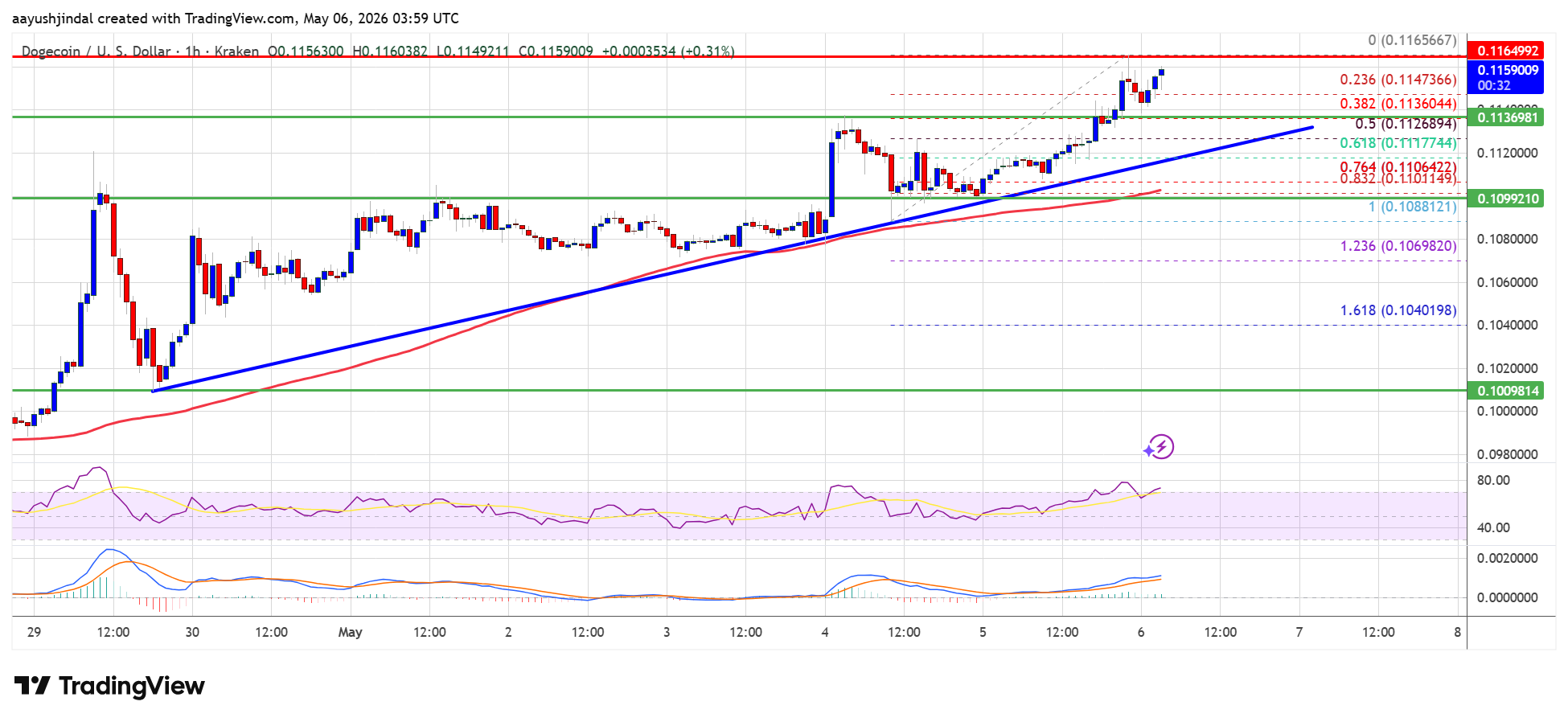
Dogecoin (DOGE) Strengthens, Traders Watch For Sustained Upside
Newsbtc·2026/05/06 05:36
MemeCore (M) Rebounds 25% Off 0.382 Fib, Eyes $4 Breakout
BeInCrypto·2026/05/06 05:21
India Gold price today: Gold rises, according to FXStreet data
FXStreet·2026/05/06 05:09
Indian Rupee advances on improved market sentiment
FXStreet·2026/05/06 05:09
NanoVita Labs Launches $NANA Token on PancakeSwap – A New Era for AI-Driven Decentralized Science
BlockchainReporter·2026/05/06 05:03
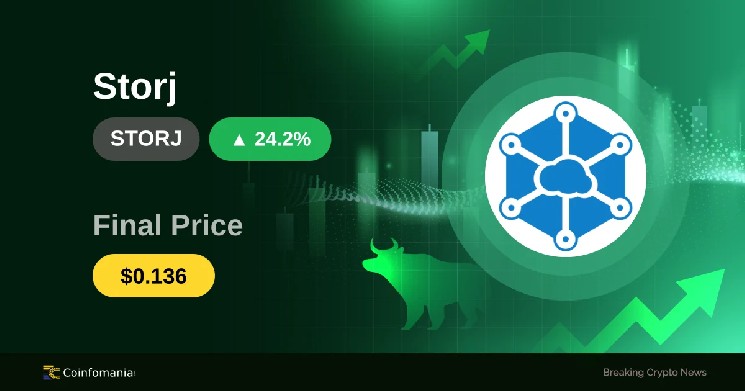
STORJ Surges Past $0.13 — 24.2% Spike in Just 30 Minutes
CryptoNewsNet·2026/05/06 05:03
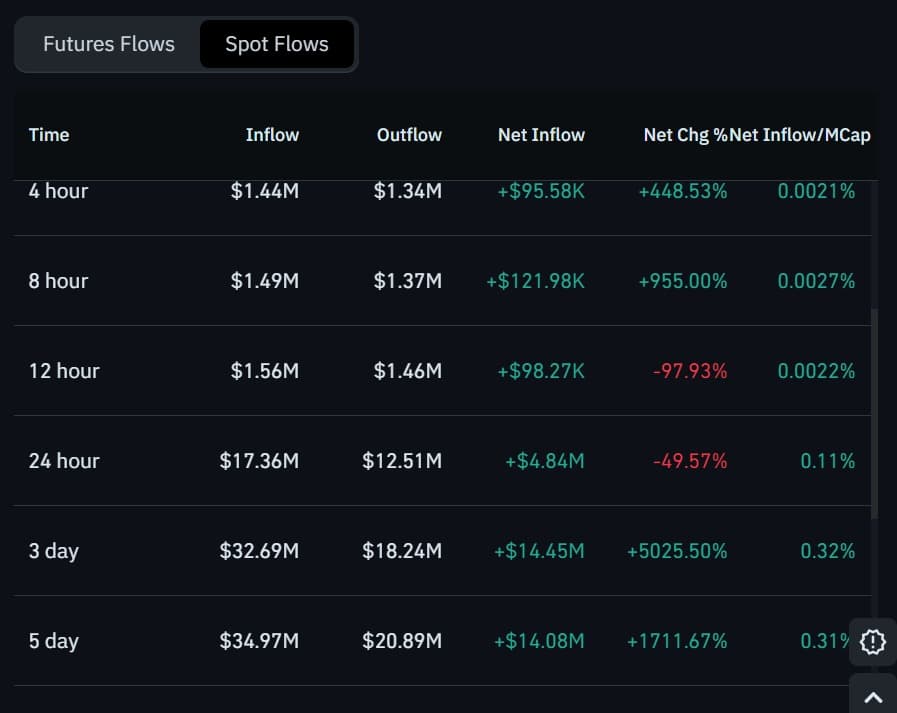
Can M reclaim $4 after Memecore’s 25% reversal? Examining…
CryptoNewsNet·2026/05/06 04:51
Flash
08:28
Goldman Sachs: Divergence Emerges in AI Trading as Market Scrutinizes Capital ReturnsBlockBeats News, June 25, Goldman Sachs strategists believe that Wall Street's AI trading is entering a more complex phase: the market still believes in the AI investment cycle, but no longer puts all AI companies into the same valuation framework. Over the past year, the most favored investments among investors have been the direct beneficiaries in the AI infrastructure chain. Nvidia, TSMC, and some semiconductor equipment and server suppliers have benefited from continued capital expenditure increases by major cloud computing companies. As long as Amazon, Alphabet, Meta, and Microsoft continue to purchase chips, servers, and data center capacity, the revenue outlook for hardware companies will remain supported. However, the hyperscalers themselves, who shoulder these expenses, have not seen equally strong stock performance. The market is rewarding "the side that collects money," but remains cautious about "the side that spends money." Investors are increasingly concerned about whether these hundreds of billions of dollars in AI investments can ultimately be converted into profits, free cash flow, and shareholder returns. This is what Goldman Sachs refers to as AI trading being like a "stretched rubber band." On one end, orders and profit expectations for hardware suppliers are continuously being elevated; on the other, large tech platforms are under increasing capital expenditure pressure. As long as AI demand keeps growing, this dynamic can continue. But if the market starts to doubt the investment return rate, or if cloud giants signal a peak in AI spending growth, related stocks may be repriced. Goldman Sachs is not bearish on AI, but believes that AI trading has moved from thematic investing to a stage of verifying returns. The market no longer just asks "who is involved in AI," but is now concerned with "who can actually make money from AI." For Nvidia, TSMC, and the AI device chain, the biggest risk is not vanishing demand, but that demand growth may no longer continually exceed expectations. For Amazon, Alphabet, Meta, and Microsoft, the short-term pressure comes from excessive capital expenditure; however, if AI costs decrease, or AI products bring in clear revenues, they might instead become the next beneficiaries. The bigger variable is the AI cost curve. If China, Japan, or other regions can develop and run high-performance models at lower costs, the current high capital expenditure path of major U.S. tech companies might be challenged. The market has previously assumed that leading AI always requires more chips and larger data centers, but improvements in model efficiency and the development of alternative chips could undermine this logic. Therefore, the main AI narrative hasn’t ended, but the buying logic is becoming more refined. The next phase is not merely about whether there is AI demand, but about who can turn AI investment into real cash flow.
08:25
ANZ: Singapore's core inflation rate is expected to peak in early 2027```htmlGolden Ten Data reported on June 25 that Khoon Goh from the ANZ Research Department stated in a report that Singapore's core inflation rate may continue to accelerate and reach a peak of over 3% in early 2027 before easing. Despite rising oil prices, inflation remains moderate. Although gasoline and other energy-related costs are increasing, there are currently no signs that inflation is spreading to other prices. However, due to a lagging effect of oil price increases, inflation may rise over the coming months. ANZ expects Singapore's core inflation rate to average 2.1% in 2026 and 2027.```
08:21
Indonesia signs contract to increase imports of Russian oil```htmlGolden Ten Data reported on June 25 that, according to foreign media, Russia and Indonesia have signed a contract for the import of Russian oil. The contract was finalized through Indonesia’s national oil and gas institution Lemigas, and is based on a top-level agreement reached between Russian President Putin and Indonesian President Subianto. This agreement is part of a broader procurement plan, which aims to purchase a total of 150 million barrels of Russian oil to be implemented in stages before the end of 2026. Last week, Indonesia’s Ministry of Energy confirmed that, despite eased tensions in the Middle East and the reopening of the Strait of Hormuz, Indonesia will continue to import Russian crude oil.```