
News
Stay up to date on the latest crypto trends with our expert, in-depth coverage.

Can Solana bulls defend $90 support as bearish crossover approaches?
Crypto.News·2026/05/14 11:18

Bitcoin stuck below $80,000 as leveraged longs unwind, altcoins slide
CryptoNewsNet·2026/05/14 11:09
Massive Win for Ripple and XRP Hidden In the CLARITY Act
TimesTabloid·2026/05/14 11:03
Fidelity, DTCC Tap Chainlink in Landmark Week for Tokenized Finance
DailyCoin·2026/05/14 11:00
BloFin Research: Will the SpaceX IPO Pop the U.S. Stock Bubble?
BeInCrypto·2026/05/14 10:57
Metaplanet reports $736 million valuation loss on Bitcoin holdings
Coinlive·2026/05/14 10:57
10,000% Gains? Why an Analyst Sees the Strongest Altcoin Setup in Years
Coinlive·2026/05/14 10:57
Charles Schwab Opens Bitcoin, Ethereum Access to Retail Clients
Coinlive·2026/05/14 10:57
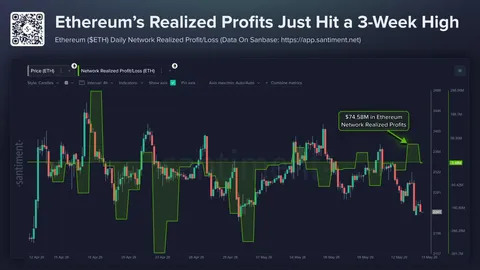
Ethereum Bottom Might be In: Analysts See the Final Shakeout
CoinEdition·2026/05/14 10:54
Nakamoto Q1 Revenue Jumps Despite Heavy Bitcoin Losses
post-161906
post-161906
post-161906
Newscrypto·2026/05/14 10:54
Flash
02:53
According to Beijing News, durian, which used to cost as much as 30 to 40 yuan per jin, will see a significant price drop in 2026. "Durian price reduction" has also become a frequent topic of heated discussion.Recently, the Beijing News Consumption Research Institute discovered that, as production area supply increased, durian prices have gradually declined since April, resulting in prices being “slashed in half.” Entering June, the terminal price of some varieties dropped to just over ten yuan per jin, and wholesale prices even fell to just above ten yuan per jin. “In April, Thailand’s Golden Pillow durians could sell for 40 yuan per jin, but now it’s just over 20 yuan per jin,” a vendor told the reporter at the end of May. Recently, at the Wumart (Taiheyuan) store, it was found that durian prices are continuing to fall, with Thai Golden Pillow durians selling for as low as 21 yuan per jin, and the salesperson said that some overripe durians can be discounted to 15 yuan per jin. An owner of a fruit shop operating in Beijing’s Yinghai area told the reporter that in April, the retail price of Golden Pillow durians reached 35-40 yuan or even higher per jin, but now quality ones are just over 20 yuan per jin, with slightly lower quality ones selling for just over ten yuan per jin.From the wholesale side, durian prices have fallen even more sharply in recent months, with mainstream varieties now entering the “just over ten yuan” range. According to Xinfadi’s agricultural wholesale market data, on June 10, the average wholesale price of Thailand Golden Pillow durians was 18 yuan per jin, Vietnam Golden Pillow was 13 yuan per jin, and Vietnamese Canh Dao was as low as 11 yuan per jin; while on May 31, the average prices were 19.25 yuan/jin, 14 yuan/jin, and 11 yuan/jin, respectively. Compared with April 10 two months ago, when Thailand Golden Pillow had not yet entered the market in large quantities, the Thailand Jialun variety had an average price of 25 yuan per jin, Vietnam Golden Pillow reached as high as 36.5 yuan per jin, and Vietnam Canh Dao was 21.5 yuan per jin. In just two months, prices of Vietnam Golden Pillow and Canh Dao have nearly been “slashed in half.”
02:53
China's gasoline exports reached 30,000 tons in May, a year-on-year decline of 95.2%; cumulative gasoline exports from January to May totaled 1.21 million tons, down 61.3% year-on-year.5.6 million tons of aviation kerosene were exported in May, a year-on-year decrease of 44.9%; from January to May, cumulative aviation kerosene exports reached 6.95 million tons, down 15.2% year-on-year. In May, diesel exports were 350,000 tons, down 31.1% year-on-year; from January to May, cumulative diesel exports reached 2.29 million tons, down 7.6% year-on-year.
02:47
Imran Khan: Tokenization is evolving into two forms—equity ownership and buyback value accumulation.Alliance co-founder Imran Khan stated that tokenization is evolving into two forms: tokens representing equity ownership, and tokens achieving value accumulation through buybacks. Token forms that fall between the two extremes will gravitate toward either side. Unless income and buybacks are programmed and brought on-chain, it will be difficult for tokens to achieve reasonable valuations. As more companies go public, tokenization can provide global investors with on-chain participation opportunities, increasing the channels for obtaining ownership beyond traditional capital markets.
Trending news
MoreAccording to Beijing News, durian, which used to cost as much as 30 to 40 yuan per jin, will see a significant price drop in 2026. "Durian price reduction" has also become a frequent topic of heated discussion.
China's gasoline exports reached 30,000 tons in May, a year-on-year decline of 95.2%; cumulative gasoline exports from January to May totaled 1.21 million tons, down 61.3% year-on-year.