
News
Stay up to date on the latest crypto trends with our expert, in-depth coverage.

USD: Risk rotation supports greenback – ING
FXStreet·2026/04/23 10:57
Bitcoin supply migrates from retail to long‑term holders as ETFs and strategies absorb the flow
Cryptopolitan·2026/04/23 10:51
Japan finance minister Katayama delivers another intervention warning
Investinglive·2026/04/23 10:48
Pi Network Announces Protocol v2 Migration and Ecosystem Updates
Coinlive·2026/04/23 10:45
Crypto market outlook as Iran blames U.S. naval blockade for stalled peace talks
Crypto.News·2026/04/23 10:33
'Timely action is critical': Crypto industry presses Senate to act as US market structure talks drag on
The Block·2026/04/23 10:30
US military operates Bitcoin node in the Indo-Pacific
CryptoValleyJournal·2026/04/23 10:24
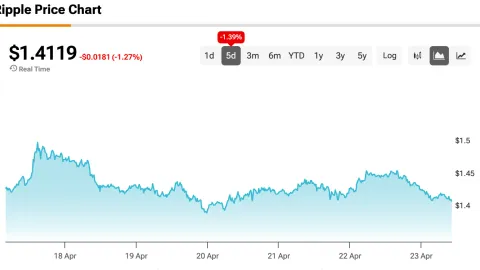

Bearish Analyst Says Repeating 2022 Pattern Can Lead to BTC Price Falling Under $52,000 Prices
Cryptonewsland·2026/04/23 10:12

Next Big Bitcoin Move May Defy Everything Traders Expect: Expert
Newsbtc·2026/04/23 10:12
Flash
21:00
The S&P/TSX Composite Index in Canada closed up 0.88% at 35,274.84 points, as investors are optimistic about the new West Coast pipeline project announced by Prime Minister Carney. The index posted a cumulative gain of 0.84% this week.Friday (July 3), late North American session: Canada's 10-year benchmark government bond yield fell by 0.4 basis points to 3.443%, rising 5.7 basis points for the week. The two-year Canadian bond yield fell by 0.5 basis points to 2.756%, rising 1.1 basis points for the week.
20:35
Aave V4 deposits more than doubled within one monthAave V4 deposits have more than doubled in the past month, reaching nearly $250 million.
20:13
Fitch: Middle East Situation Continues to Pose Risks to Global Businesses On July 4, Fitch Ratings released a report stating that despite the temporary memorandum of understanding signed between the U.S. and Iran on June 17, both sides continue to engage in retaliatory military strikes. The agreement remains fragile and Israel is not involved, which keeps the situation in the Middle East a risk for global businesses. In its updated 'negative scenario' analysis, Fitch pointed out that even if the currently set extreme scenarios (such as a 10% drop in the stock market, a widening of corporate bond spreads by 100-200 basis points, tightening monetary policy, and a noticeable slowdown in the global economy) do not fully materialize, they can still serve as a reference in the event of escalating conflict. In this scenario, the economic growth rates of the U.S. and the Eurozone would significantly decline. Fitch assessed 72 industry sub-sectors across six global regions, with most risk assessments remaining unchanged, while a few were adjusted up or down. Overall, Fitch believes that the 'tail risks' of the Middle East conflict persist, and if the situation escalates again, it will continue to exert pressure on the global corporate credit environment and financial markets.
Trending news
MoreThe S&P/TSX Composite Index in Canada closed up 0.88% at 35,274.84 points, as investors are optimistic about the new West Coast pipeline project announced by Prime Minister Carney. The index posted a cumulative gain of 0.84% this week.
Gold and silver hold post-NFP gains as hike bets move out - Kitco PM Report