
Aster DEX's On-Chain Momentum: Signaling the Future of DeFi
- Aster DEX reported $27.7B daily volume and $1.399B TVL in Q3 2025, outpacing DeFi benchmarks with 2M users. - Institutional whale activity, including CZ's $2M ASTER purchase, drove $5.7B inflows and 800% volume spikes. - Hybrid AMM-CEX model and ZKP privacy tech enabled 40.2% TVL growth, 77% private transactions, and 19.3% perpetual DEX market share. - ASTER's margin trading upgrades and Stage 4 airdrops fueled 30% price surges, while Aster Chain's 2026 launch will integrate privacy-preserving ZKPs. - On
Aster DEX: Redefining DeFi Growth and Adoption
The decentralized finance (DeFi) sector is known for its rapid changes, but Aster DEX has recently become a standout, igniting widespread enthusiasm. In the third quarter of 2025, Aster DEX reported an impressive daily trading volume of $27.7 billion, a total value locked (TVL) of $1.399 billion, and a user base that soared to 2 million. These achievements not only surpass industry standards but also highlight a significant transformation in the way on-chain progress is driving DeFi adoption. For investors, these numbers offer a glimpse into the future of decentralized trading platforms.
Key Drivers: Volume, TVL, and Institutional Interest
Aster DEX’s innovative blend of automated market maker (AMM) and centralized exchange (CEX) features, combined with AI-driven liquidity routing, has minimized slippage and enhanced scalability. This has fueled a cycle of rapid user growth. By October 2025, the platform’s TVL had reached $1.399 billion, marking a 40.2% increase from the previous quarter—outpacing the broader DeFi market. Daily trading volume surged to $27.7 billion, largely propelled by cross-chain transactions, with the ASTER/BSC-USD pair representing 94% of the $2 billion daily volume.
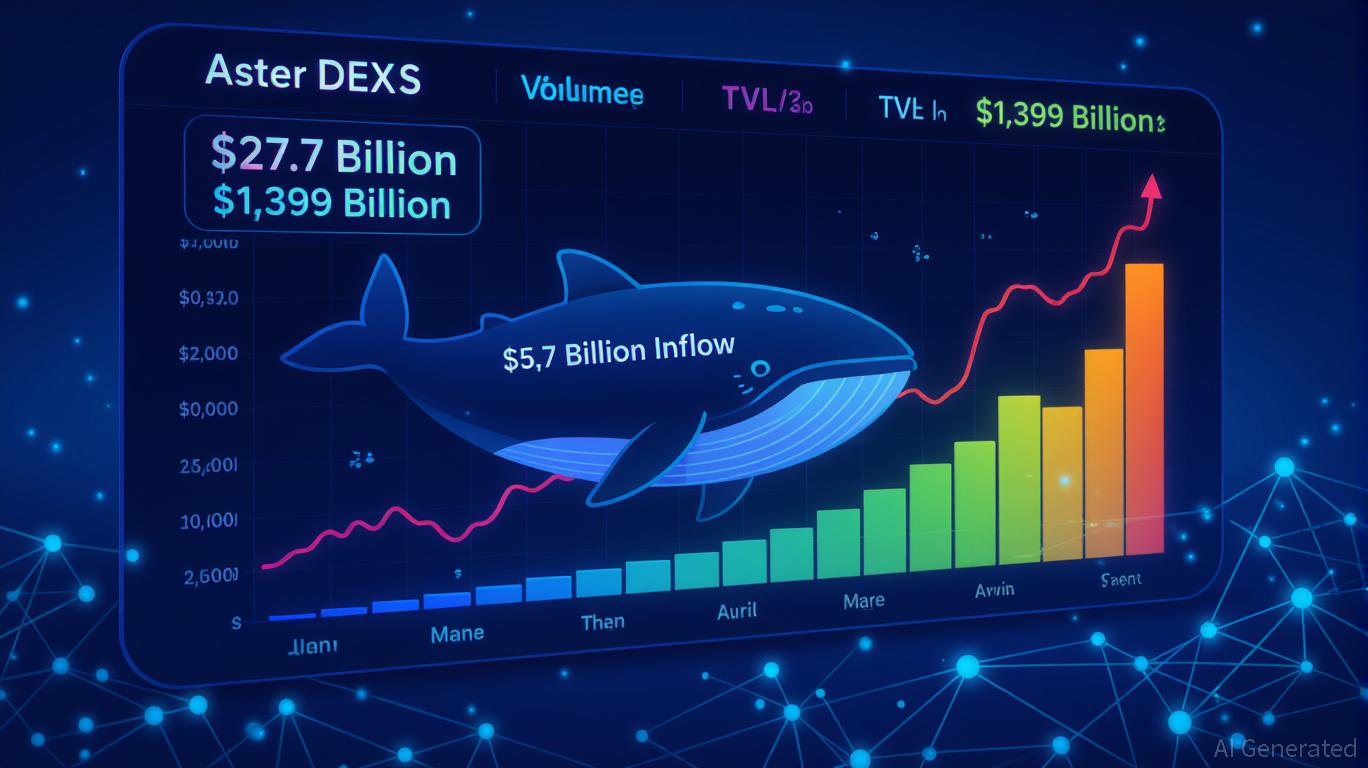
Large-scale investors further accelerated this momentum. Between November 1 and December 5, 2025, institutions invested $5.7 billion into ASTER, including a single transaction worth $191 million. The excitement peaked when Binance founder Changpeng Zhao purchased $2 million worth of ASTER on November 2, sparking an 800% increase in trading activity. Such significant investments from major players signal growing institutional confidence in the platform.
Innovation at the Core: Margin Trading and Privacy Enhancements
Aster’s development team has continued to push boundaries. In October and November 2025, the platform introduced new utilities for the ASTER token, enabling holders to use their tokens as collateral for perpetual trades at an 80% margin ratio. This, along with a 5% trading fee discount for ASTER-backed transactions, encouraged users to hold and utilize the token, resulting in a 30% price increase and a TVL rebound to $1 billion.
Looking forward, Aster’s roadmap remains ambitious. The Stage 4 (Harvest) airdrop and a $10 million trading competition distributed 1.5% of the ASTER supply, further energizing the ecosystem. The upcoming launch of Aster Chain in Q1 2026 will introduce Layer-1 infrastructure with integrated zero-knowledge proofs (ZKPs) for enhanced privacy—a technology already used to obscure 77% of transactions. As regulatory scrutiny intensifies, privacy-focused solutions are becoming essential for DeFi platforms.
Aster’s Role in the Broader DeFi Landscape
To appreciate Aster’s impact, it’s important to consider the wider DeFi market in Q3 2025. The sector’s total TVL reached $237 billion, with Ethereum maintaining a 49% share despite a 4% year-over-year decline. While BNB Chain and Hyperliquid experienced TVL growth, Aster’s $1.399 billion TVL and its 19.3% share of the perpetual DEX market set it apart as a clear leader.
Even as the DeFi industry saw a 22% drop in daily active wallets, Aster’s user base grew to 2 million, driven by its privacy features and margin trading options. This resilience is no accident—Aster’s hybrid approach combines the efficiency of centralized exchanges with the security of decentralized platforms, appealing to both retail and institutional participants.
Investment Insights: On-Chain Metrics as Predictors
Why are these developments significant for DeFi’s future? On-chain indicators such as TVL, trading volume, and user engagement have evolved into key predictors of industry shifts. The 2025 Onchain Revenue Report reveals that DeFi and finance applications now generate 66% of all on-chain fees, up from 56% in 2021. Aster’s $732.4 million in total fees and a $214 million token buyback highlight its ability to capitalize on this growth.
Additionally, the Chainalysis 2025 Global Crypto Adoption Index identifies on-chain activity as a primary factor in grassroots adoption. Aster’s 800% volume spike following CZ’s purchase and its 77% ZKP transaction rate are in line with this trend. For investors, the message is clear: platforms that prioritize utility, privacy, and scalability—like Aster—are not just surviving but leading the next phase of DeFi evolution.
Conclusion: Pioneering the Next Era of Decentralized Trading
Aster DEX’s recent achievements are more than a temporary surge—they demonstrate how on-chain innovation can drive sustained market leadership. By addressing critical challenges such as liquidity and privacy, Aster is setting new standards for the industry. As DeFi continues to evolve, performance metrics like those seen in Q3 2025 will become increasingly important, positioning Aster as a key indicator for future adoption. For those looking to invest in DeFi’s next chapter, the question is not if the sector will grow, but whether they are aligned with the platforms leading this transformation.
Disclaimer: The content of this article solely reflects the author's opinion and does not represent the platform in any capacity. This article is not intended to serve as a reference for making investment decisions.
You may also like
Bitcoin Faces Regulatory Turning Point in November 2025: Institutional Integration and Compliance Obstacles
- In November 2025, Bitcoin faces regulatory crossroads as U.S. SEC approves spot ETFs and EU MiCA harmonizes crypto rules, accelerating institutional adoption. - 68% of institutional investors now allocate to Bitcoin ETPs, driven by GENIUS Act clarity and infrastructure advances, signaling strategic asset-class integration. - Compliance challenges persist due to fragmented enforcement, with MiCA passporting inconsistencies and U.S. stablecoin audit requirements complicating cross-border operations. - Futu

The Bitcoin Leverage Liquidation Dilemma: Widespread Dangers in Crypto Markets and Future Solutions
- Bitcoin's 2025 price drop below $104,000 triggered $1.3B in leveraged liquidations, exposing systemic fragility in crypto trading ecosystems. - Overleveraged retail investors and DATCos drove cascading liquidations, with platforms like Binance accounting for 72% of forced unwinds during volatile swings. - Growing Bitcoin leverage concentration and AI-driven retail participation amplify contagion risks as crypto's correlation with traditional markets deepens. - Experts warn financialization creates feedba

ALGO Falls by 5.41% Over 24 Hours as Argo Blockchain Undergoes Restructuring and Integrates Growler
- ALGO dropped 5.41% in 24 hours amid Argo Blockchain's restructuring and Growler integration, with year-to-date losses reaching 61.82%. - Argo finalized its court-approved restructuring on Dec 10, 2025, exchanging 8.75% senior notes for 10% ADRs and integrating Growler's resources. - Market reaction remains cautious as investors assess whether the restructuring will drive operational efficiency or merely restructure debt. - Growler's director appointment and new infrastructure aim to strengthen Argo's min

The Influence of Scholarly Studies on Developing Technology Industries
- Farmingdale State College bridges academia and industry through interdisciplinary AI programs and partnerships with firms like Tesla and National Grid . - Its BS in AIM combines technical AI training with ethics courses, addressing workforce gaps in responsible AI deployment and management. - Industry-linked initiatives like the Nexus Center's certificate programs and PSEG's innovation challenge create direct pathways to employment and scalable solutions. - A $164K NSF grant for AI education research and

Trending news
MoreCrypto prices
More





