
Bitcoin wallets holding over 0.1 BTC decline for first time in two-year period

The number of Bitcoin addresses holding balances greater than 0.1 BTC has declined over a two-year period for the first time since the cryptocurrency network’s launch in 2009, according to blockchain data reported by Protos.com.
- The number of Bitcoin addresses holding more than 0.1 BTC declined by 2.3% over two years, marking the first drop since Bitcoin’s launch in 2009.
- While smaller wallets (holding 0.01 BTC or more) saw only a 0.7% decline, larger wallet balances experienced a sharper decrease.
- The decline reflects evolving Bitcoin infrastructure, with many investors using intermediaries like ETFs and exchanges, alongside changing security practices reducing the need for large balances in single addresses.
The metric dropped from 4,548,107 addresses on December 8, 2023, to 4,443,541 as of this month, representing a 2.3% decline. Prior to this period, the number of addresses holding more than 0.1 BTC increased annually through 2023, according to the report.
The data shows the number of unique addresses rose steadily with occasional brief fluctuations lasting a few months, peaking in December 2023. The figure plateaued through most of 2024 before declining to the current two-year low, according to the analysis.
By comparison, addresses holding 0.01 BTC or more declined by only 0.7% during the same period, indicating a sharper decrease among wallets with larger balances.
The decline comes as the Bitcoin ecosystem has evolved significantly from its early years. Thousands of centralized exchanges, exchange-traded funds, derivatives platforms, treasury companies, and other financial products now provide exposure to Bitcoin’s price, according to industry observers. This infrastructure makes it difficult to determine the actual number of individual investors holding specific amounts of Bitcoin, as assets held by these intermediaries are commingled on-chain.
Hardware wallets such as Ledger, Trezor, and Coldcard remain available for direct Bitcoin custody. However, many investors now use ETFs and other exchange-traded products that comply with retirement account regulations, which direct Bitcoin holdings do not satisfy, according to financial analysts.
Security practices among Bitcoin holders have also evolved. Users increasingly employ techniques including unspent transaction output consolidation, extended public keys to distribute holdings across multiple wallets controlled by one private key, embedded wallet structures, and cryptographic methods such as XOR to combine seed phrases from multiple wallets, according to cryptocurrency security experts.
These practices reduce the necessity of holding large balances in single addresses, regardless of total investment size, according to the report. The data nonetheless provides insight into behavioral patterns among Bitcoin network users over time.
Disclaimer: The content of this article solely reflects the author's opinion and does not represent the platform in any capacity. This article is not intended to serve as a reference for making investment decisions.
You may also like
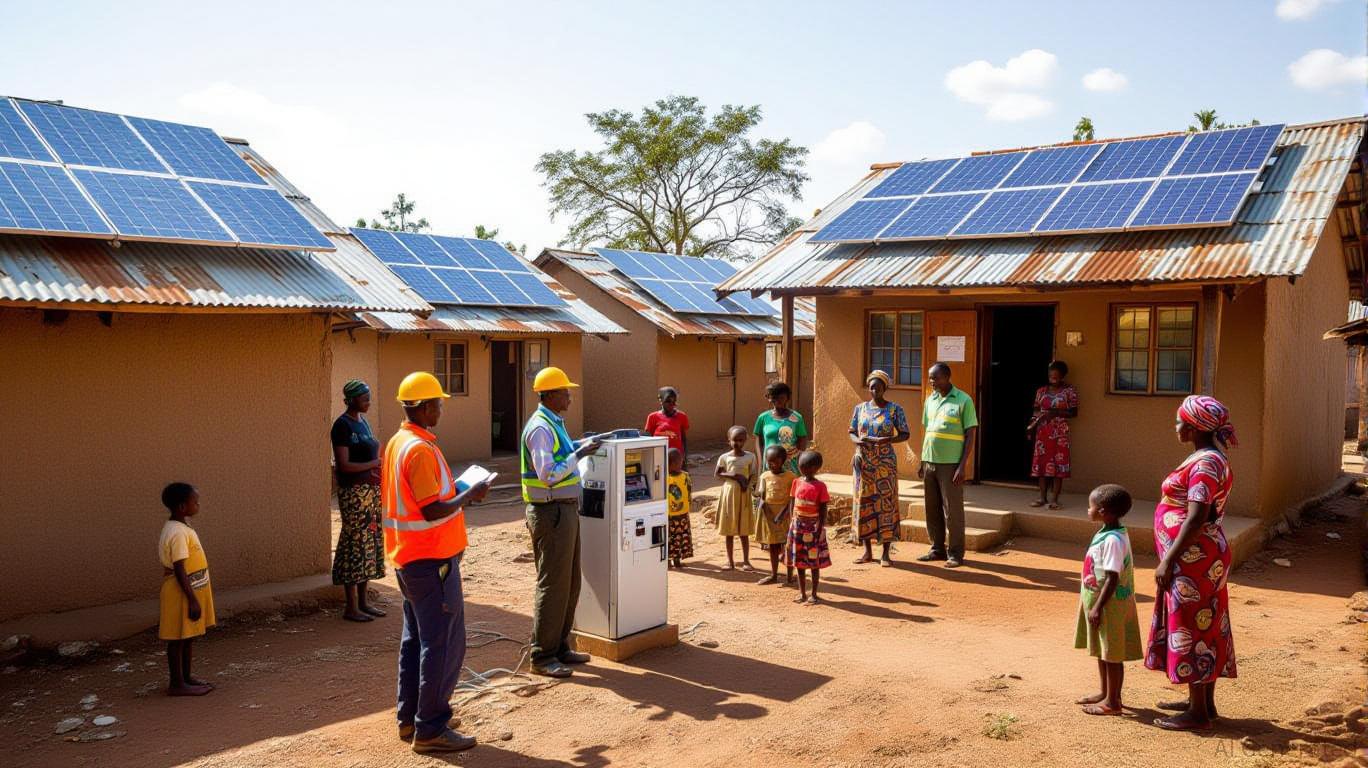
The Convergence of Social Justice and Renewable Energy Implementation in Developing Economies
- IEA data shows emerging markets need $45B/year by 2030 to achieve universal clean energy access, with Africa and Asia facing the greatest demand. - Renewable projects in low-income regions demonstrate nonlinear ESG impacts, with solar microgrids directly reducing energy poverty for 600M+ Africans. - PIDG's $27M guarantees mobilized $270M in African renewables, proving blended finance models can de-risk investments while creating 200-300MW capacity. - Kenya's M-KOPA and Indonesia's JETP showcase scalable
Stanford’s top journalist challenges Silicon Valley’s startup scene, calling out its obsession with wealth
PENGU Token Experiences Rapid Growth: Could This Signal the Onset of a Bullish Trend in Cryptocurrency?
- PENGU token's 25% surge since Nov 2025 sparks debate over altcoin revival vs speculative frenzy. - Technical indicators show mixed signals with bullish patterns but bearish RSI divergence and compressed Bollinger Bands. - Whale accumulation and $4.3M institutional inflows contrast with broader altcoin weakness (ETH -27%, SOL -31%). - Upcoming 41% supply unlock on Dec 17 poses $288M selling pressure risk amid fragile market conditions. - Token's future depends on sustaining institutional support, navigati

Clean Energy Market Fluidity: How REsurety's CleanTrade Platform is Transforming the Industry
- REsurety's CleanTrade platform, CFTC-approved as a SEF, standardizes trading of VPPAs, PPAs, and RECs to boost clean energy liquidity. - By aligning with ICE-like regulations and offering real-time pricing, it reduces counterparty risks and bridges traditional/renewable energy markets. - The platform achieved $16B in notional volume within two months, signaling maturing markets where clean assets gain institutional traction. - CleanTrade's analytics combat greenwashing while streamlining transactions, en

Trending news
MoreCrypto prices
More





