
Infrastructure-Fueled Expansion of Industrial Real Estate in Upstate New York: Tapping into Lucrative Prospects via Targeted Grants and Brownfield Redevelopment
- New York state’s infrastructure grants and brownfield remediation strategies are transforming Upstate industrial real estate. - FAST NY’s $283M in funding since 2022 has revitalized 37 projects, including Genesee County’s green hydrogen hub and Webster’s Xerox campus redevelopment. - Brownfield cleanup tax credits and "bluefield" zoning policies in Webster reduced industrial vacancy rates to 2% and boosted residential property values by 10.1%. - The $300M POWER UP initiative upgrades energy infrastructur
Upstate New York’s Industrial Real Estate: A New Era of Growth
The industrial property landscape in Upstate New York is experiencing significant transformation, fueled by a combination of public infrastructure investments and forward-thinking approaches to brownfield redevelopment. Since 2022, the state has funneled more than $283 million into the FAST NY Shovel-Ready Grant Program, supporting early-stage development and infrastructure enhancements across nearly 7,700 acres of industrial land. This influx of capital, alongside regulatory updates and collaborative regional efforts, is paving the way for dynamic commercial projects. Developers and investors who engage with these programs are well-positioned to benefit from a revitalized market that is not only reclaiming former brownfield sites but also attracting high-tech sectors such as semiconductor manufacturing and clean energy.
Grant Initiatives Driving Industrial Expansion
Under Governor Kathy Hochul’s leadership, infrastructure development has become a central pillar of economic strategy. The County Infrastructure Grant Program has opened a second round of $50 million in funding, targeting small and mid-sized projects that boost housing, tourism, and industrial growth. Municipalities can apply for these grants until April 1, 2026, giving local governments a valuable resource to overcome development hurdles.
The FAST NY Shovel-Ready Grant Program is a standout initiative, with up to $400 million earmarked for infrastructure upgrades. The program operates on three fronts: certifying shovel-ready sites, supporting pre-development activities, and financing major capital improvements. Since its inception, $283 million has been distributed to 37 projects. Notably, the Genesee County STAMP site was awarded $56 million to construct a wastewater treatment facility and expand natural gas services, positioning the region as a leader in green hydrogen and semiconductor production. In another example, a former Xerox property in Webster, NY, received $9.8 million to convert 300 acres of brownfield into a state-of-the-art industrial park, resulting in industrial vacancy rates plummeting to 2%.
Brownfield Redevelopment and Policy Innovation
Historically, brownfield sites—properties burdened by environmental contamination—have hindered industrial progress. However, New York’s Brownfield Cleanup Program and Brownfield Opportunity Area initiatives are turning these sites into valuable assets. Enhanced tax incentives for environmental cleanup and streamlined permitting have enabled communities to repurpose contaminated land for industrial use. In Webster, these efforts have not only rejuvenated the former Xerox campus but also contributed to a 10.1% rise in residential property values since 2023.
Local authorities are also advancing redevelopment through creative zoning policies. Webster’s innovative “bluefield” zoning permits mixed-use development within industrial zones, encouraging a blend of commercial, residential, and recreational spaces. These measures reduce regulatory barriers and attract a diverse range of industries, from advanced manufacturing to logistics.
Collaborative Partnerships and Energy Upgrades
The POWER UP initiative, a $300 million program launched in 2025, is another major driver of industrial growth. By modernizing electrical and transmission infrastructure, it supports energy-intensive sectors such as semiconductors and agribusiness. Building on the foundation laid by FAST NY, POWER UP is helping to create ready-to-use industrial sites tailored to the needs of contemporary manufacturers. For example, Oneida County secured $23.6 million to develop the Triangle Site near Griffiss International Airport, a project anticipated to create as many as 3,000 new jobs.
Investment Opportunities and Market Trends
The convergence of infrastructure funding, brownfield remediation, and progressive policy reforms has made Upstate New York an attractive destination for investors. As of 2025, over $175 million has been allocated to 20 sites throughout the region, with Webster and Genesee County serving as prime examples of successful redevelopment. These initiatives are not only reducing industrial vacancy rates but also strengthening the long-term value of commercial properties.
For those seeking investment opportunities, the focus should be on properties that have received or are eligible for FAST NY or POWER UP funding. Locations benefiting from active brownfield cleanup programs and forward-thinking zoning—such as Webster’s “bluefield” approach—offer additional growth potential. The reduction of industrial vacancies to 2% in Webster highlights the strong demand for well-situated assets, while the 10.1% increase in residential property values demonstrates the broader economic benefits of industrial revitalization.
Conclusion
Upstate New York’s industrial real estate sector is being reshaped by a strategic emphasis on infrastructure and brownfield redevelopment. With more than $500 million in grants and incentives available through 2026, the state is fostering a competitive environment for advanced manufacturing and clean technology. Investors who engage with these initiatives—whether through direct development, partnerships, or acquisitions—stand to gain from a market that is overcoming historical obstacles and emerging as a national leader in industrial innovation.
Disclaimer: The content of this article solely reflects the author's opinion and does not represent the platform in any capacity. This article is not intended to serve as a reference for making investment decisions.
You may also like
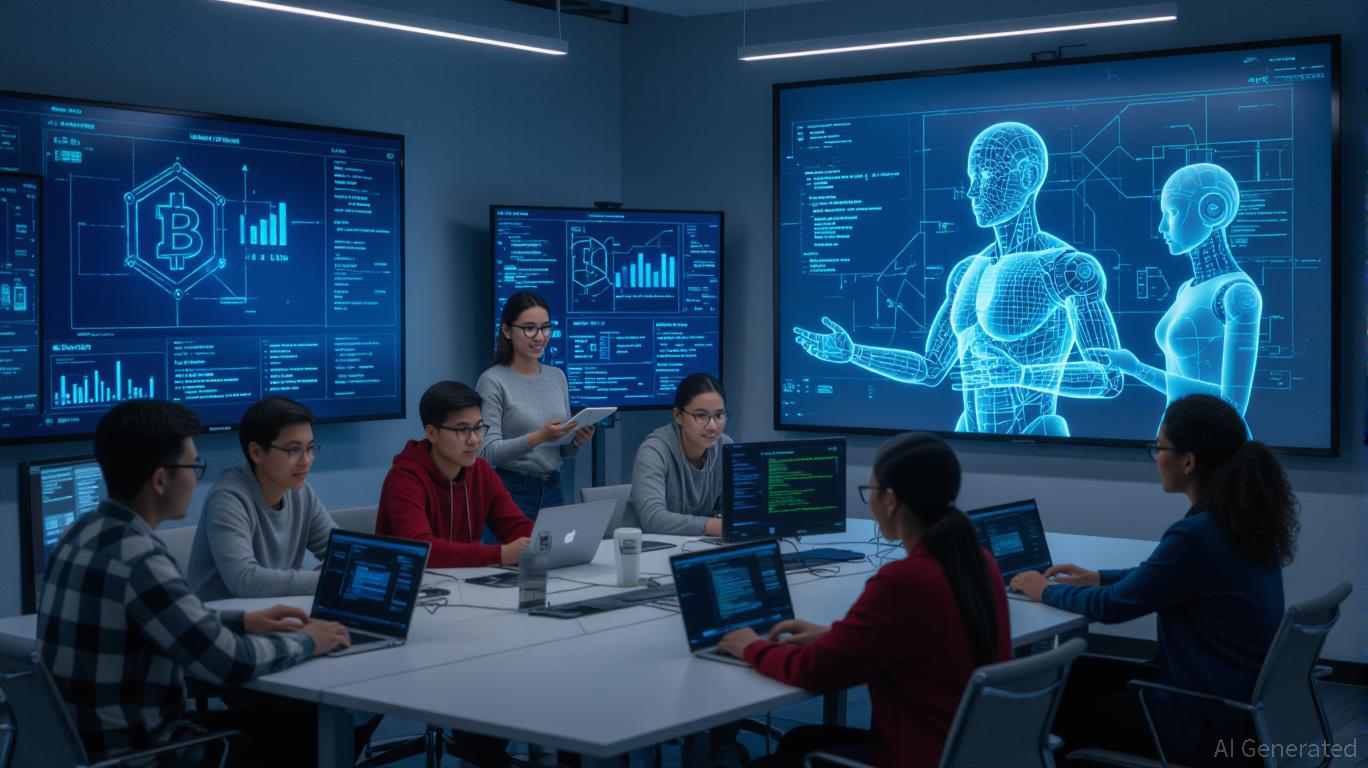
How Shifting Educational Trends Influence Technology Sectors and Create New Investment Prospects
- Interdisciplinary STEM programs drive growth in AI, cybersecurity, and biotech , addressing global talent shortages and fostering innovation. - Expanding into agritech, fintech , and healthcare tech , these programs leverage IoT, blockchain, and AI to enhance productivity and financial inclusion. - Investors target EdTech, clean energy, and biotech-agritech collaborations, supported by federal policies and industry partnerships. - STEM-driven innovations reshape industries, creating $348B EdTech market a

Navigating the Emergence of Decentralized Finance (DeFi): A Tactical Handbook for Investors in 2026
- Aster DEX dominates 19.3% of perpetual DEX market by Q3 2025 with hybrid AMM-CEX model reducing slippage by 40% and $27.7B daily volume. - Platform bridges TradFi/DeFi through Binance/APX partnerships, aligning with MiCAR/CLARITY Act while securing $50B in Layer-2 assets via ZKP-powered Aster Chain. - ASTER token surged 1,650% post-TGE with $80M burns and 80% margin trading driving 30% price jumps, while 2026 roadmap targets RWA integration and institutional onboarding. - Projected 72.8% CAGR in RWA mark

Investment Prospects in STEM Learning and Workforce-Ready Talent Streams: Linking with Astar 2.0
- Global STEM education demand surges as AI, blockchain, and biotech reshape industries, creating workforce skill gaps. - Astar 2.0's DeFi innovations (ZK Rollups, interoperability) indirectly support STEM through blockchain infrastructure and cross-chain collaboration. - U.S. and Singapore prioritize tech-integrated workforce strategies, aligning with Astar 2.0's potential to bridge DeFi and STEM education via scalable tools. - Investors can leverage Astar 2.0's $1.399B TVL and hybrid AMM-CEX model to fun
The ZK Transformation: Evaluating How Zero-Knowledge Technology Influences the Future Development of Blockchain
- ZK-rollups scale blockchain networks by bundling transactions, achieving 43,000 TPS and 30% lower gas fees, attracting institutions like Goldman Sachs and JPMorgan . - ZK technology resolves privacy-scalability paradox by enabling verifiable transactions without data exposure, adopted by EU regulators and enterprises like Nike and Sony . - Challenges persist: ZK-SNARKs require heavy computation, trusted setup risks exist, and privacy conflicts with AML regulations in some jurisdictions. - $725M+ VC inves

Trending news
MoreCrypto prices
More





