
ICP Price Jumps 30%: Exploring the Driving Forces and Long-Term Investment Outlook
- ICP token surged 30% in Nov 2025 to $4.71, driven by ICP 2.0 upgrades and institutional partnerships with Microsoft , Google, and SWIFT. - Price retreated to $3.50 by Dec 2025 amid waning AI hype, macroeconomic pressures, and speculative trading volatility. - NVT ratio and DCF analyses highlight valuation challenges, with optimistic 2026 price projections ($11.15–$31.89) contingent on real-world adoption and institutional traction. - Market dynamics reveal a duality: innovative infrastructure potential v
ICP Token: November 2025 Price Rally and Its Implications
In November 2025, the Internet Computer (ICP) token experienced a dramatic 30% price increase, briefly reaching $4.71. This surge, fueled by a mix of technological advancements, new institutional collaborations, and heightened speculative activity, highlighted the unpredictable yet vibrant nature of the blockchain sector. However, the subsequent drop to $3.50 by December 2025 has prompted serious reflection on the durability of ICP’s growth and what it means for valuing tokens in decentralized infrastructure projects.
Main Drivers: Technological Progress and Institutional Partnerships
The primary trigger for ICP’s price jump was the introduction of ICP 2.0, which brought significant protocol enhancements. Notable features included Caffeine—an AI-powered app development tool, Internet Identity 2.0, and Chain Fusion, a protocol enabling cross-chain compatibility. These upgrades positioned ICP as a robust, enterprise-ready alternative to conventional cloud services, drawing interest from developers and businesses looking for decentralized solutions. Strategic alliances with Microsoft Azure, Google Cloud, and SWIFT further strengthened ICP’s reputation, signaling growing institutional confidence.
ICP’s rally also coincided with a 22.5% rise in its Total Value Locked (TVL), reaching $237 billion in the third quarter of 2025. This growth reflected increasing demand for decentralized computing. Nevertheless, the momentum faded quickly. By late November, ICP struggled to break above the $6.66 resistance level, with failed attempts indicating uncertainty among traders. The subsequent decline to $3.50 was linked to diminishing excitement around AI, broader economic challenges, and speculative trading behaviors.
Valuation Analysis: NVT Ratio and DCF Models
Evaluating ICP’s long-term prospects requires a closer look at its network value to transaction (NVT) ratio and discounted cash flow (DCF) models. Although specific NVT figures for ICP are scarce, blockchain data points to a gap between its market capitalization and actual usage. For example, token transfers fell by 91% during the November downturn, suggesting reduced user engagement. In contrast, trading volumes soared to $1.14 billion during the price rally, largely due to the launch of Caffeine. Such volatility complicates NVT-based assessments, which typically depend on steady transaction activity.
DCF analysis for ICP remains speculative due to the project’s early stage. Projections for 2025–2030 vary widely, ranging from $3 to $21, depending on factors like institutional uptake and integration of real-world assets. The ecosystem’s expansion—including a 2.5-fold increase in active canister smart contracts since January 2024—offers a positive outlook for DCF scenarios. However, the lack of consistent revenue streams or transaction fees, unlike networks such as Bitcoin or Ethereum, introduces additional uncertainty.
Speculation and Market Sentiment: Insights from On-Chain Data
ICP’s price movements in November 2025 were largely shaped by speculative trading. A short squeeze in the derivatives market, triggered by negative funding rates, led to an 11.3% price jump within a single day. This was further supported by a bullish breakout from a two-month downward trend, which traders saw as a sign of renewed strength. Despite these gains, ICP’s inability to maintain prices above $6.66 pointed to liquidity issues and prevailing bearish sentiment.

On-chain metrics reveal a constant struggle between optimistic and pessimistic forces. While trading volume climbed to $357.95 million in mid-November, indicating revived investor interest, token transfers dropped sharply during market corrections, signaling reduced user activity. The Crypto Fear & Greed Index plunged to an extreme fear reading of 20 by late November, reflecting widespread market anxiety. Meanwhile, a 22% decrease in exchange balances over 30 days suggested that long-term holders were accumulating ICP, potentially setting the stage for a future rebound.
Looking Ahead: Real Adoption Versus Speculation
ICP’s ability to sustain growth depends on shifting from speculative hype to genuine adoption. While rising TVL and expanding canister activity are positive signs, broader market volatility and competition from established platforms like Ethereum and Solana present ongoing challenges. Forecasts for 2026 suggest a price range between $11.15 and $31.89, influenced by the success of Caffeine AI and further institutional involvement. However, these projections rely on overcoming resistance at $5.94 and maintaining support above $4.33, as noted by CoinMarketCap.
For investors, ICP represents a blend of cutting-edge infrastructure and speculative trading. Although its technological advancements and high-profile partnerships are promising, the token’s value remains sensitive to shifts in market sentiment and liquidity. A comprehensive DCF approach that factors in both blockchain activity and macroeconomic trends is crucial for balanced evaluation.
Summary
The ICP token’s price rally in November 2025 illustrates the complex interplay between innovation, institutional interest, and speculative trading in the evolving blockchain landscape. While fundamentals like TVL growth and canister adoption point to long-term promise, ongoing price swings and reliance on speculative flows highlight the risks inherent in decentralized infrastructure investments. Investors should carefully consider these dynamics, recognizing that ICP’s future will depend on its ability to deliver real-world value in a rapidly changing market.
Disclaimer: The content of this article solely reflects the author's opinion and does not represent the platform in any capacity. This article is not intended to serve as a reference for making investment decisions.
You may also like
Investment Prospects in STEM Learning and Workforce-Ready Talent Streams: Linking with Astar 2.0
- Global STEM education demand surges as AI, blockchain, and biotech reshape industries, creating workforce skill gaps. - Astar 2.0's DeFi innovations (ZK Rollups, interoperability) indirectly support STEM through blockchain infrastructure and cross-chain collaboration. - U.S. and Singapore prioritize tech-integrated workforce strategies, aligning with Astar 2.0's potential to bridge DeFi and STEM education via scalable tools. - Investors can leverage Astar 2.0's $1.399B TVL and hybrid AMM-CEX model to fun

The ZK Transformation: Evaluating How Zero-Knowledge Technology Influences the Future Development of Blockchain
- ZK-rollups scale blockchain networks by bundling transactions, achieving 43,000 TPS and 30% lower gas fees, attracting institutions like Goldman Sachs and JPMorgan . - ZK technology resolves privacy-scalability paradox by enabling verifiable transactions without data exposure, adopted by EU regulators and enterprises like Nike and Sony . - Challenges persist: ZK-SNARKs require heavy computation, trusted setup risks exist, and privacy conflicts with AML regulations in some jurisdictions. - $725M+ VC inves

The Influence of Vitalik Buterin's Support for ZKsync on the Advancement of Scalable Blockchain Technologies: Evaluating the Prospects for Long-Term Investment in Pr
- Vitalik Buterin's 2025 endorsement of ZKsync accelerated its rise as a scalable Ethereum Layer-2 solution with 30,000 TPS and $3.3B TVL. - ZKsync's EVM compatibility and institutional partnerships contrast with StarkNet's quantum-resistant STARK proofs and Aztec's privacy-first architecture. - Analysts project ZK token prices at $0.40–$0.60 by 2025, while StarkNet faces adoption barriers and Aztec navigates regulatory challenges in privacy-focused DeFi. - The $7.59B ZKP market (2033 forecast) hinges on b
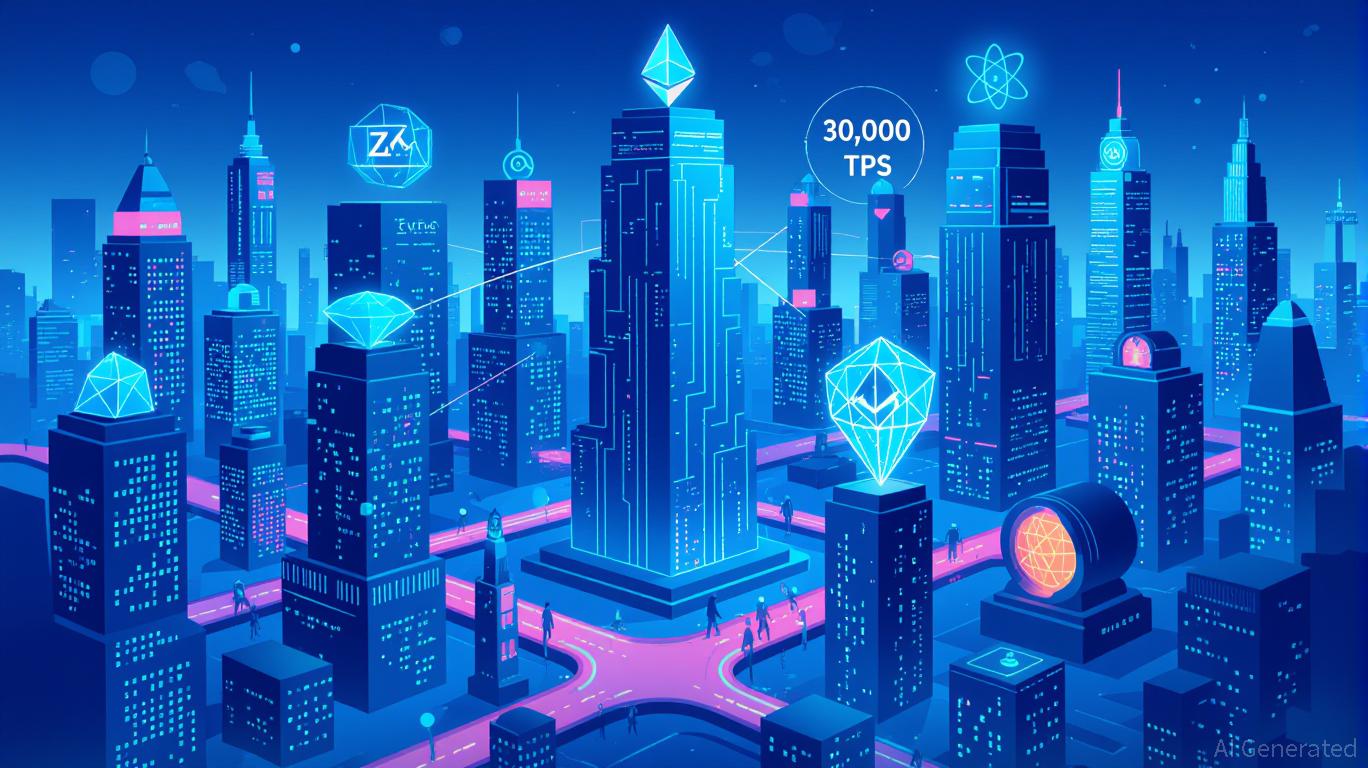
ZK Atlas Enhancement: Transforming Blockchain Scalability and Paving the Way for Institutional Integration
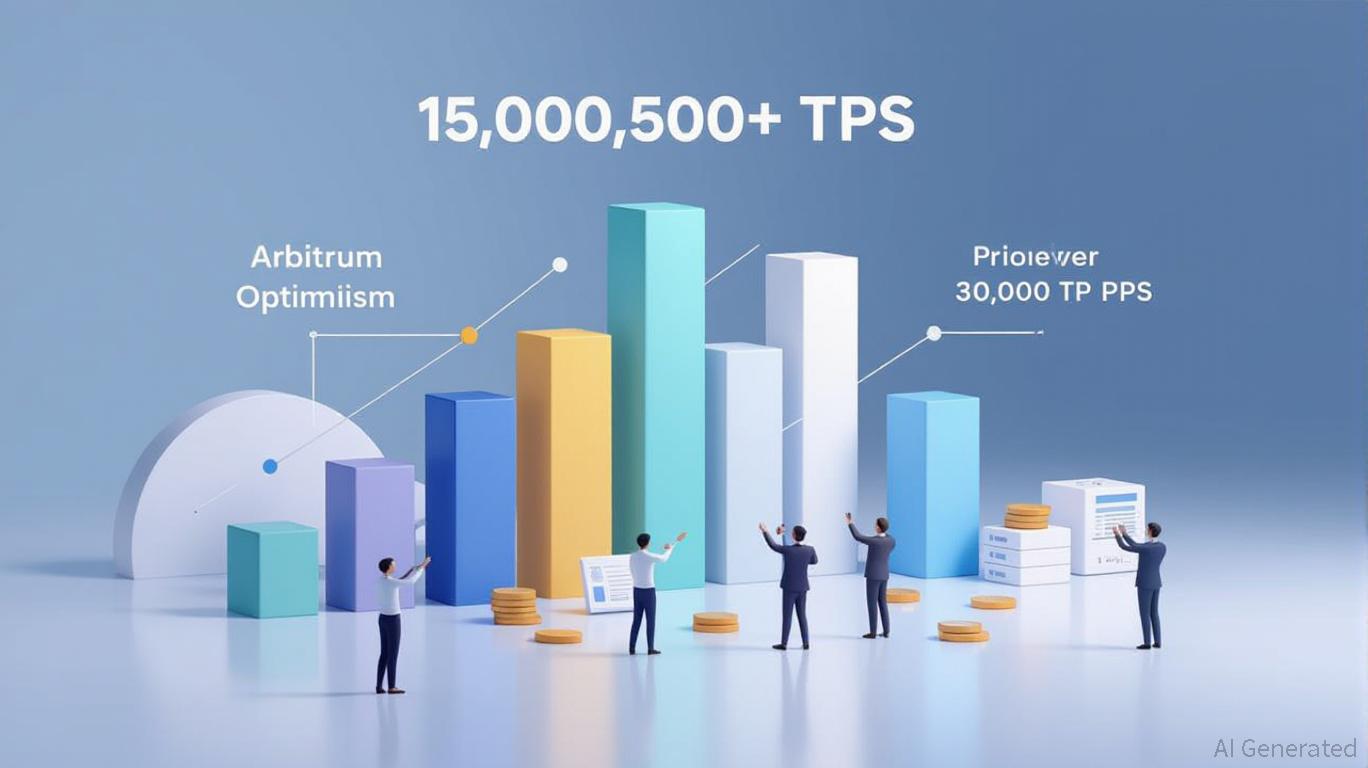
- ZKsync’s 2025 Atlas Upgrade achieves 15,000–43,000 TPS with $0.0001/transaction costs, boosting blockchain scalability for institutions. - Deutsche Bank , Sony , and Citi adopt ZKsync for tokenized assets and privacy-driven transactions, citing compliance and efficiency gains. - Market forecasts predict 60.7% CAGR for ZK Layer-2 solutions through 2031, with Fusaka upgrade targeting 30,000 TPS to solidify ZKsync’s leadership.
Trending news
MoreCrypto prices
More





