
Vitalik Buterin Backs ZKsync: Paving the Way for Ethereum’s ZK-Driven Scalability Transformation
- Vitalik Buterin's endorsement of ZKsync's Atlas upgrade boosts Ethereum's ZK-based scalability. - Atlas enables 15,000 TPS and bridges Ethereum's L1-L2 liquidity via ZK Stack framework. - ZKsync's token surged 120%, attracting Citi and Deutsche Bank as institutional investors. - ZK rollups now outperform optimistic rollups in cost efficiency and transaction speed post-EIP-4844. - Fusaka upgrade aims to double TPS to 30,000, positioning ZKsync as Ethereum's key scaling solution.
Vitalik Buterin’s Support Sparks Momentum for ZKsync and Ethereum Layer 2
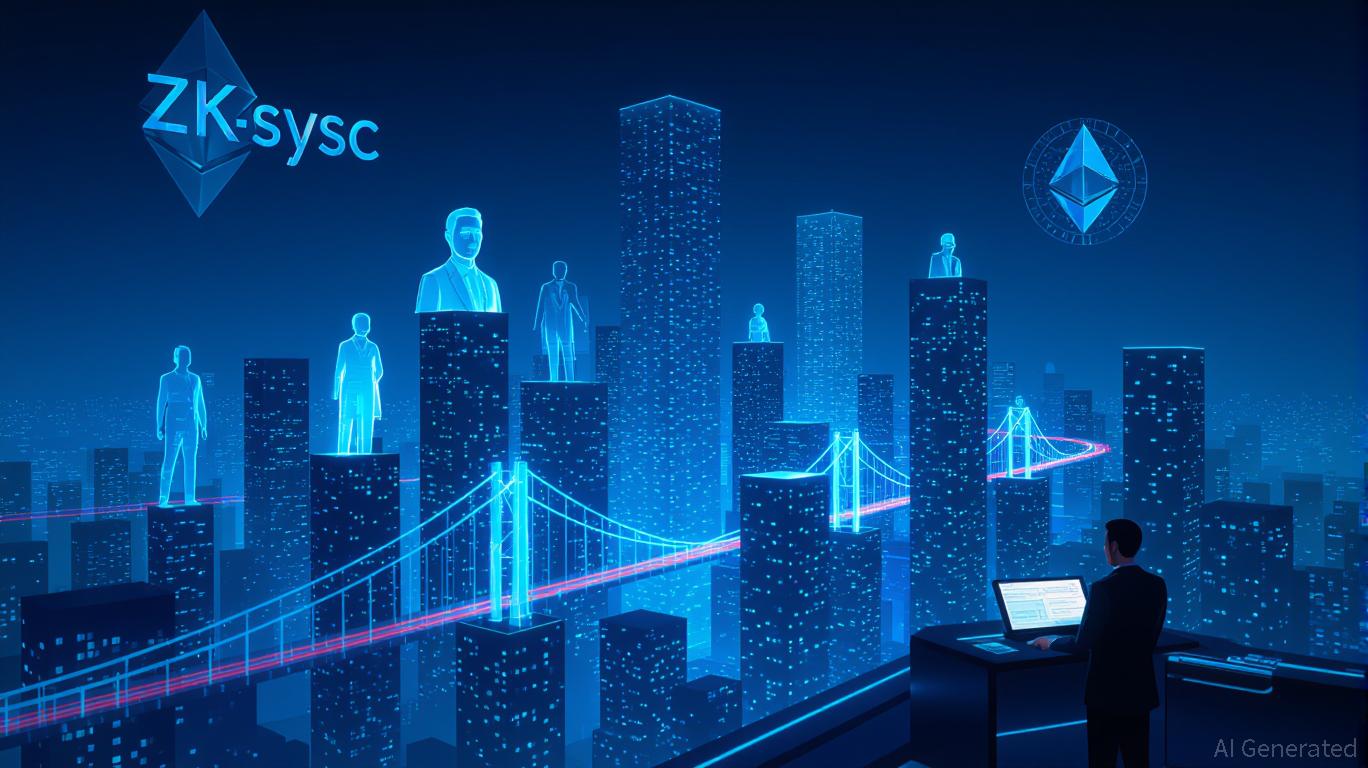
Vitalik Buterin’s recent praise for ZKsync’s Atlas upgrade has energized the Ethereum Layer 2 landscape, highlighting zero-knowledge (ZK) rollups as a vital component in Ethereum’s efforts to scale. As a prominent proponent of ZK technology, Buterin described the Atlas upgrade as both “underrated and valuable,” emphasizing its significance in connecting liquidity between Ethereum’s mainnet and Layer 2 solutions through the ZK Stack framework. This endorsement has not only validated ZKsync’s technical progress but also triggered a 120% increase in its token value, attracting attention from major institutions such as Citi and Deutsche Bank. For investors, this marks a turning point in Ethereum’s scaling journey and signals the growing importance of ZK-based innovations.
ZKsync Atlas: Advancing Performance and Strategy
Launched in 2025, the Atlas upgrade represents a major leap for ZKsync, enabling up to 15,000 transactions per second (TPS) with almost immediate finality. This addresses Ethereum’s persistent scalability issues while upholding security and decentralization. The ZK Stack framework further strengthens the ecosystem by establishing a unified liquidity layer between Ethereum and ZKsync, minimizing fragmentation and facilitating efficient cross-chain transactions.
Buterin’s endorsement is particularly impactful given his influence on Ethereum’s direction. His support for ZKsync aligns with Ethereum’s post-Merge goals, especially the implementation of Proto-Danksharding (EIP-4844), which aims to lower data costs for rollups. This alignment suggests that ZK-based solutions like ZKsync are central to Ethereum’s long-term strategy.
Comparing ZKsync with Other Layer 2 Solutions
Despite ZKsync’s impressive technical achievements, its standing among Layer 2 platforms is complex. As of November 2025, Arbitrum leads the market with 45% of Layer 2 total value locked (TVL), holding $16.63 billion, while ZKsync’s TVL stands at $569 million. Optimism follows with $6 billion in TVL. However, ZKsync’s post-Atlas TPS of 15,000—and a planned increase to 30,000 TPS with the Fusaka upgrade—surpasses the throughput of optimistic rollups like Arbitrum and Optimism, which focus more on ecosystem maturity than raw speed.
Another area where ZKsync excels is transaction fees. Following EIP-4844, ZK rollups have reduced most transaction costs to below $0.01, compared to Ethereum’s average of $3.78. This efficiency, combined with ZKsync’s Prividium solution for private, institutional-grade transactions, has attracted both enterprise clients and DeFi projects seeking scalable infrastructure.
Institutional Interest and Mainstream Adoption
The impact of the Atlas upgrade extends beyond technical improvements. Large financial institutions are increasingly exploring ZK-based solutions for practical use cases. For example, Citi and Deutsche Bank are evaluating ZKsync’s Prividium for permissioned Layer 2 transactions, indicating a shift toward enterprise adoption. This trend is echoed by the October 2025 mainnet launch of Lighter, which used zero-knowledge proofs to help Ethereum reach a record 24,000 TPS.
However, ZKsync still faces challenges in expanding its user base. While Arbitrum boasts 1.37 million daily active wallets, ZKsync’s numbers are smaller. Nevertheless, Buterin’s endorsement has accelerated ZKsync’s growth, with its TVL increasing by 120% after the announcement. The upcoming Fusaka upgrade may further narrow the gap with competitors.
Shaping Ethereum’s Scalability and the Future of Layer 2
Buterin’s backing of ZKsync reflects a broader movement toward ZK-based scaling solutions. Unlike optimistic rollups, which depend on fraud proofs and can experience delays, ZK rollups use cryptographic proofs to validate transactions instantly. This approach aligns with Ethereum’s focus on data availability and cost reduction following the Merge. As a result, ZKsync and the ZK Stack framework are positioned as key drivers of Ethereum’s ambitious scaling goals.
For investors, the central question is whether ZKsync can maintain its momentum. While Arbitrum’s dominance in TVL and Optimism’s established DeFi ecosystem present strong competition, ZKsync’s technical innovation and growing institutional partnerships offer a compelling alternative. The Fusaka upgrade’s target of 30,000 TPS, combined with the cost-saving benefits of EIP-4844, could further cement ZKsync’s role in Ethereum’s scaling narrative.
Conclusion: ZKsync’s Strategic Role in Ethereum’s Evolution
Vitalik Buterin’s endorsement of ZKsync is more than just technical approval—it’s a strategic signal for Ethereum’s future direction. By championing ZK-based scaling, Buterin has increased ZKsync’s prominence and credibility, drawing interest from both retail and institutional investors. While competition among Layer 2 solutions remains fierce, ZKsync’s emphasis on throughput, cost-effectiveness, and enterprise adoption positions it as a pivotal player in Ethereum’s ongoing development. For investors, this presents a strong opportunity to support the infrastructure that will drive Ethereum’s next stage of growth.
Disclaimer: The content of this article solely reflects the author's opinion and does not represent the platform in any capacity. This article is not intended to serve as a reference for making investment decisions.
You may also like
The Increasing Economic Strain of Alzheimer’s Disease and Its Effects on Healthcare Systems and Long-Term Care Industries
- Alzheimer's disease's global economic burden is projected to surge from $1.6 trillion in 2023 to $14.5 trillion by 2050, straining healthcare systems and public infrastructure. - The Alzheimer's therapeutics market is growing at 23.4% CAGR, driven by disease-modifying therapies and tech innovations like AI-driven care platforms. - Strategic investments in dementia infrastructure include $3.9B U.S. NIH funding and startups like Isaac Health securing $10.5M for in-home memory clinics. - Public-private part

Building Robust Investment Portfolios: Insights Gained from Economic Crises and Policy Actions

Hyperliquid (HYPE) Price Rally: The Role of DeFi Advancements and Investor Sentiment in Driving Recent Market Fluctuations
- Hyperliquid (HYPE) surged to $59.39 in 2025 before retreating, driven by DeFi innovations and volatile market sentiment. - Technical advancements like HyperBFT consensus and USDH stablecoin attracted 73% of decentralized trading volume, while institutional partnerships stabilized the ecosystem. - Despite short-term volatility near $36, bullish RSI patterns and $3 trillion trading volume suggest potential for a $59 rebound, though sustained momentum above $43 is critical. - Analysts project HYPE could rea
The Driving Forces Behind Economic Growth in Webster, NY
- Webster , NY, transformed a 300-acre Xerox brownfield into a high-tech industrial hub via a $9.8M FAST NY grant, boosting industrial and real estate growth. - Public-private partnerships enabled infrastructure upgrades, attracting $650M fairlife® dairy projects and 250 high-paying jobs by 2025. - Industrial vacancy rates dropped to 2%, while residential values rose 10.1% annually, highlighting synergies between infrastructure and economic development. - The model underscores secondary markets' potential
Trending news
MoreCrypto prices
More






