
The Transformation of Webster, NY: How Targeted Infrastructure Funding and the Revamp of Xerox’s Campus Mark a New Chapter for Industrial Property
- Webster , NY redevelops Xerox’s former campus into a $1B industrial hub with $9.8M FAST NY grant and $283M state funding. - Infrastructure upgrades, including road and grid modernization, attract $650M fairlife® dairy facility, reducing vacancy rates to 2%. - Mixed-use zoning with 500 housing units and 200K sq ft commercial space aims to address workforce retention, mirroring Research Triangle Park’s model. - Public-private partnerships (PPPs) leverage state funds for wastewater and waterfront projects,
Transforming Upstate New York’s Industrial Real Estate
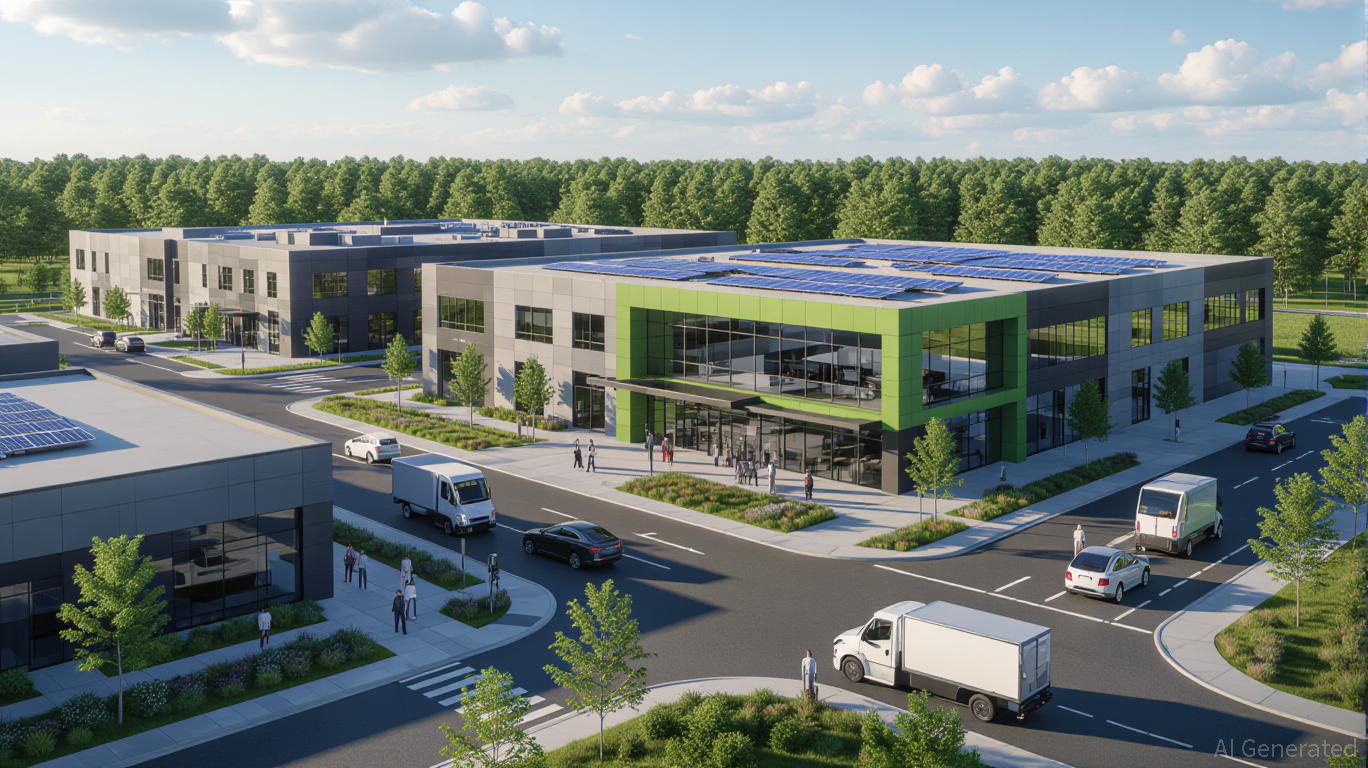
Upstate New York’s industrial property market is experiencing dramatic changes, fueled by major infrastructure investments and the innovative redevelopment of suburban technology campuses. Leading this wave of change is Webster, NY, where the former Xerox campus is being converted into a $1 billion industrial center. Supported by a $9.8 million FAST NY grant and $283 million in state infrastructure funding, this initiative serves as a model for revitalizing suburban industrial spaces to meet the needs of a post-pandemic world.
Infrastructure Investments Drive Industrial Expansion
The transformation in Webster is the result of coordinated public and private funding. The FAST NY grant, along with state-sponsored upgrades—such as road improvements, expanded sewer systems, and modernized electrical grids—has turned a 300-acre brownfield into a prime location for advanced manufacturing and logistics companies. These enhancements have already attracted substantial private investment, including a $650 million fairlife® dairy facility expected to generate 250 jobs by 2025.
Webster’s approach to infrastructure has had a clear impact: industrial vacancy rates have dropped to just 2%, far below the projected national average of 7.5% in 2025. This mirrors a broader trend in suburban markets, where companies increasingly seek facilities equipped for automation and robust supply chains. For investors, Webster demonstrates how infrastructure grants can reduce risk and speed up tenant commitments in large-scale redevelopment projects.
Repurposing Suburban Tech Campuses: A Nationwide Movement
Webster’s redevelopment is part of a larger trend across the country. In the Chicago suburbs, Allstate’s 232-acre corporate campus in Northbrook was acquired by Dermody Properties for $232 million and transformed into a 3.2 million-square-foot logistics park. Similarly, in Silicon Valley, former Amazon office campuses in Milpitas have been converted for industrial use. These projects highlight the advantages of repurposing existing structures over new construction, as well as the rising demand for logistics space driven by e-commerce and nearshoring.
Innovative Mixed-Use Zoning at the Xerox Campus
What sets the Xerox campus in Webster apart is its mixed-use zoning strategy. The redevelopment plan includes 500 residential units and 200,000 square feet of commercial space, aiming to create a vibrant, self-sustaining community that addresses the challenge of workforce retention—a key issue for industrial centers. This approach is similar to the model seen at North Carolina’s Research Triangle Park, where suburban office parks are being reimagined to include restaurants, retail, and housing, offering urban-style amenities in a suburban setting. Such hybrid developments are increasingly appealing to companies looking to boost employee satisfaction and productivity.
Public-Private Partnerships: A Key to Success
Webster’s progress highlights the effectiveness of public-private partnerships. The town has utilized state funding for upgrades to its wastewater treatment plant and the Sandbar Waterfront Revitalization Project, making the area more attractive to both residents and investors. Combined with the Xerox redevelopment, these efforts position Webster as a leading example of how collaboration between the public and private sectors can drive industrial growth while supporting long-term sustainability.
For investors, the main takeaway is that infrastructure grants and thoughtful zoning policies are reshaping the suburban industrial real estate landscape. The Xerox campus, with its combination of logistics-ready facilities and mixed-use amenities, provides a blueprint for future developments in markets where e-commerce, automation, and workforce needs intersect.
Looking Forward: Setting the Standard for Future Development
As Webster’s industrial sector continues to evolve, the focus will be on sustaining growth through 2035. With its low vacancy rates and strategic location near major transportation routes, Webster is well-positioned to benefit from the resurgence of U.S. manufacturing and the growth of e-commerce logistics. Investors should look for markets that prioritize infrastructure improvements and recognize the increasing value of mixed-use developments for attracting and retaining talent.
In today’s landscape, industrial real estate has become a critical component of global supply chains. Webster’s transformation stands as a compelling example, and as Governor Kathy Hochul’s economic strategy unfolds, the town’s experience is likely to inspire other communities aiming to convert suburban tech campuses into thriving industrial hubs.
Disclaimer: The content of this article solely reflects the author's opinion and does not represent the platform in any capacity. This article is not intended to serve as a reference for making investment decisions.
You may also like
Investment Prospects in STEM Learning and Workforce-Ready Talent Streams: Linking with Astar 2.0
- Global STEM education demand surges as AI, blockchain, and biotech reshape industries, creating workforce skill gaps. - Astar 2.0's DeFi innovations (ZK Rollups, interoperability) indirectly support STEM through blockchain infrastructure and cross-chain collaboration. - U.S. and Singapore prioritize tech-integrated workforce strategies, aligning with Astar 2.0's potential to bridge DeFi and STEM education via scalable tools. - Investors can leverage Astar 2.0's $1.399B TVL and hybrid AMM-CEX model to fun

The ZK Transformation: Evaluating How Zero-Knowledge Technology Influences the Future Development of Blockchain
- ZK-rollups scale blockchain networks by bundling transactions, achieving 43,000 TPS and 30% lower gas fees, attracting institutions like Goldman Sachs and JPMorgan . - ZK technology resolves privacy-scalability paradox by enabling verifiable transactions without data exposure, adopted by EU regulators and enterprises like Nike and Sony . - Challenges persist: ZK-SNARKs require heavy computation, trusted setup risks exist, and privacy conflicts with AML regulations in some jurisdictions. - $725M+ VC inves

The Influence of Vitalik Buterin's Support for ZKsync on the Advancement of Scalable Blockchain Technologies: Evaluating the Prospects for Long-Term Investment in Pr
- Vitalik Buterin's 2025 endorsement of ZKsync accelerated its rise as a scalable Ethereum Layer-2 solution with 30,000 TPS and $3.3B TVL. - ZKsync's EVM compatibility and institutional partnerships contrast with StarkNet's quantum-resistant STARK proofs and Aztec's privacy-first architecture. - Analysts project ZK token prices at $0.40–$0.60 by 2025, while StarkNet faces adoption barriers and Aztec navigates regulatory challenges in privacy-focused DeFi. - The $7.59B ZKP market (2033 forecast) hinges on b

ZK Atlas Enhancement: Transforming Blockchain Scalability and Paving the Way for Institutional Integration
- ZKsync’s 2025 Atlas Upgrade achieves 15,000–43,000 TPS with $0.0001/transaction costs, boosting blockchain scalability for institutions. - Deutsche Bank , Sony , and Citi adopt ZKsync for tokenized assets and privacy-driven transactions, citing compliance and efficiency gains. - Market forecasts predict 60.7% CAGR for ZK Layer-2 solutions through 2031, with Fusaka upgrade targeting 30,000 TPS to solidify ZKsync’s leadership.
Trending news
MoreCrypto prices
More





