
XRP News Today: "U.S. Tightens Crypto Regulations as Worldwide Innovation Accelerates"
- U.S. lawmakers accuse Biden administration of stifling crypto via "Operation Choke Point 2.0," citing regulatory pressure on banks to cut ties with crypto firms. - Report highlights systemic "debanking" of crypto entities, with abrupt account closures and restrictions harming innovation and growth. - Proposed CLARITY Act seeks clear digital asset rules to counter SEC's "regulation by enforcement" strategy and prevent regulatory overreach. - Global crypto hubs like Singapore and UAE advance regulated fram
U.S. Accused of Suppressing Crypto Industry Through Aggressive Regulation
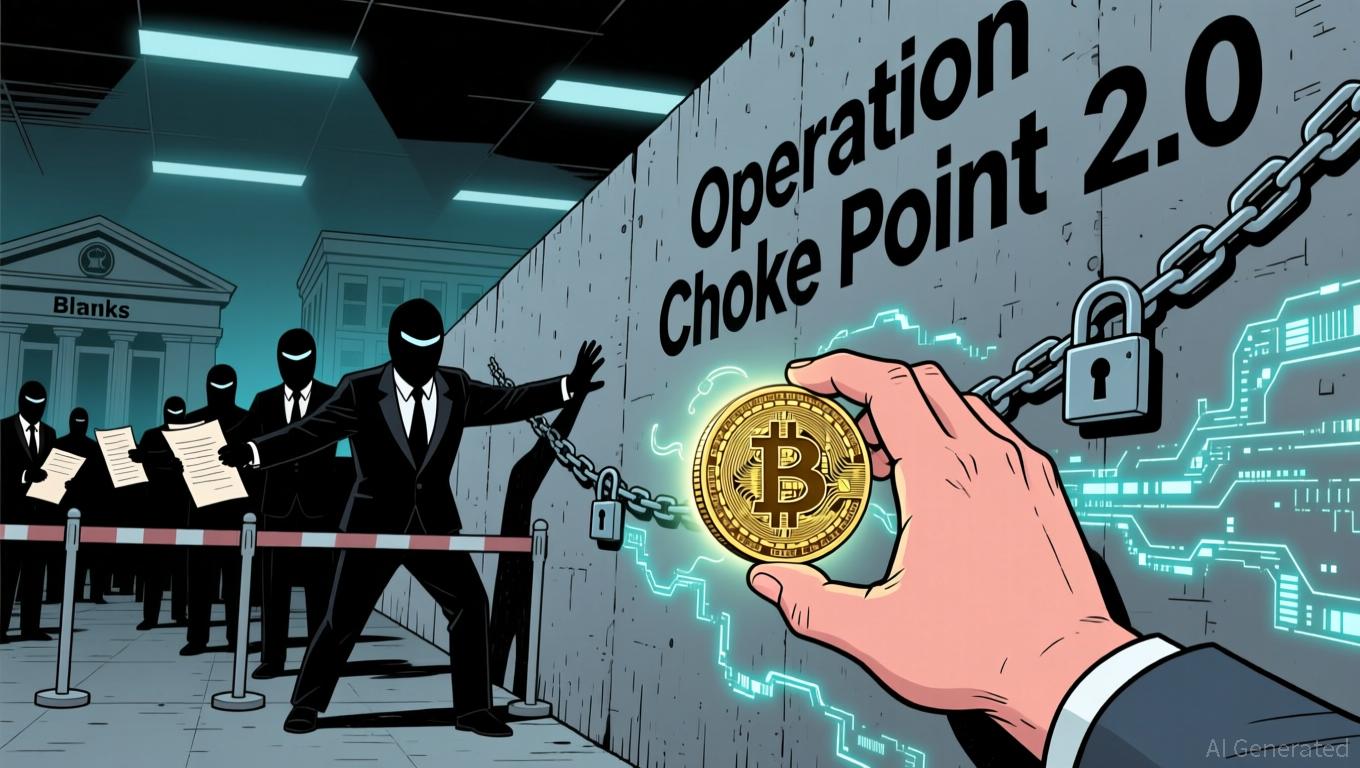
A recent report from the House Financial Services Committee alleges that the U.S. government has been actively working to undermine the cryptocurrency sector through a coordinated series of regulatory measures, informally referred to as "Operation Choke Point 2.0."
Republican leaders French Hill and Dan Meuser outlined claims that federal agencies—such as the Securities and Exchange Commission (SEC) and the Federal Reserve—have relied on ambiguous guidelines, broad discretionary powers, and strict enforcement tactics to pressure banks into distancing themselves from crypto businesses and their leaders. The report draws comparisons to the original "Choke Point" initiative of the 2010s, which targeted industries deemed high-risk, and suggests that the Biden administration is orchestrating a similar campaign to slow digital asset innovation.
The committee’s findings point to a pattern of "debanking," where financial institutions have withdrawn services from crypto companies due to unclear regulatory expectations. Lawmakers argue that this environment has stifled both growth and technological progress, with some firms experiencing sudden account closures or new restrictions. In response, Hill and Meuser have put forward legislative proposals, such as the CLARITY Act, which aims to establish transparent rules for digital assets and curb what they describe as the SEC’s practice of regulating through enforcement actions. The bill seeks to provide legal certainty and prevent future regulatory excesses.
Global Developments: Crypto-Friendly Policies Gain Momentum Abroad
While the U.S. contends with regulatory uncertainty, other countries are moving forward with frameworks designed to foster crypto innovation. Singapore’s Monetary Authority recently broadened Ripple’s Major Payment Institution license, enabling the company to expand its crypto payment offerings using XRP and its stablecoin RLUSD. This move highlights Singapore’s growing reputation as a leader in regulated blockchain development, with Ripple noting the city-state’s pivotal role in international payments.
Similarly, the United Arab Emirates enacted a comprehensive central bank law in December 2025, bringing cryptocurrencies, decentralized finance (DeFi), and tokenized assets under centralized regulation. The UAE aims to establish itself as a global hub for digital asset activity through these reforms.
International Regulatory Trends: Striking a Balance
Globally, approaches to crypto oversight differ. The United Kingdom has expanded its Cryptoasset Reporting Framework (CARF) to include domestic transactions starting in 2026, granting tax authorities greater access to both local and cross-border data in an effort to combat tax evasion. In South Korea, the "travel rule" now applies to all virtual asset transactions, even those under one million won, requiring identity verification for every trade. These initiatives reflect a worldwide shift toward stricter regulation, as governments seek to balance innovation with compliance and risk management.
Ongoing Debate Over U.S. Crypto Regulation
The release of the House report has reignited discussions about the need for clear regulatory guidelines in the U.S. While critics argue that the accusations against the Biden administration oversimplify complex enforcement issues, supporters of the CLARITY Act emphasize the importance of a unified regulatory framework to prevent inconsistencies and regulatory loopholes. With the Senate Banking Committee expected to finalize new market structure legislation by early 2026, the debate over the future of crypto regulation in the U.S. remains heated.
As nations around the world refine their approaches to digital assets, the United States stands at a pivotal crossroads. The ongoing tension between regulatory caution and the desire for industry growth will likely influence not only the domestic crypto landscape but also have far-reaching effects on global markets.
Disclaimer: The content of this article solely reflects the author's opinion and does not represent the platform in any capacity. This article is not intended to serve as a reference for making investment decisions.
You may also like
Avalanche executive says future lies in purpose-built blockchains
Euro stablecoins surpass $1b, represent 0.006% of Eurozone money supply
Ethereum Retail Investor Exodus: Why the Bleak Outlook Limits an ETH Rebound
Trending news
MoreCrypto prices
More





