
Infrastructure-Focused Industrial Property Sees Growing Traction in Upstate New York
- Upstate NY's industrial real estate is transforming via infrastructure grants and public-private partnerships, exemplified by Webster's $9.8M FAST NY-funded 300-acre brownfield-to-industrial-hub conversion. - Strategic upgrades in Webster reduced industrial vacancy to 2%, attracting $650M private investments like fairlife® dairy plant and creating 250 jobs while boosting residential property values by 10.1% annually since 2020. - The "bluefield" model blending manufacturing with residential/commercial zo
Transforming Upstate New York’s Industrial Real Estate
Upstate New York’s industrial property sector is experiencing significant change, fueled by targeted infrastructure spending and collaborative efforts between the public and private sectors. As businesses look to diversify their manufacturing and distribution networks, areas like Webster, NY, are demonstrating how strategic grants can revitalize dormant land. The allocation of a $9.8 million FAST NY grant to Webster is a prime example, setting the stage for a 300-acre brownfield to become a modern industrial center. This transformation highlights how public funding can be leveraged to attract private investment, providing a model for economic growth in key development zones.
Webster, NY: Revitalization Through Infrastructure
With the support of the FAST NY grant, a former Xerox brownfield in Webster has been converted into a ready-to-develop site for advanced manufacturing and logistics operations. Improvements such as redesigned roadways, expanded sewer systems, and upgraded electrical infrastructure have dramatically lowered industrial vacancy rates to just 2%, well below the national average of 7.4%. This has drawn major private investments, including a $650 million fairlife® dairy facility, which is expected to generate 250 new jobs and boost the local economy.
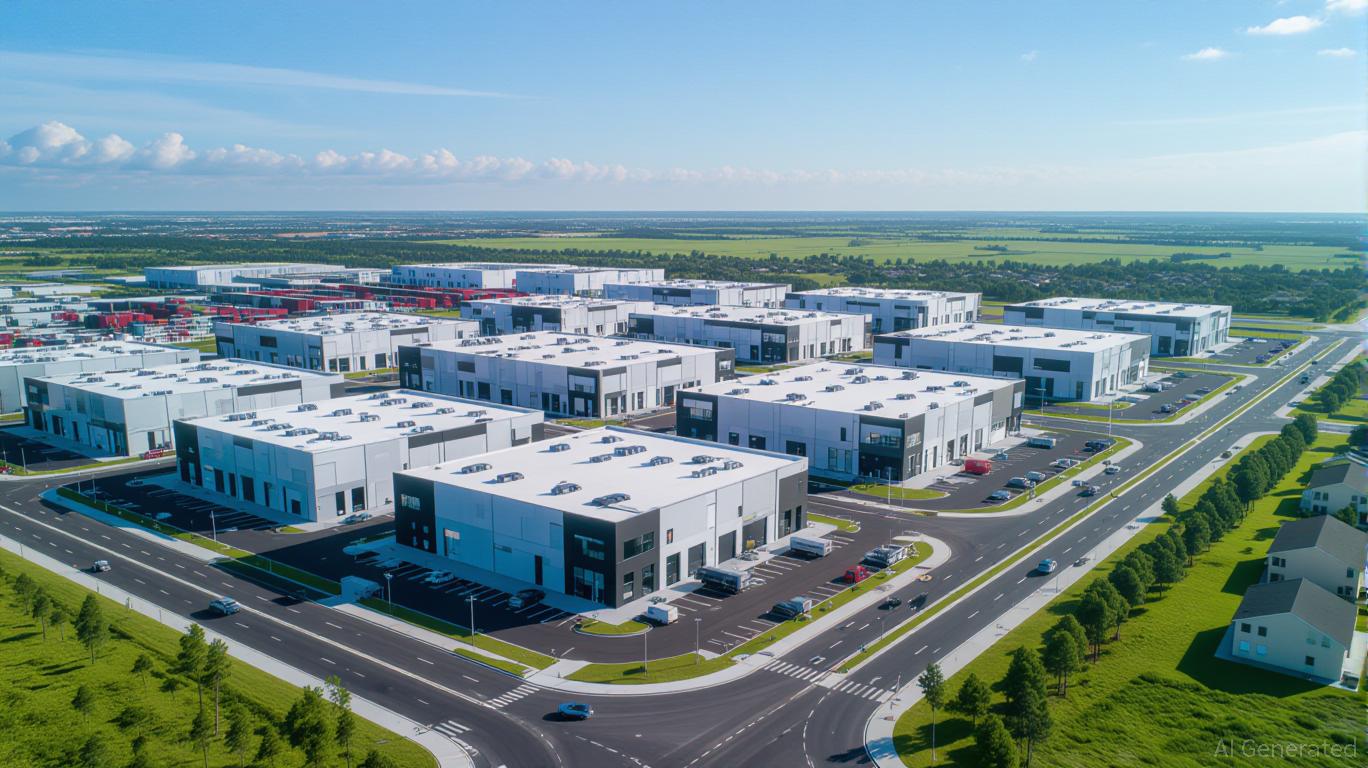
The positive impact extends beyond the industrial sector. Residential property prices in Webster have climbed by 10.1% per year since 2020, reflecting the area’s growing appeal as a mixed-use community. This approach, which integrates manufacturing, residential, and commercial spaces, shortens commutes and supports housing for workers—addressing a key challenge for today’s industrial centers.
The Role of Partnerships and Location
The redevelopment of the Xerox site in Webster showcases the benefits of collaboration between government and private entities. While the FAST NY grant laid the groundwork, Xerox contributed an additional $1.8 million for road enhancements, and further support is available through the NY Forward Program. These partnerships create a strong foundation for attracting industries such as semiconductor manufacturing and renewable energy, which depend on reliable infrastructure and access to major highways like I-90.
By 2026, Webster is projected to offer nearly one million square feet of industrial space, making it a cost-effective alternative to pricier coastal regions. This development supports Governor Hochul’s initiative to decentralize manufacturing and reinforce regional supply chains, ensuring the site’s long-term competitiveness.
Wider Lessons for Industrial Land Investment
Webster’s achievements provide a template for other communities in Upstate New York. While some areas face high warehouse vacancy rates, focused infrastructure investment can turn neglected land into valuable assets. The Northeast Area for Technology (NEAT) site, for example, illustrates how former industrial sites can be adapted for contemporary manufacturing needs while also benefiting local communities.
- Proximity to major transportation routes
- Availability of public funding
- Strong public-private collaboration
These are key factors for investors to consider as companies increasingly seek resilient and cost-effective supply chains. Locations like Webster are poised to become essential hubs in the shifting landscape of industrial real estate.
Key Takeaways
The experience in Webster, NY demonstrates the powerful impact of infrastructure-led redevelopment. By utilizing grants such as FAST NY and fostering strong partnerships, underused properties can be transformed into thriving industrial centers. For investors, aligning with strategic development zones where infrastructure improvements drive demand and asset performance is crucial. As Upstate New York continues to attract manufacturers and logistics providers, the strategies applied in Webster are likely to influence future trends in industrial real estate.
Disclaimer: The content of this article solely reflects the author's opinion and does not represent the platform in any capacity. This article is not intended to serve as a reference for making investment decisions.
You may also like
The HYPE Token Crypto Rally: Unveiling the Driving Force Behind Its Week-Long Surge
- HYPE Token's 7-day surge in late 2025, reaching $35.08, was driven by protocol upgrades, institutional backing, and retail FOMO. - Institutional investments like Paradigm’s $581M stake and retail-driven momentum mirrored the 2021 Dogecoin rally. - However, looming token unlocks and bearish indicators, including a $11B unlock of 237M tokens, raised sustainability concerns. - Technical analysis showed mixed signals, with consolidation near support levels and short-term volatility risks, while broader trend

How CFTC-Recognized Platforms Such as CleanTrade Are Transforming the Landscape of Clean Energy Investments
- CFTC-approved CleanTrade introduces a regulated SEF for clean energy derivatives, addressing market fragmentation and liquidity gaps. - The platform enables institutional-scale trading of vPPAs/RECs, achieving $16B notional volume in two months by aggregating demand/supply. - Integrated risk analytics (e.g., CleanSight) enhance transparency, allowing investors to hedge project-specific risks like grid congestion and curtailment. - Dual investment pathways attract hedge funds/pension funds through direct

The Rise of CFTC-Regulated Clean Energy Markets: Opening a New Chapter for Institutional Investors
- CFTC's 2025 approval of REsurety's CleanTrade as a SEF marks a landmark shift in clean energy markets by introducing standardized, transparent trading for VPPAs and RECs. - The platform attracted $16B in notional value within two months, enabling rapid institutional-grade transactions that previously took months to negotiate. - By addressing liquidity gaps and enabling precise risk modeling, CleanTrade is accelerating capital flows into decarbonization while bridging ESG investment gaps for institutional

The Increasing Overlap Between Health and Financial Wellbeing in Managing Personal Finances
- Global wellness economy to hit $9 trillion by 2028, driven by holistic well-being trends. - Millennials/Gen Z prioritize wellness as lifestyle, with 55% spending over $100/month on health. - Employers integrate financial wellness into health programs to reduce burnout and boost productivity. - Investors target wellness-driven SaaS, healthcare tech , and financial literacy platforms for holistic solutions.

Trending news
MoreCrypto prices
More





