
Bitcoin News Update: Tether's USDT Rating Cut Sparks Conflict Between Cryptocurrency and Conventional Financial Systems
- Tether CEO dismisses S&P's downgrade of USDT's stability rating, blaming traditional finance for misunderstanding its model. - S&P cited Bitcoin's 5.6% reserve exposure and transparency gaps, downgrading the peg to "weak" amid $184B market cap. - Tether defends its decade-long dollar peg and $112.4B in U.S. Treasuries, rejecting calls for Big Four audits. - Market reactions highlight depegging risks and insolvency concerns during Bitcoin volatility, intensifying crypto-traditional finance tensions. - Reg
Tether Responds to S&P Global Ratings Downgrade
Paolo Ardoino, CEO of Tether, has criticized S&P Global Ratings for lowering its assessment of the stablecoin’s reliability, labeling the agency’s evaluation as “outdated.” Ardoino argued that traditional financial institutions fail to grasp Tether’s business model. S&P recently downgraded USDT’s peg stability from “constrained” to “weak,” citing the company’s increased investments in riskier assets such as Bitcoin and ongoing concerns about the transparency of its reserves. This decision has reignited discussions about the stability of the world’s largest stablecoin, which reportedly boasts a market capitalization of $184 billion.
S&P’s analysis revealed that Bitcoin now makes up 5.6% of Tether’s reserves, surpassing the company’s own 3.9% overcollateralization margin. The agency cautioned that a significant drop in the value of Bitcoin or other volatile holdings—including gold, corporate bonds, and secured loans—could leave USDT undercollateralized. Although the majority of Tether’s reserves (75%) are held in low-risk U.S. Treasury bills and cash equivalents, S&P criticized the company for not providing enough information about its custodians, counterparties, and how it manages reserves.
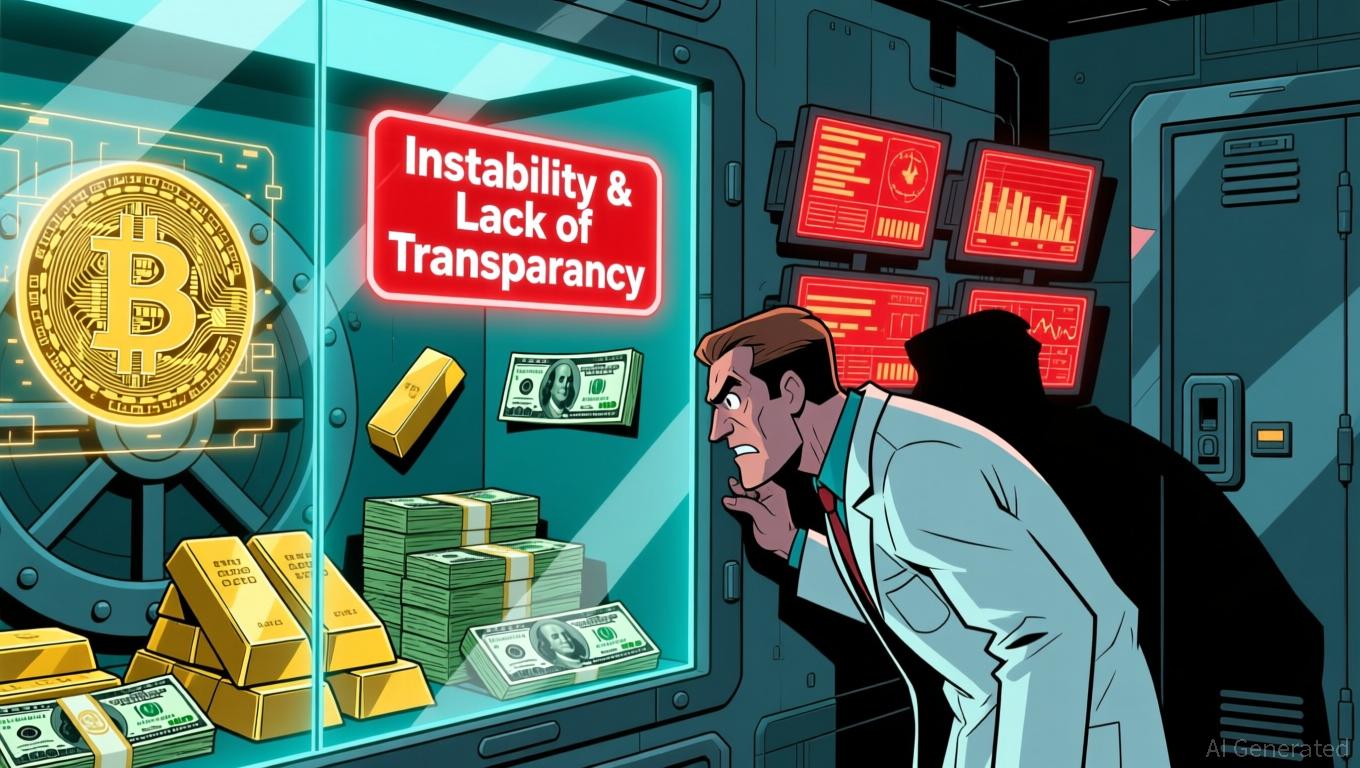
Tether has strongly pushed back against the downgrade. Ardoino described the move as evidence of “hostility” toward firms that disrupt traditional finance. He argued on X that conventional rating systems have a history of misleading investors, referencing past banking failures. Tether highlighted its consistent maintenance of the dollar peg for over a decade, its $112.4 billion in U.S. Treasury holdings, and $14 billion in gold reserves, according to recent reports.
The downgrade has triggered a range of reactions within the cryptocurrency community. Many Chinese traders, who depend on USDT for international transactions, voiced concerns online about the risk of the stablecoin losing its peg. Meanwhile, industry observers such as BitMEX co-founder Arthur Hayes have warned that Tether’s financial position could become precarious if Bitcoin’s price were to fall sharply, given the company’s exposure to volatile assets.
S&P also pointed out operational vulnerabilities at Tether, such as limited separation of assets to guard against insolvency and weaknesses in its redemption processes. The agency suggested that Tether’s rating could improve if the company reduced its exposure to high-risk assets and increased transparency. Despite these recommendations, Tether has consistently declined to undergo independent audits by major accounting firms, though it has released quarterly reserve attestations since 2021.
This situation highlights ongoing tensions in the stablecoin industry. While USDT remains the leading digital dollar with $184 billion in liabilities, regulatory bodies and rating agencies are stepping up their scrutiny of how reserves are managed. Other stablecoins like USD Coin (USDC) face similar issues, but Tether’s size and its assertive public relations approach have kept it at the center of debates over the future of cryptocurrency in global finance.
With Bitcoin currently trading around $89,600—down 28% from its October high—the pressure on Tether’s business model is mounting. The company’s ability to maintain trust in its reserves amid regulatory and market challenges will play a crucial role in shaping the evolution of stablecoins and their place in the broader financial landscape.
Disclaimer: The content of this article solely reflects the author's opinion and does not represent the platform in any capacity. This article is not intended to serve as a reference for making investment decisions.
You may also like
MMT Price Forecast Fluctuations: Changes in Institutional Outlook and Macroeconomic Drivers
- Mazda's stock volatility (2023-2025) stems from institutional investor caution and macroeconomic pressures like inflation, interest rates, and EV transition challenges. - Institutional ownership remains stable (16.8% by Master Trust Bank, 5.1% by Toyota), but firms like Morgan Stanley reduced stakes amid concerns over EV adaptation. - Strategic cost-cutting (85% lower EV investment) and repurposed production lines aim to mitigate risks, yet Q3 2025 showed 9% sales decline and ¥46.1B operating loss. - Div

RLUSD Market Cap Climbs Nearly 18% as XRP Ledger Tokenization Expands
Quick Take Summary is AI generated, newsroom reviewed. The market cap of Ripple's stablecoin RLUSD has increased by nearly 18% over the last 30 days to reach approximately $420 million. Real-World Asset (RWA) tokenization on the XRP Ledger (XRPL) grew by 8.77%, with 47 projects now hosting $158 million in tokenized assets. Vanguard officially began allowing its clients to access crypto ETFs (including those tracking BTC, ETH, and XRP) on its brokerage platform. The combined growth in RLUSD, RWA, and instit
XRP ETF Holdings Reveal Strong Institutional Confidence
Quick Take Summary is AI generated, newsroom reviewed. Franklin Templeton’s XRP ETF holds 53.22 million XRP valued at $107.08M. The ETF’s market value exceeds its NAV, reflecting strong investor demand. ETFs provide regulated exposure to crypto without holding coins directly. Institutional participation could increase market stability and confidence.References Franklin Templeton reports its $XRP spot ETF holding 53.22M $XRP valued near $107.08M and a total NAV of $78.67M.
Vanguard Lists XRP ETFs as Inflows Surpass $756 Million and Institutional Demand Accelerates
Quick Take Summary is AI generated, newsroom reviewed. Vanguard lists XRP ETFs for the first time, marking a major shift from its traditional anti-crypto stance. XRP ETFs from Franklin Templeton and Canary Capital gain approval on Vanguard’s platform. XRP ETFs experience eleven straight days of inflows totaling $756 million. Inflows represent around 0.6 percent of XRP’s market cap, tightening liquid supply.References X Post Reference
Trending news
MoreCrypto prices
More





