
The COAI Token Fraud and the Precarious Nature of Cryptocurrency Oversight in Developing Economies: Urging International Collaboration and Caution Among Investors
- COAI token's 88% devaluation in 2025 exposed DeFi's systemic flaws in emerging markets, causing $116.8M investor losses. - Centralized wallet control (87.9% supply in ten wallets) enabled manipulation and liquidity crises, exploiting U.S. CLARITY Act ambiguities. - Emerging market regulators, like Nigeria’s SEC and Indonesia’s FSA, struggle with cross-border fraud and inconsistent AML/KYC enforcement. - Global efforts like EU’s MiCA and U.S. SEC proposals aim to harmonize rules, but enforcement gaps pers
COAI Token Collapse Exposes DeFi Weaknesses in Emerging Markets
In 2025, the COAI token experienced a dramatic downfall, losing 88% of its value and resulting in $116.8 million in investor losses. This event has highlighted significant structural weaknesses within decentralized finance (DeFi) systems, especially in developing regions where regulatory oversight has not kept pace with rapid technological change. The token’s algorithmic stablecoins, xUSD and deUSD, both failed to maintain their dollar value during a liquidity crunch. This crisis was intensified by the fact that nearly 88% of the token’s supply was held by just ten wallets, creating conditions ripe for coordinated manipulation, mass sell-offs, and a severe liquidity shortfall that ultimately harmed everyday investors.
This incident raises a pressing question: How can countries with fragmented regulations and legal loopholes protect investors as digital assets and AI-powered scams become more prevalent?
Dissecting the Scam: Centralization, Legal Uncertainty, and Abuse
The downfall of COAI is emblematic of deeper issues plaguing the DeFi sector. A report from the Financial Stability Board revealed that COAI exploited ambiguous legal definitions under the U.S. CLARITY Act, which failed to clearly categorize AI-enhanced tokens. This lack of clarity allowed COAI to operate with minimal scrutiny in regions such as Southeast Asia, where enforcement of anti-money laundering (AML) and know-your-customer (KYC) rules is inconsistent. The token’s governance, dominated by a small group of wallets, further eroded transparency and enabled manipulative schemes and algorithmic breakdowns that led to a full-blown liquidity crisis.

Emerging economies have proven especially vulnerable to these tactics. For example, Nigeria’s financial regulator has warned of scams using AI-generated deepfake videos to impersonate public figures and lure investors into unregulated platforms like CBEX and TOFRO. In Indonesia, authorities have introduced a three-level approval process for digital financial assets to address regulatory gaps, but challenges remain, particularly with foreign entities targeting local investors. These cases illustrate a recurring problem: while regulators are starting to respond, their measures often fall short against sophisticated, cross-border fraud operations.
Regulatory Developments: Advances and Ongoing Challenges
Efforts to regulate the crypto sector have accelerated globally in 2025, yet international coordination remains limited. The European Union’s Markets in Crypto-Assets (MiCA) initiative aims to standardize stablecoin rules and require capital reserves, influencing policy in regions like Southeast Asia and Africa. However, the U.S. CLARITY Act’s lack of clear guidance on AI tokens has led to conflicting interpretations between regulatory bodies, undermining investor trust. Meanwhile, the U.S. Department of Justice has focused on dismantling fraud networks in Southeast Asia, particularly in areas where organized crime groups exploit weak governance to run large-scale scams.
Progress in emerging markets is uneven. Kenya’s Virtual Assets Service Providers (VASP) Bill of 2025 requires crypto platforms to obtain licenses and imposes harsh penalties for unregistered operations, but it does not address foreign fraudsters or offer protections for whistle-blowers. Nigeria’s Investment and Securities Act (ISA) 2025, on the other hand, provides clear definitions for crypto assets and criminalizes Ponzi schemes, though enforcement remains a challenge given the scale of previous losses, which exceed 1 trillion naira from crypto-related scams. These initiatives, while positive, underscore the need for regulatory systems to keep pace with the evolving nature of financial fraud.
Looking Ahead: Collaboration, Technology, and Investor Awareness
The fallout from the COAI token scandal calls for a comprehensive response. First, regulators worldwide need to align their definitions and enforcement strategies. The U.S. SEC’s proposed framework for digital assets, which prioritizes transparency and minimizes conflicts of interest, could serve as a blueprint. Second, integrating AI-powered risk assessment tools and real-time fraud detection into regulatory technology (RegTech) platforms is essential for monitoring suspicious activity and wallet movements.
Equally important is educating investors. As emphasized by the Hong Kong Monetary Authority, emerging markets must strike a balance between fostering innovation and ensuring safety, such as by requiring audits of smart contracts and promoting decentralized token distribution. Retail investors, especially in areas with limited financial literacy, need clearer warnings about risks—such as platforms that operate exclusively through messaging apps like Telegram or WhatsApp, a concern highlighted by Nigerian regulators.
Conclusion: Striking the Right Balance
The COAI token debacle serves as a stark warning for a world increasingly dependent on digital assets. While regulatory progress is evident in many emerging markets, this episode underscores the urgent need for global cooperation, technological advancement, and heightened investor awareness. As international bodies like the Financial Stability Board and FATF push for greater regulatory alignment, it is crucial for authorities to close loopholes and equip investors with the knowledge and tools to navigate this rapidly changing landscape. Without decisive action, the promise of decentralized finance risks being overshadowed by exploitation and loss.
Disclaimer: The content of this article solely reflects the author's opinion and does not represent the platform in any capacity. This article is not intended to serve as a reference for making investment decisions.
You may also like
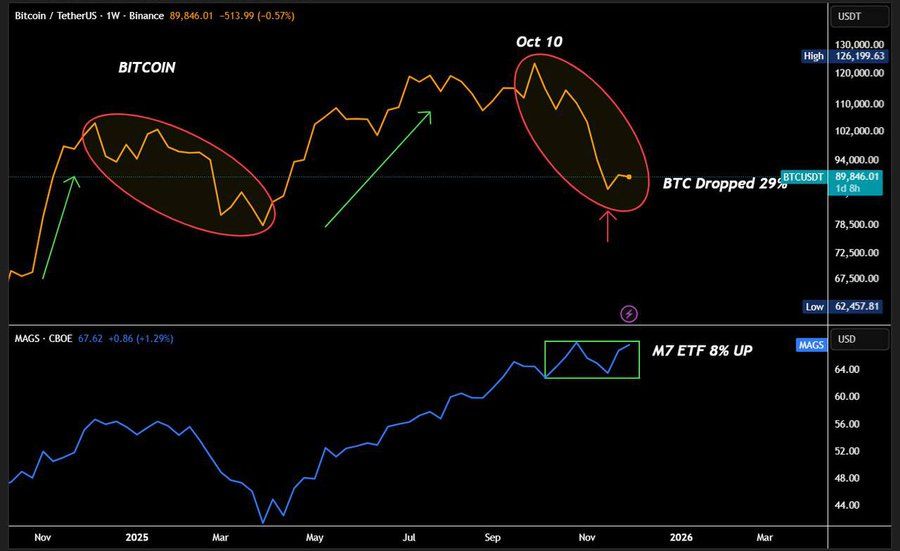
What Caused Bitcoin Price To Crash Below $90K Today?
Exclusive: Expert Says Double-Digit XRP Price ‘Unrealistic’ as ETFs Hit $1 Billion
The Rise of Trust Wallet Token (TWT): An Analysis Following Exchange Integration
- TWT's 2025 surge stems from strategic innovations, institutional adoption, and deflationary tokenomics. - Expanded utility via FlexGas, prediction markets, and RWA integrations boosts demand while burning 10%+ supply. - Institutional confidence grows through Ondo Finance partnership and Binance co-founder CZ's endorsement, driving 50% price jump. - Analysts project $5.13 by 2025 and $15 by 2030 if RWA and cross-chain adoption continue accelerating.
New Prospects in Security Technology and Health Advancement Fields
- Post-pandemic convergence of security systems and health promotion drives innovation in hybrid infrastructure and wellness solutions. - Institutions like Farmingdale State College align curricula with AI, cybersecurity, and health-tech to meet evolving workforce demands. - AI-powered health-tech startups raised $10.7B in 2025, reflecting 24.4% growth as telehealth and data security become critical. - EdTech and health-tech markets are projected to grow rapidly, with EdTech reaching $348B by 2030 and heal

Trending news
MoreCrypto prices
More





