
Why the COAI Index Is Plummeting in November 2025
- COAI Index plunges 88% in 2025 due to governance failures, regulatory ambiguity, and supply chain risks. - C3.ai's leadership instability, $116.8M loss, and lawsuits exemplify corporate governance crises eroding investor trust. - CLARITY Act's undefined terms and jurisdictional confusion deter institutional investment in AI crypto assets. - China-dominated mineral supply chains and macroeconomic risks amplify volatility in speculative AI crypto markets. - Recovery requires clearer regulatory frameworks a
COAI Index Faces Steep Decline Amid Industry Turmoil
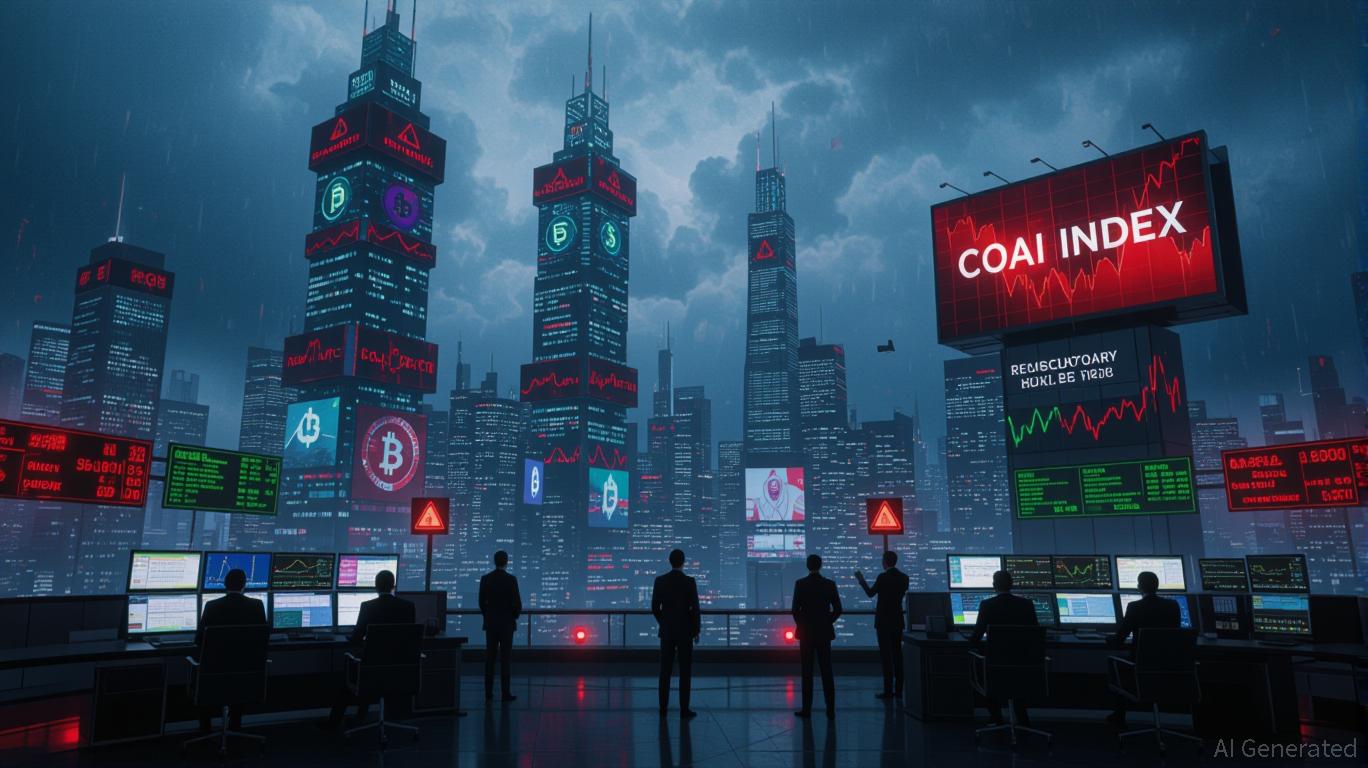
By November 2025, the COAI Index—which tracks leading AI-focused cryptocurrencies—had plunged 88% since the start of the year. This dramatic downturn highlights the vulnerability of speculative AI crypto assets, especially as investors grow more cautious. The decline has been fueled by a mix of governance breakdowns, unclear regulations, and evolving market conditions, with regulatory confusion and supply chain issues playing significant roles.
Corporate Governance Challenges and Strategic Errors
The sharp drop in the COAI Index can be traced to a series of governance problems within its key constituents. Notably, C3.ai, a major player in the index, has struggled with unstable leadership, reported a $116.8 million loss in the first quarter of 2025, and is facing a class-action lawsuit. These setbacks have shaken investor faith in the company’s direction, dragging down the entire index. The broader AI crypto sector has also suffered from a lack of transparency and accountability, prompting investors to withdraw from assets seen as particularly risky and deepening liquidity concerns.
Regulatory Ambiguity: The Impact of the CLARITY Act
The Digital Asset Market Clarity Act of 2025, known as the CLARITY Act, has added to the sector’s woes by failing to resolve key regulatory uncertainties. Although the Act designates the Commodity Futures Trading Commission (CFTC) as the main authority for non-security digital assets, it leaves crucial definitions—such as what constitutes a "security" or a "commodity"—unclear. This ambiguity has discouraged institutional investors, who are wary of navigating inconsistent compliance requirements. The lack of clear regulatory boundaries has also led to confusion over jurisdiction, further unsettling the market.
Market Dynamics: Supply Chain Risks and Geopolitical Tensions
Beyond regulatory issues, shifts in market fundamentals have also weighed on AI crypto assets. The global supply chain for essential minerals—vital for AI hardware and blockchain infrastructure—remains largely dependent on China, exposing the industry to geopolitical risks. Efforts like the Mining Regulatory Clarity Act of 2025 aim to boost domestic mineral production and reduce reliance on foreign sources by streamlining permits for responsible mining. However, the benefits for COAI-related projects have been limited so far. Ongoing uncertainty about mineral supply chains has made investors even more cautious, especially in speculative markets like COAI.
Investor Confidence and Broader Economic Pressures
Investor confidence has also been undermined by wider economic trends. In 2025, diverging monetary policies and rising inflation have increased risk aversion, prompting investors to favor established technology stocks with solid financials. Unlike traditional AI companies, the COAI Index is heavily reliant on speculative crypto projects that lack strong revenue streams, making it more susceptible to market downturns. Additionally, the ongoing regulatory uncertainty from the CLARITY Act has led many institutional investors to adopt a cautious, wait-and-see approach, further limiting capital inflows into the sector.
Looking Ahead: What’s Next for the COAI Index?
The steep fall of the COAI Index reflects a convergence of governance failures, regulatory confusion, and challenging economic conditions. While recent legislative efforts like the Mining Regulatory Clarity Act and the CLARITY Act are intended to bring stability, their effects have been inconsistent. For the COAI Index to stage a recovery, the industry will need clearer regulatory guidelines and stronger corporate governance within AI crypto projects. Until these improvements are realized, the index is expected to remain a volatile indicator of speculative risk in a market that is increasingly wary.
Disclaimer: The content of this article solely reflects the author's opinion and does not represent the platform in any capacity. This article is not intended to serve as a reference for making investment decisions.
You may also like
Sony's blockchain partner Startale launched the USD stablecoin USDSC on Soneium.
A new HSBC study refutes concerns about an artificial intelligence bubble.
Trending news
MoreCrypto prices
More






