
Sanctions Fuel North Korea’s Pursuit of Digital Wealth Through Cyber Warfare
- North Korea's Lazarus hackers exploited spear phishing to breach Upbit, stealing $36–37M via hot wallet access in late 2025. - Attack timing coincided with Upbit's merger announcement, leveraging symbolic dates to maximize visibility as part of strategic operations. - Lazarus employs credential hijacking and mixing techniques to launder funds, reflecting North Korea's reliance on cybercrime for foreign currency amid sanctions. - Experts urge multi-layered crypto defenses, including real-time monitoring a
North Korean Cyber Threats Target Cryptocurrency Sector
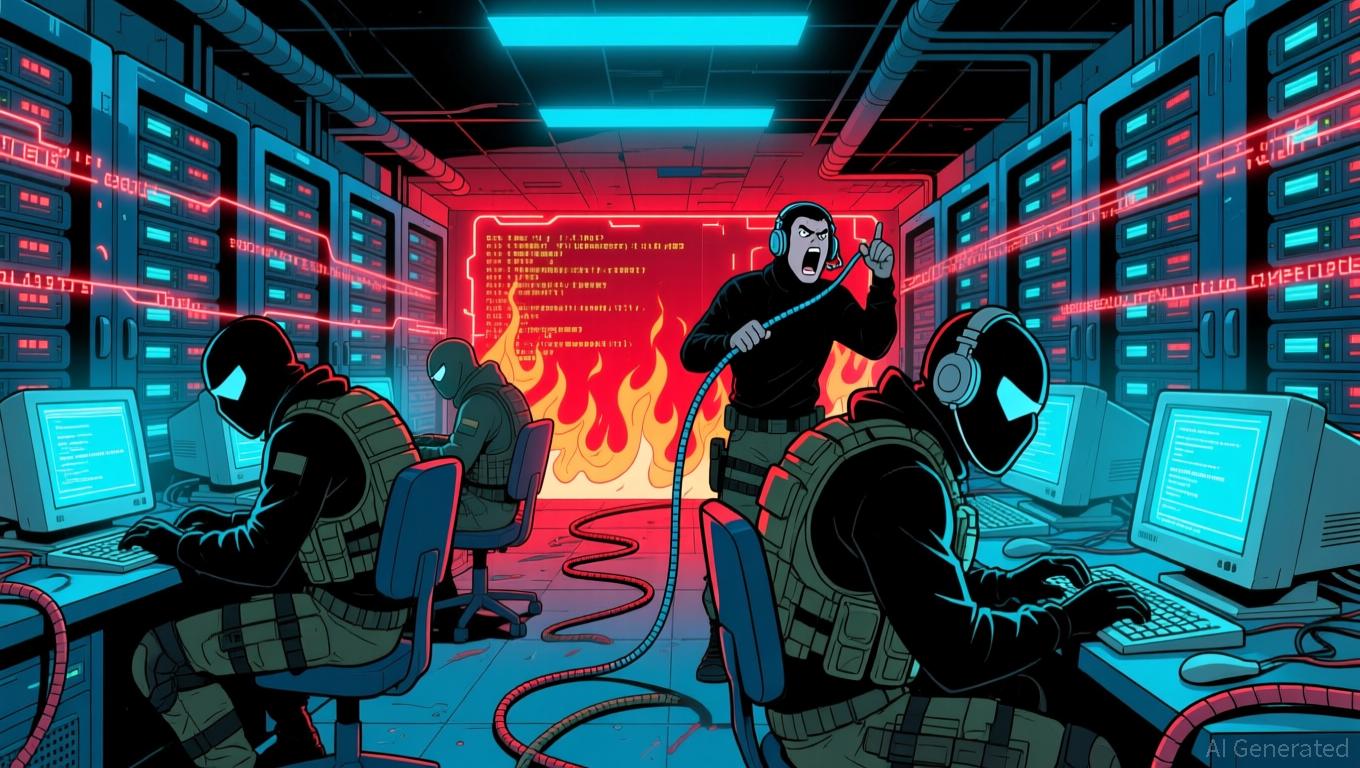
Recent investigations reveal that North Korean hacking groups, notably Lazarus, are increasingly relying on spear phishing as their main method to breach cryptocurrency exchanges and financial organizations. In late November 2025, South Korea's leading digital asset platform, Upbit, experienced a security breach resulting in losses estimated between $36 and $37 million. Authorities suspect that Lazarus orchestrated the attack, which occurred alongside a significant merger announcement between Upbit’s parent company, Dunamu, and technology giant Naver. This timing has led to speculation that the incident was strategically planned for maximum exposure.
Cybersecurity experts have observed that Lazarus frequently employs tactics such as seizing or mimicking administrator credentials, a method reminiscent of their 2019 attack on Upbit. These strategies highlight the group’s evolving sophistication and persistent focus on high-profile financial targets.
The breach underscores the broader risks posed by North Korea’s state-backed cyber operations, which are believed to be motivated by the regime’s ongoing need for foreign currency amid international sanctions. Reports indicate that the stolen assets were laundered through mixing services, a technique Lazarus has used in the past to conceal the origins of illicit funds. South Korean analysts warn that these groups are becoming increasingly adept at exploiting weaknesses in cryptocurrency wallets and transaction systems.
Spear Phishing and Social Engineering Tactics
Lazarus is known for its elaborate spear phishing campaigns, which use tailored social engineering to compromise valuable targets. In the Upbit incident, attackers gained unauthorized access to a hot wallet—a common vulnerability in the crypto industry. According to security professionals, hackers often select significant dates for their operations to attract attention, suggesting that the November 27 breach was intentionally timed. This approach aligns with Lazarus’ broader pattern of leveraging psychological and operational timing to amplify their impact.
Industry Response and Security Recommendations
This incident highlights the pressing need for stronger cybersecurity protocols within the cryptocurrency ecosystem. Blockchain analytics companies have repeatedly warned about the dangers of insufficient anti-money-laundering (AML) measures, as evidenced by recent legal actions against exchanges like Binance for failing to report transactions linked to sanctioned entities. On the other hand, firms such as GoPlus have showcased the benefits of advanced security solutions, with their Token Security API handling over 700 million requests monthly in 2025 to identify vulnerabilities. Experts advocate for comprehensive security strategies, including real-time monitoring, employee education to spot phishing attempts, and partnerships with threat intelligence providers to counteract increasingly sophisticated attacks.
Geopolitical Dimensions and Information Warfare
North Korea’s cyber activities are closely tied to its wider geopolitical objectives. Despite strict internal laws prohibiting foreign cultural influences, the regime continues to deploy hacking teams to bypass economic barriers. Efforts by South Korean and U.S. organizations to transmit uncensored information into North Korea have been hampered by funding reductions and policy changes, creating an information gap that cyberattacks now exploit.
Regulatory Developments and Industry Trends
As the cryptocurrency sector confronts these ongoing threats, both regulators and private companies are enhancing their defenses. For example, Grayscale’s recent application for a Zcash ETF signals growing institutional interest in privacy-oriented digital assets, though it also raises concerns about potential abuse by cybercriminals. Meanwhile, companies like Riot Platforms are diversifying beyond Bitcoin mining into data center infrastructure, aiming to reduce risks associated with single points of failure.
Disclaimer: The content of this article solely reflects the author's opinion and does not represent the platform in any capacity. This article is not intended to serve as a reference for making investment decisions.
You may also like
The Federal Reserve's Change in Policy and Its Unexpected Effect on Solana's Rise
- Federal Reserve's 2025 rate cut and QT end injected $72.35B liquidity, briefly boosting Solana by 3.01%. - October 2025's $19B liquidation and government shutdown exposed crypto liquidity fragility, eroding investor confidence. - Solana's 6.1% price drop and 4.7% TVL decline in November 2025 highlighted macroeconomic policy's volatile impact on crypto markets. - Upcoming December FOMC meeting (87% rate cut chance) could reignite risk appetite or trigger corrections, mirroring October's 20% price drop. -
Solana’s Latest Price Fluctuations and Institutional Involvement: Insights for Long-Term Investors
- Solana (SOL) faced 2025 price swings from $155 to $294, driven by macroeconomic pressures, on-chain weakness, and institutional adoption dynamics. - Institutional ETFs like Bitwise's BSOL attracted $2B AUM by mid-2025, with major holders staking SOL to deepen ecosystem integration despite short-term volatility. - Risks include network centralization, competition from Ethereum 2.0, and reliability concerns after the 2024 cluster outage amid Fed rate uncertainty. - Ecosystem resilience with 500+ dApps and
Timeless Strategies for Investing Amid Market Volatility
- In 2025, R.W. McNeel's 1927 value investing principles and Warren Buffett's strategies remain critical amid market volatility driven by tech disruption and geopolitical risks. - Both emphasize intrinsic value, emotional discipline, and long-term thinking to counter crypto and stock market swings fueled by speculation and social media hype. - Buffett's $340B cash reserves and focus on undervalued sectors like healthcare contrast with crypto's intangible promises, reinforcing tangible asset preferences. -

Saylor Strikes Again: Strategy Makes Its Biggest BTC Buy Since July
Trending news
MoreCrypto prices
More





