
Whales Buy the Bitcoin Dip as Fear Peaks, Hinting at a Potential Market Reversal

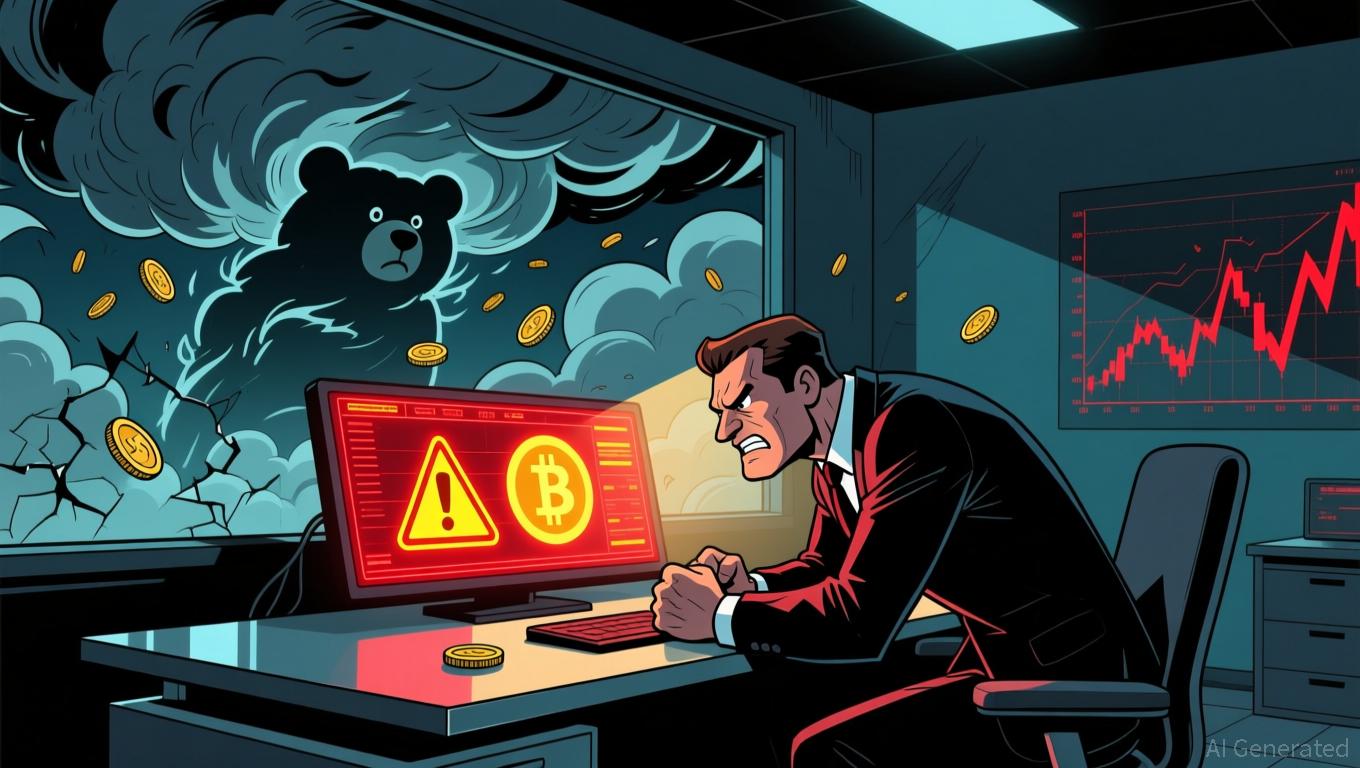
The post highlights on-chain data showing Bitcoin whales—wallets holding at least 1,000 BTC—buying aggressively during the sharp November 2025 market pullback. The total number of whale entities rose from roughly 1,350 in 2023 to more than 1,450 by late 2025, despite Bitcoin dropping below the $80,000 mark amid widespread panic.
This pattern of accumulation during extreme fear is consistent with historical behavior. When retail investors panic-sell, large holders often seize the opportunity to accumulate discounted Bitcoin, strengthening the case for a potential rebound.
BTC Rebounds as Sentiment Shifts and ETF Inflows Return
Despite the panic-driven correction, Bitcoin quickly recovered to approximately $91,000 by November 30, supported by renewed institutional demand. U.S. spot Bitcoin ETFs recorded nearly $190 million in net weekly inflows, signaling that institutional appetite remained strong even as short-term sentiment weakened.
This shift in flows has repeatedly acted as a catalyst for market reversals in past cycles, including the notable recovery following a sentiment crash in March 2025.
Historical Patterns Suggest a Bullish Setup Ahead
Whale accumulation during fear phases has historically preceded major market rallies. On-chain analysts point out that similar accumulation waves have triggered price recoveries ranging from 60% to over 115% in previous cycles. The consistency of this pattern suggests that the current dip-buying activity might be setting the foundation for the next leg up.
As retail panic rises and whale buying intensifies, market dynamics increasingly point toward a bullish reversal—provided macro conditions remain supportive and ETF inflows continue.
Disclaimer: The content of this article solely reflects the author's opinion and does not represent the platform in any capacity. This article is not intended to serve as a reference for making investment decisions.
You may also like
Bitcoin Updates: 2025 Crypto Downturn Driven by Liquidity, Not Crisis, as Markets Demonstrate Evolving Stability
- Cryptocurrency markets collapsed in late 2025, with Bitcoin dropping 31% as $1.2T in value vanished amid liquidity crunches and macroeconomic pressures. - Analysts attribute the selloff to thin trading during holidays, BoJ rate hike speculation, Chinese crackdowns, and Tether/MicroStrategy risks. - MicroStrategy's potential Bitcoin sales and Fed policy shifts highlight institutional influence over volatility, contrasting past retail-driven crashes. - Market maturity is tested as Bitcoin approaches $60K s

Dogecoin News Today: Dogecoin Faces a Turning Point: Popular Enthusiasm Meets Broader Economic and Regulatory Challenges
- Dogecoin (DOGE) drops 7% amid broader crypto bearishness, extending a five-day losing streak as retail-driven momentum falters. - Technical indicators signal weakness near $0.13000, with a break below $0.12986 risking a slide toward $0.09500 support. - Japan's new DOGE department, focused on fiscal efficiency, adds macroeconomic uncertainty, influencing investor trust in markets. - Diverging futures open interest (OI) highlights mixed sentiment: DOGE and SHIB attract optimism , while PEPE faces declining
Ethereum Updates Today: BitMine’s Risky ETH Investment: Bold Wager on 2026 Market Surge
- BitMine Immersion Technologies spent $70M to buy 23,773 ETH, aiming to hold 5% of Ethereum's supply as part of its $10.48B digital asset treasury. - CEO Tom Lee delayed Bitcoin's $250,000 all-time high prediction to January 2026, citing institutional liquidity constraints and equity market linkages. - Analysts highlight Ethereum's high-beta potential and growing Layer 2 TVL as bullish factors ahead of Fed's December 2025 rate-cut expectations. - Risks include potential ETH price drops to $15.5–$20 by yea

MMT Price Forecast Fluctuations: Changes in Institutional Outlook and Macroeconomic Drivers
- Mazda's stock volatility (2023-2025) stems from institutional investor caution and macroeconomic pressures like inflation, interest rates, and EV transition challenges. - Institutional ownership remains stable (16.8% by Master Trust Bank, 5.1% by Toyota), but firms like Morgan Stanley reduced stakes amid concerns over EV adaptation. - Strategic cost-cutting (85% lower EV investment) and repurposed production lines aim to mitigate risks, yet Q3 2025 showed 9% sales decline and ¥46.1B operating loss. - Div

Trending news
MoreCrypto prices
More





