
Trump Exploits Tragedy to Overhaul Immigration Policy
- Trump administration halts Afghan asylum decisions and visa issuance after a 2021 Biden-era refugee shot two National Guard members, killing one. - USCIS orders re-interviews for 233,000 Biden-era Afghan refugees, citing concerns over rushed vetting and security oversights. - State Department pauses Afghan passport holder visas indefinitely, aligning with Trump's pledge to prioritize national security over humanitarian admissions. - Critics condemn the move as punitive to innocent Afghans, warning it des
Trump Administration Suspends Afghan Asylum and Visa Processing After D.C. Shooting
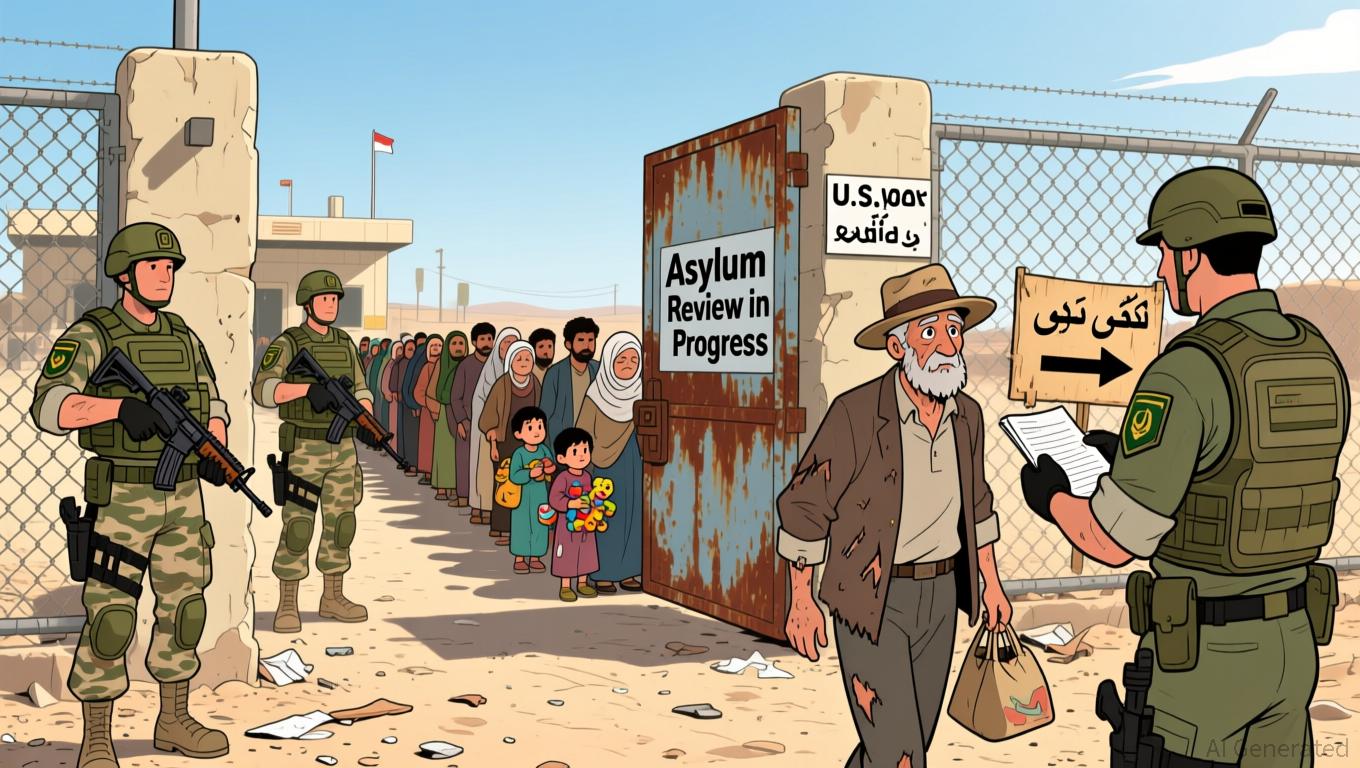
In response to a deadly shooting near the White House involving an Afghan national who had previously been granted asylum, the Trump administration has suspended all asylum decisions and stopped issuing visas for individuals holding Afghan passports. This announcement, made by U.S. Citizenship and Immigration Services (USCIS) and the State Department, represents a significant intensification of the administration’s ongoing efforts to tighten immigration controls, particularly regarding refugees admitted during the Biden presidency.
The suspect, Rahmanullah Lakanwal, a 29-year-old Afghan who arrived in the United States in 2021 through Biden’s Operation Allies Welcome initiative, reportedly shot two National Guard members, resulting in one fatality and leaving the other critically wounded.
USCIS Director Joseph Edlow has issued a directive requiring a thorough review and re-interview process for approximately 233,000 refugees who entered the country between January 20, 2021, and February 20, 2025. The directive cites concerns about lapses in the vetting procedures under the previous administration, suggesting that expediency was prioritized over comprehensive security checks. In a parallel move, the State Department has indefinitely suspended visa processing for all Afghan passport holders, pending a reassessment of security and screening measures.
These policy changes are consistent with President Trump’s broader commitment to remove individuals deemed not to contribute positively to the country and to revisit the issuance of green cards to immigrants from 19 specific nations.
Controversy Surrounding the Policy Shift
Lakanwal’s case has become central to the administration’s messaging. Formerly a CIA-supported Afghan military contractor, he sought asylum during Biden’s term and ultimately received it in April 2025 under Trump’s policies. Critics, including refugee advocates and Democratic lawmakers, warn that these sweeping measures unfairly penalize thousands of innocent Afghans for the actions of a single individual.
- Mark Hetfield, representing HIAS, described the new vetting requirements as “unnecessary, cruel, and wasteful,” highlighting the already extensive screening refugees undergo.
- The Alliance of Afghan Communities in the U.S. has strongly criticized the suspension, cautioning that it could jeopardize the legal standing of many Afghans who have complied with all U.S. immigration laws.
Broader Immigration Policy Implications
The administration’s latest moves have drawn parallels to Trump’s earlier immigration strategies, such as reducing refugee admissions and giving preference to certain groups, including “white South Africans of Afrikaner descent.” The refugee cap for fiscal year 2026 has been set at a historic low of 7,500, reflecting a focus on national security and assimilation. Nonetheless, experts point out that the U.S. already enforces strict vetting for asylum seekers and refugees, and that processing delays have worsened under Trump’s leadership.
Ongoing Debate and Future Outlook
As authorities continue to investigate Lakanwal’s motives, the administration is under increasing scrutiny to balance security measures with humanitarian responsibilities. The incident has reignited contentious debates over immigration, with critics accusing President Trump of leveraging the tragedy to push a more restrictive agenda. The recent USCIS memo directly references Trump’s January executive order, which prioritizes national security and the integration of refugees. For now, the indefinite suspension of Afghan immigration and the comprehensive review of recent arrivals highlight the administration’s determination to reshape U.S. immigration policy, even as controversy persists.
Disclaimer: The content of this article solely reflects the author's opinion and does not represent the platform in any capacity. This article is not intended to serve as a reference for making investment decisions.
You may also like
Solana’s Latest Price Fluctuations and Institutional Involvement: Insights for Long-Term Investors
- Solana (SOL) faced 2025 price swings from $155 to $294, driven by macroeconomic pressures, on-chain weakness, and institutional adoption dynamics. - Institutional ETFs like Bitwise's BSOL attracted $2B AUM by mid-2025, with major holders staking SOL to deepen ecosystem integration despite short-term volatility. - Risks include network centralization, competition from Ethereum 2.0, and reliability concerns after the 2024 cluster outage amid Fed rate uncertainty. - Ecosystem resilience with 500+ dApps and
Timeless Strategies for Investing Amid Market Volatility
- In 2025, R.W. McNeel's 1927 value investing principles and Warren Buffett's strategies remain critical amid market volatility driven by tech disruption and geopolitical risks. - Both emphasize intrinsic value, emotional discipline, and long-term thinking to counter crypto and stock market swings fueled by speculation and social media hype. - Buffett's $340B cash reserves and focus on undervalued sectors like healthcare contrast with crypto's intangible promises, reinforcing tangible asset preferences. -

Saylor Strikes Again: Strategy Makes Its Biggest BTC Buy Since July
Bitcoin Experiences Sharp Decline: Underlying Reasons and Potential Impact for 2026
- Bitcoin fell 32% below $90,000 in 2025, raising bear market fears driven by Fed policy shifts, regulatory uncertainty, and institutional exits. - Fed's 0.25% rate cut and delayed inflation data created volatility, while the GENIUS Act's reserve rules may reduce Bitcoin's appeal unless rates drop further. - SEC's Project Crypto and Senate bills increased regulatory clarity risks, while $3.79B ETF outflows triggered self-reinforcing price declines. - 2026 outcomes depend on Fed clarity, regulatory resoluti

Trending news
MoreCrypto prices
More





