
Fed Faces Balancing Act Between Inflation and Employment Amid Political and Market Scrutiny
- Fed officials remain divided on a December rate cut amid conflicting inflation and labor market signals. - Boston Fed's Collins opposes cuts, citing persistent inflation risks despite recent 119,000 jobs gain and 4.4% unemployment. - Trump's tariff-driven policies face criticism for sustaining high prices, mirroring Biden's inflation challenges. - Crypto sector shows resilience with $4.6B Q3 VC funding, as regulators push for digital asset tax clarity under Trump . - Fed's December decision will balance
Federal Reserve policymakers are split on whether to lower interest rates in December, as mixed economic indicators fuel ongoing debate. Boston Fed President Susan Collins, who has consistently urged caution, stated again on Friday that she "remains inclined to oppose" reducing the federal funds rate from its current 3.75%-4% band,
Recent employment figures have further complicated the outlook. The September jobs report, released earlier this month, revealed a modest increase of 119,000 nonfarm jobs, while unemployment ticked up to 4.4%—suggesting the labor market is losing steam
The political environment adds another layer of complexity for the Fed. President Donald Trump is facing increased criticism over his administration’s economic strategies, which have not yet succeeded in bringing down persistently high consumer prices. Despite promises to tackle inflation, Trump’s tariff policies have kept products like beef, coffee, and hardware
Market responses have been varied. While the anticipation of rate reductions often lifts risk assets, some industries have moved against the trend. DexCom Inc., a company specializing in diabetes technology, saw its stock climb 3.9% after New York Fed President John Williams suggested possible easing, even as the firm faces a separate class-action suit
In the digital asset sector, regulatory issues are becoming increasingly urgent. More than 65 crypto organizations, including the
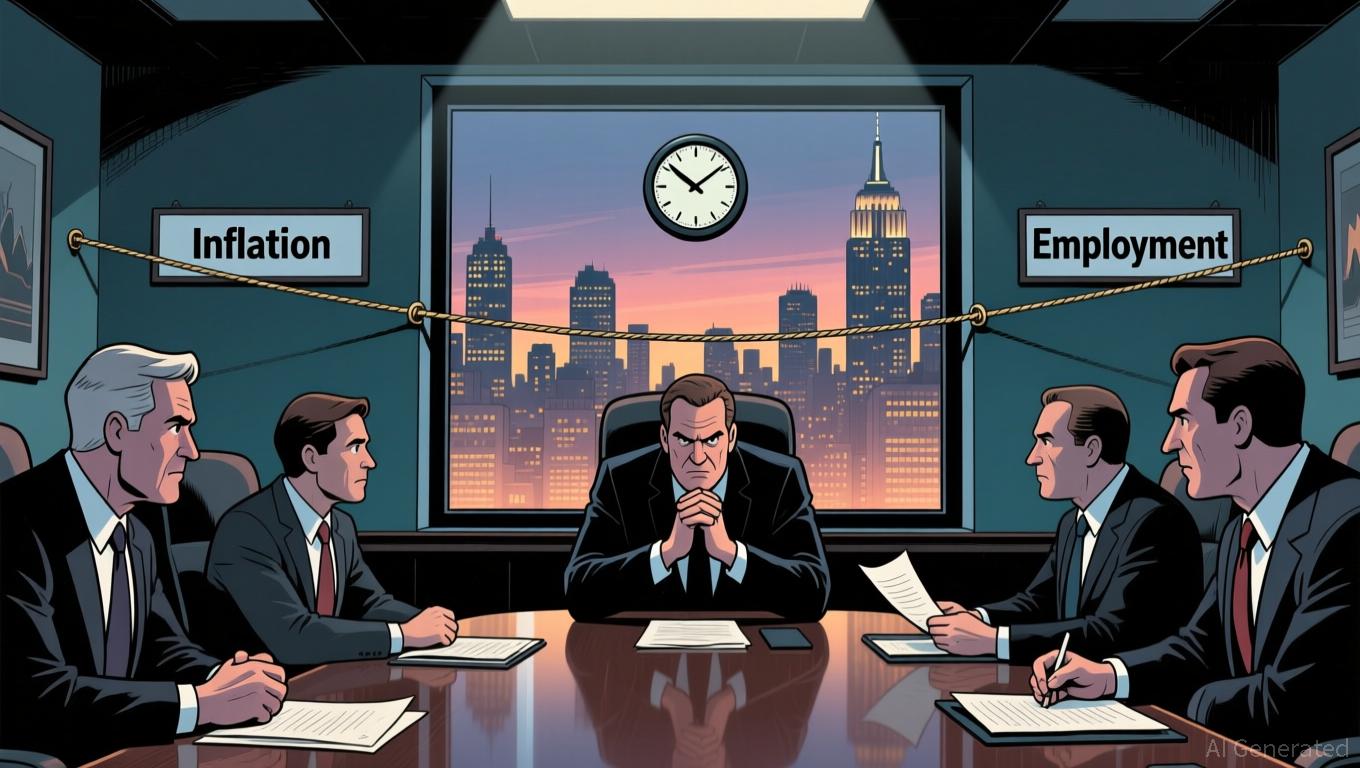
As the December meeting draws near, the Fed’s choice will depend on whether it decides to prioritize fighting inflation or supporting the job market—a dilemma that has shaped its decisions for years. With markets preparing for potential turbulence and political stakes rising, the central bank’s next steps could define the economic landscape for the coming year.
Disclaimer: The content of this article solely reflects the author's opinion and does not represent the platform in any capacity. This article is not intended to serve as a reference for making investment decisions.
You may also like
Modern Monetary Theory and the Transformation of International Markets: Inflation Trends, Asset Movements, and Currency Shifts in 2025
- Modern Monetary Theory (MMT) reshapes fiscal-monetary coordination, linking government spending to inflation and resource constraints in post-pandemic economies. - Central banks face challenges anchoring inflation expectations as CPI lags asset market pressures, risking self-fulfilling inflationary spirals amid eroding public trust. - Currency valuations shift with fiscal stimulus (e.g., euro's 2025 rebound) and U.S. dollar uncertainty, compounded by gold reserve diversification and rising bond yields. -

Grasping the COAI Price Decline: Key Factors and What It Means for Investors
- COAI Index, a crypto AI benchmark, fell 88% in 2025 due to governance failures, regulatory ambiguity, and market panic. - C3.ai's $116M loss, founder resignation, and lawsuits exposed systemic governance risks in AI crypto firms. - Regulatory "gray zone" over AI tokens and conflicting agency rules deterred institutional investment in the sector. - Volatile COAI prices ($44.9 to $2-3) and suspicious trading patterns highlighted sector-wide trust erosion. - Investors now prioritize governance transparency

The Importance of Industrial Property in Webster, NY, in Light of $9.8 Million Infrastructure Investment
- Webster , NY, transformed a 300-acre brownfield into the NEAT industrial hub via $9.8M FAST NY funding, boosting economic growth and real estate value. - Infrastructure upgrades (roads, utilities) reduced industrial vacancy rates to 2%, attracting high-capacity industries like semiconductor manufacturing and food processing. - A $650M fairlife® dairy facility will create 250 jobs by 2025, while rezoning expanded 1,400 acres of contiguous industrial land with mixed-use development. - Residential property

Trust Wallet Token (TWT) Price Forecast for 2025: Should You Invest Now?
- TWT defied 2025 crypto market declines with 0.81% 24h gain vs sector's 3.63% drop, driven by staking incentives and supply reduction via Trust Premium program. - Onramper partnership expanded TWT's utility to 210M users via 130+ local payment methods, enhancing adoption in emerging markets and governance value. - Fixed supply model with 40% circulating for 5+ years, combined with BNB Chain's 274% trading volume surge, supports TWT's undervaluation thesis. - Whale activity contrasts with Bitcoin's 87% vol
Trending news
MoreCrypto prices
More






