
The ZK Atlas Enhancement: Driving Blockchain Expansion and Enterprise Integration
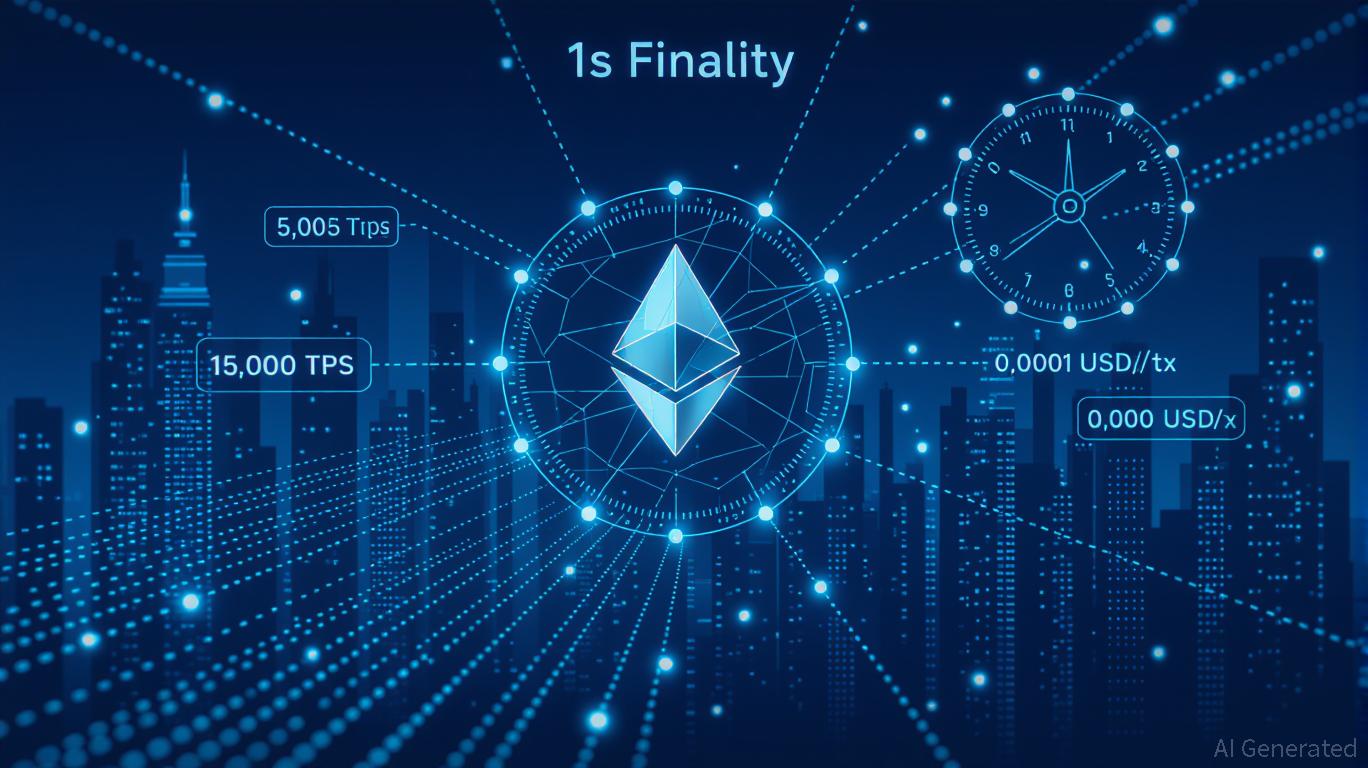
- ZKsync's 2025 Atlas Upgrade breaks scalability barriers with 30,000 TPS and sub-second finality via Airbender proof system. - Modular architecture and 70% lower gas fees drive $3.5B TVL growth, attracting Deutsche Bank and Bitcoin ETF investments. - ZK token price surged 50% as RWA tokenization and enterprise-grade privacy position ZK networks as DeFi infrastructure backbone. - Upgrade enables real-world asset digitization but faces regulatory and interoperability challenges for mass institutional adopti
Technical Breakthroughs: Speed, Finality, and Modularity
The
Gas costs, which have long hindered institutional participation, have dropped by 70% compared to 2023, making ZK networks practical for use cases such as confidential transactions and tokenized securities
Institutional Adoption: From TVL to Partnerships
The ZK Atlas Upgrade has sparked a notable increase in institutional engagement. By 2025, the total value locked (TVL) within ZK ecosystems climbed to $3.5 billion, fueled by platforms such as
Further proof of institutional trust is seen in $15 billion in net inflows from Bitcoin ETFs in 2025, with participation from ZK token holders increasing by 20%
Implications for the Future
The influence of the ZK Atlas Upgrade goes beyond technical statistics. By making real-world asset tokenization and enterprise-level modularity possible, it sets ZK networks up as the foundation for institutional DeFi. For instance, the upgrade’s support for RWA tokenization could unlock trillions of dollars in previously illiquid assets, ranging from real estate to carbon credits, by enabling transparent and programmable ownership
Nonetheless, some hurdles persist. While ZKsync’s TVL expansion is remarkable, widespread adoption will depend on regulatory developments and the ecosystem’s maturity. Institutions must address compliance for tokenized assets and ensure compatibility with existing legacy systems.
Conclusion
The ZK Atlas Upgrade stands as more than just a technical milestone—it serves as a link between blockchain’s theoretical promise and real-world institutional use. By overcoming obstacles related to scalability, costs, and modularity, ZKsync has established a solid base for a future where decentralized technology underpins global finance. For investors, this upgrade marks the evolution of the market, with ZK-based solutions moving from speculation to essential infrastructure. As TVL and institutional collaborations continue to expand, the ZK ecosystem is set to become a key pillar of the next generation of financial systems.
Disclaimer: The content of this article solely reflects the author's opinion and does not represent the platform in any capacity. This article is not intended to serve as a reference for making investment decisions.
You may also like
India’s Spinny set to secure $160 million in funding for GoMechanic acquisition, sources report
PENGU Price Forecast: Managing Immediate Market Fluctuations and Exploring Future AI Opportunities
- PENGU token's price fell to $0.01114 in Nov 2025, far below its 2024 peak of $0.068, amid regulatory and macroeconomic risks. - Short-term volatility is amplified by SEC ETF delays, $7.68M short positions, and susceptibility to broader crypto market downturns. - Long-term potential emerges through AI-driven features like dynamic staking and cross-chain interoperability, plus Schleich's physical collectible partnerships. - Pudgy Penguins' hybrid digital-physical model, including Walmart retail presence, d

The Rise of Dynamic Clean Energy Markets
- CleanTrade, CFTC-approved as a Swap Execution Facility (SEF), transformed clean energy markets into institutional-grade assets by standardizing VPPAs, PPAs, and RECs. - The platform addressed fragmented pricing and opaque risks, enabling $16B in transactions within two months and bridging renewable assets with institutional capital. - Institutional investors now use CleanTrade’s tools to hedge fossil fuel volatility and lock in renewable energy prices, mirroring traditional energy strategies. - Global cl

COAI Token Fraud: Insights for Cryptocurrency Investors During Times of Regulatory Ambiguity
- COAI token's 88% collapse in late 2025 exposed systemic risks in AI-driven DeFi ecosystems, with $116.8M investor losses. - Governance flaws included 87.9% token concentration in ten wallets, untested AI stablecoins, and lack of open-source audits. - Panic selling accelerated by AI-generated misinformation and CEO resignation, amid conflicting global crypto regulations. - Lessons emphasize scrutinizing token distribution, demanding transparent audits, and avoiding jurisdictions with regulatory ambiguity.

Trending news
MoreCrypto prices
More





