Green Energy Implementation and Urban Dispersal in Developing Economies
- Global investment in sustainable infrastructure is accelerating in emerging markets through electric transit, decentralized energy, and shared mobility solutions. - India leads with 9,714 electric buses (2024) under government schemes, reducing fossil fuel dependence and urban pollution in decentralized networks. - African and South Asian DRE projects, backed by $16M U.S. funding and $495M guarantees, address energy poverty while enabling industrial resilience. - Shared electric mobility in Hanoi, Jakart
Transforming Investment in Emerging Markets: The Rise of Sustainable Infrastructure
Emerging markets are undergoing a significant transformation as the push for sustainable infrastructure and decentralized urban development gains momentum. Rapid urban growth, energy challenges, and environmental concerns in regions such as India, Africa, and Asia are fueling demand for innovative solutions in electric transportation, distributed energy, and shared mobility. These advancements are propelled not only by new technologies but also by shifting policies and societal priorities that emphasize energy conservation and environmental responsibility. For investors, this convergence creates a compelling landscape for investing in clean infrastructure and technologies aligned with environmental, social, and governance (ESG) principles.
Electric Transit: Driving Decentralized Urban Mobility
Electric buses and shared mobility platforms are revolutionizing public transportation in developing cities. India stands out as a frontrunner, boasting 9,714 registered electric buses by 2024 and experiencing an annual growth rate surpassing 65%. The government's PM-eBus Sewa Scheme, which dedicates $2.4 billion to introduce 10,000 electric buses in 169 cities, highlights this rapid progress. By February 2025, 5,165 e-buses had been deployed under the FAME II initiative, with a particular focus on smaller urban centers facing significant public transport gaps. These efforts are about more than just electrification—they represent a shift toward decentralized mobility, reducing dependence on centralized fossil fuel systems and enabling cities to expand transit options without worsening congestion or pollution.
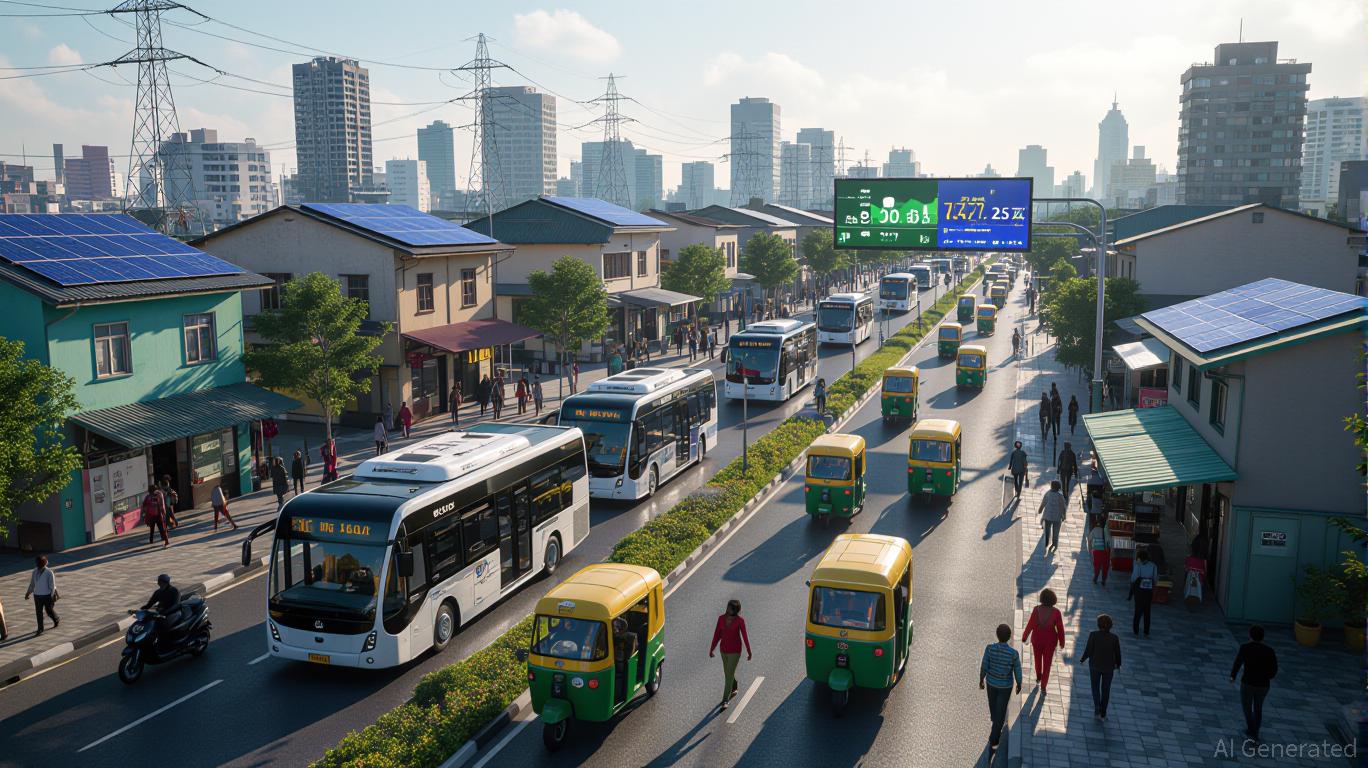
The environmental impact is substantial. Shared electric vehicle services have been shown to cut greenhouse gas emissions by 14–65% compared to traditional vehicles, while also improving air quality and reducing noise. In cities like Hanoi and Dar es Salaam, electric three-wheelers and mopeds offer affordable, effective solutions for densely populated areas. These projects illustrate the potential for scalable, ESG-focused infrastructure investments that address pressing urban issues.
Decentralized Energy: Building Resilience Across the Global South
Distributed renewable energy systems are gaining ground as a remedy for energy shortages and unreliable grids in Africa and South Asia. The Global Energy Alliance, supported by the U.S., has pledged $16 million to expand access to decentralized energy in the Democratic Republic of Congo and Nigeria, where mini-grids are replacing diesel generators and bringing electricity to millions. Additionally, the Multilateral Investment Guarantee Agency has provided $495 million in guarantees to support CrossBoundary Energy’s distributed renewable projects in 20 African nations. These initiatives not only broaden energy access but also strengthen economic resilience by allowing businesses to operate independently of unstable power grids.
In Southeast Asia, while hydropower and geothermal have historically attracted U.S. investment, solar energy is set for rapid expansion thanks to falling costs and supportive policies. Indonesia alone secured $3.536 billion in renewable energy partnerships in 2025, underscoring the region’s potential as a leader in decentralized energy. For investors, the blend of policy support, scalable technology, and strong social demand creates an ideal environment for funding distributed renewable energy infrastructure.
Shared Mobility and Social Dynamics: Accelerating Adoption
Social and behavioral factors are playing an increasingly important role in the uptake of sustainable mobility options. In India, consumer interest in electric vehicles is shaped by perceptions of government incentives, financial benefits, and environmental consciousness. Research also points to the influence of community networks and peer groups in speeding up electric vehicle adoption. The EMBRACE Platform, which connects India’s expertise with African partners, is helping these regions bypass traditional transport systems and move directly to electric alternatives.
Shared mobility models are leveraging these trends. In cities like Jakarta and Karachi, where motor vehicles are major contributors to air pollution, electric three-wheelers and rickshaws are helping to lower emissions and improve access. These examples show how local solutions and social influence can drive widespread adoption, even in areas with fragmented infrastructure.
Policy Innovation: Paving the Way for Sustainable Investment
Effective policy frameworks are crucial for attracting investment in emerging markets. Mechanisms such as feed-in tariffs, renewable portfolio standards, and tax incentives directly shape the investment landscape. In regions with limited infrastructure, micro-generation plants are proving to be a practical alternative to centralized grids. China’s rapid expansion in solar PV manufacturing since 2020, fueled by robust government support and rising demand, demonstrates the powerful impact of policy on sector growth.
However, the success of these policies varies by region. In the Global South, streamlined regulations and financial incentives are vital for drawing private investment and fostering international collaboration. The EU-backed SOLUTIONSplus project, which piloted electric three-wheelers and buses in Asia and Africa, exemplifies how policy-driven experimentation can lead to scalable solutions. For investors, targeting markets that prioritize policy innovation and stakeholder engagement is essential for managing risks and achieving strong returns.
Strategic Opportunities for Impact-Focused Investors
The intersection of electric transit, decentralized energy, and shared mobility in emerging economies presents a rare chance for investors to achieve both financial and societal gains. With significant funding from the U.S. and international organizations, and local governments emphasizing efficiency and equity, the environment is ripe for transformative investment. Key strategies include:
- Investing in Electric Bus Infrastructure: Supporting the development of charging networks and operational models in rapidly growing cities.
- Backing Distributed Renewable Energy Projects: Focusing on African and South Asian markets where energy access and grid reliability remain challenges.
- Scaling Shared Mobility Platforms: Utilizing social influence and behavioral insights to expand affordable electric transportation solutions.
As emerging markets move toward sustainable urbanization, investors who emphasize ESG integration and scalable technology will be well-positioned to seize the trillion-dollar opportunities anticipated in 2025 and beyond.
Disclaimer: The content of this article solely reflects the author's opinion and does not represent the platform in any capacity. This article is not intended to serve as a reference for making investment decisions.
You may also like
Investing in EdTech and Skills Training to Empower Tomorrow's Workforce
- Global high-growth sectors like AI, renewables, and biotech are reshaping workforce demands, driving rapid STEM education evolution through edtech and vocational training. - AI-powered adaptive learning and immersive VR/AR tools now personalize education, with 36% of 2024 edtech funding directed toward workforce-specific skill development. - Vocational programs and industry partnerships (e.g., U.S. EC4A, EU Green Deal) are closing STEM skills gaps, creating direct pipelines to 16.2M+ clean energy jobs by

The Rising Influence of EdTech on Career-Focused Investment Prospects
- Global EdTech market grows at 20.5% CAGR to $790B by 2034, driven by STEM/digital skills demand. - STEM workers earn 45% higher wages; 10.4% occupation growth vs 4.0% non-STEM, reshaping labor markets. - 2025 EdTech VC investments show 35% YoY decline, concentrating on AI tools and scalable upskilling platforms. - MENA/South Asia EdTech sees 169% funding growth, addressing equity gaps through global platforms. - AI-driven EdTech and M&A activity (e.g., ETS-Ribbon) highlight sector's shift toward outcome-
KITE Price Forecast Following Listing: Managing Post-IPO Fluctuations and Institutional Investor Outlook
- Kite Realty Group (KITE) fell 63% post-IPO despite strong retail occupancy and NOI growth, highlighting valuation disconnect between real estate fundamentals and tech IPO expectations. - Institutional sentiment split: COHEN & STEERS boosted holdings by 190% amid industrial pivot, while others divested $18. 3M , reflecting uncertainty over hybrid retail-industrial strategy execution. - Analysts remain divided on $24–$30 price targets, balancing KITE's 7.4% dividend increase and industrial shift against ma

The Increasing Importance of Blockchain Education for Strategic Growth in Emerging Markets
- Blockchain education in emerging markets is accelerating token adoption and financial inclusion by addressing technical barriers and fostering trust in decentralized systems. - Trust Wallet Token (TWT) enables low-cost remittances and DeFi access through gas discounts and fee reductions, targeting regions with weak traditional banking infrastructure. - Strategic partnerships like Trust Wallet-EBI and UNDP blockchain training programs amplify TWT's utility in governance, identity management, and cross-bor