
The redevelopment of the Xerox campus in Webster, NY presents a valuable strategic prospect within the industrial real estate sector.
- Webster , NY's former Xerox campus is being redeveloped into a $1B industrial hub via FAST NY Grant-funded infrastructure upgrades. - Road, sewer, and grid improvements transformed a 300-acre brownfield into a shovel-ready site with 2% industrial vacancy, below national averages. - Municipal realignment and subdividability plans reduce regulatory barriers, mirroring successful models like the Research Triangle. - Webster's 4.31% 2023 income growth and proximity to I-390 position it as a supply chain resi
Revitalizing Webster: The $1 Billion Industrial Transformation
The former Xerox campus in Webster, NY, is undergoing a remarkable transformation into a billion-dollar industrial center. This redevelopment is fueled by a unique combination of infrastructure investment, municipal planning, and the flexibility to subdivide land for various uses. Central to this effort is the $9.8 million FAST NY Grant, which has played a pivotal role in converting a previously neglected brownfield into a prime location ready to welcome advanced manufacturing and logistics companies. The partnership between public funding and private enterprise is creating an environment where risks are minimized and growth potential is maximized for investors.
Infrastructure Investment Drives Growth
Thanks to the FAST NY Grant, essential improvements have been made to the area’s roads, sewer systems, and electrical infrastructure, turning 300 acres of unused land into a vibrant industrial park. These upgrades are part of a larger economic vision led by Governor Kathy Hochul and have already produced significant results. For example, residential property values in Webster have climbed by 10.1% since the project began, and industrial vacancy rates have dropped to just 2%, well below the national average. These figures highlight how ready-to-use infrastructure reduces investment risks and appeals to companies looking to expand quickly without lengthy site preparation.
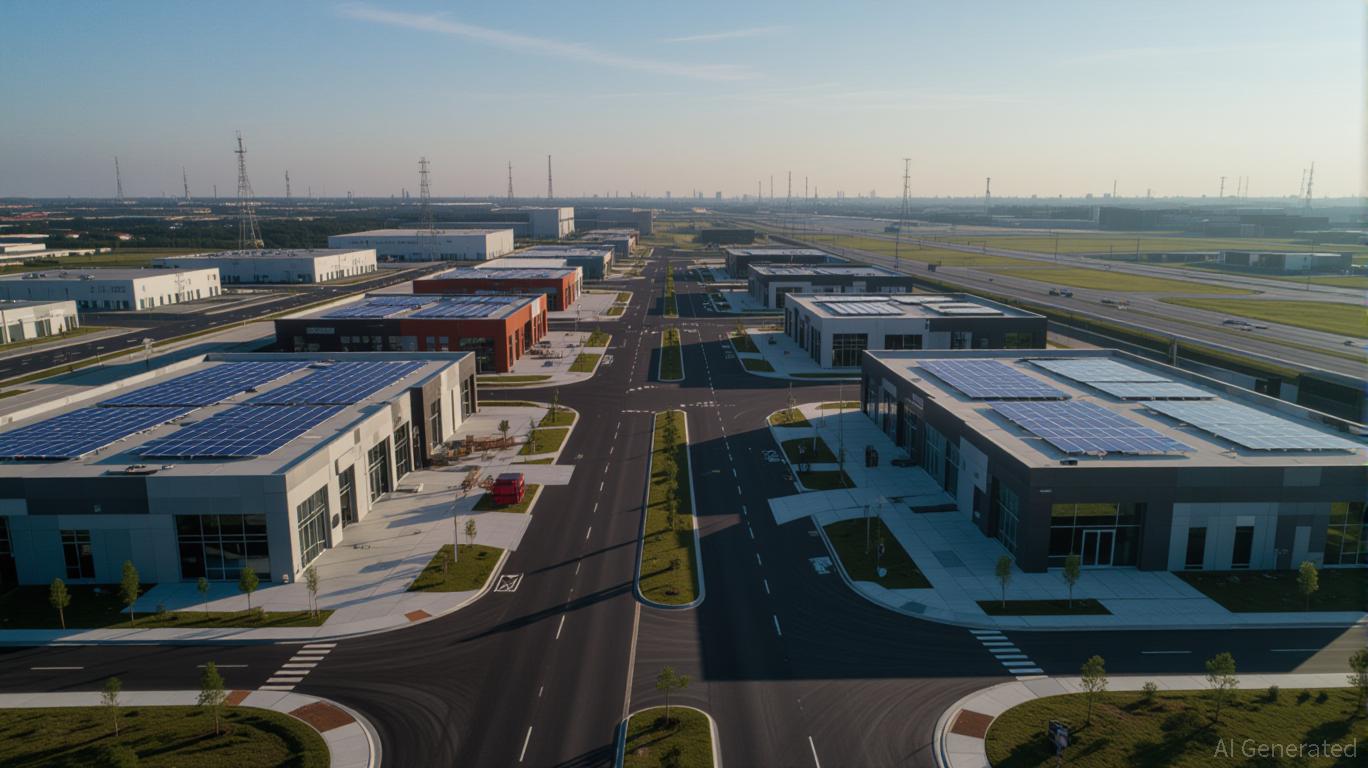
The benefits of the FAST NY Grant extend beyond immediate construction. By 2026, all infrastructure enhancements—including road improvements and modernized power grids—will be complete, further establishing Webster as a prime destination for business. This phased development ensures the site remains attractive to industries seeking reliable supply chains and access to major transportation routes like I-390 and the Rochester International Airport.
Additionally, the plan to subdivide the land aligns with the town’s broader goals to encourage private investment. By securing pre-approvals for zoning and infrastructure on each parcel, Webster has removed many regulatory barriers that often slow down industrial projects. This streamlined process is similar to successful strategies used in places like the Research Triangle, where ready-to-build sites have historically attracted rapid investment.
Municipal Planning for Sustainable Growth
Webster’s approach to municipal realignment further strengthens its investment appeal. The Community Access Project, supported by a $1.838 million grant, is upgrading industrial roads and improving pedestrian pathways, creating infrastructure that benefits both businesses and residents. These efforts are part of the Reimagine Webster Initiative, which aims to address affordable housing needs while promoting mixed-use development. For investors, this demonstrates a long-term commitment to urban renewal, integrating industrial areas into lively, well-connected communities.
The positive economic impact of these changes is already visible. In 2023, Webster’s median household income increased by 4.31%, even as employment numbers shifted due to changes in industry focus. This suggests a move toward higher-paying jobs in advanced manufacturing, supported by new projects like the fairlife dairy plant. Rising wages not only boost local spending but also enhance the stability of the real estate market, making Webster an appealing location for both commercial and residential development.
Seizing a Timely Investment Opportunity
The redevelopment of the Xerox campus presents a timely opportunity for investors interested in industrial real estate. The synergy of upgraded infrastructure, flexible land use, and proactive municipal planning creates a cycle where public and private investments reinforce each other, driving up property values and generating new jobs. With the site expected to be fully operational by 2026, the chance to benefit from early-stage growth is limited.
Furthermore, the project’s alignment with regional strategies for supply chain resilience—such as reducing dependence on expensive coastal markets—makes it a strong option for companies seeking stability amid economic uncertainty. Webster’s strategic location and ready-to-use facilities are likely to attract premium interest from industries like dairy processing, advanced manufacturing, and logistics.
Summary
The redevelopment of the Xerox campus in Webster, NY, showcases how targeted infrastructure spending can unlock hidden potential in underused industrial areas. By combining state grants, flexible development plans, and forward-thinking municipal policies, Webster has set a new standard for industrial revitalization that balances immediate returns with lasting community benefits. For investors, this is a rare chance to participate in a market poised for transformation, where government initiatives and private sector drive come together to reshape the future of industrial real estate.
Disclaimer: The content of this article solely reflects the author's opinion and does not represent the platform in any capacity. This article is not intended to serve as a reference for making investment decisions.
You may also like
Aligning ESG Investment with Legal Industry Transformation: The Societal Influence of Funding Legal Education and Supporting Public Interest Scholarships
- ESG investing in legal education promotes social equity by funding scholarships for underrepresented communities, aligning financial goals with justice access. - Programs like New York Law School's Wilf Scholars reduce financial barriers, creating pathways for graduates to address legal gaps in marginalized areas. - Persistent racial disparities (70% of full-tuition awards to white students vs. 6% to Black students) highlight the need for equitable ESG scholarship distribution. - ESG-aligned initiatives

Bitcoin Price Rally During Macroeconomic Instability: Investor Confidence and Institutional Integration in the Fourth Quarter of 2025
- Bitcoin surged 86.76% in Q4 2025 amid macroeconomic uncertainty, driven by institutional adoption and regulatory clarity. - 86% of institutional investors now allocate to crypto, with $1.65T market cap supported by 65% institutional demand via ETFs/ETPs. - Macroeconomic factors like inflation hedging and MMT-driven valuation models reshaped Bitcoin's role as a store of value. - Supply-demand imbalances and $4T potential institutional demand outpace Bitcoin's limited supply, creating upward price pressure

LUNA surges 36.7% as Network Enhancement and Legal Progress Boost Confidence
- LUNA surged 36.7% in 24 hours, driven by a Binance-backed network upgrade and Do Kwon's sentencing on Dec 11. - The v2.18 upgrade boosted technical confidence, breaking key resistance with strong volume and momentum indicators. - Kwon's legal resolution is seen as critical for Terra's credibility, though post-sentencing volatility remains a risk. - RSI and MACD suggest sustained buying pressure, but traders are urged to remain cautious amid evolving market dynamics.

LUNA Rises 21.88% Following Network Updates and Kwon’s Sentencing
- LUNA surged 21.88% in 24 hours on Dec 9, 2025, driven by Do Kwon's upcoming sentencing and Terra's v2.18 network upgrade. - Kwon's Dec 11 sentencing is seen as a potential turning point, ending legal uncertainty from the 2022 Terra/UST collapse. - The v2.18 upgrade, backed by Binance, aims to improve security and scalability, boosting institutional interest in Terra. - Technical indicators show strong bullish momentum, though post-sentence legal outcomes remain critical for long-term market stability.






