Timeless Investment Strategies: Insights from 1927 for Today’s Markets
- R.W. McNeel's 1927 market principles align with Buffett's value investing, emphasizing emotional discipline and intrinsic value over speculation. - These strategies counter modern crypto market volatility, as 2025 studies show disciplined investors avoid behavioral biases like FOMO and disposition effect. - Behavioral finance tools (dollar-cost averaging, stop-loss orders) reduce losses by 37% during downturns, validating McNeel/Buffett's risk management focus. - 2025 research confirms temperament—not te
Enduring Investment Wisdom in the Age of Crypto and Algorithms
Despite the rapid evolution of financial markets—marked by algorithmic trading, decentralized finance, and the unpredictable swings of cryptocurrencies—the core lessons from R.W. McNeel’s 1927 classic, Beating the Market, remain remarkably pertinent. Long before Warren Buffett popularized value investing, McNeel championed principles centered on emotional control, intrinsic worth, and a steadfast belief in long-term growth. These foundational ideas, rooted in behavioral finance, serve as a stabilizing force against the emotional swings and cognitive traps that often ensnare today’s investors, especially in turbulent spaces like crypto.
Behavioral Finance: Linking McNeel and Buffett
Both McNeel and Buffett built their investment philosophies on the rejection of speculation, instead advocating for disciplined decisions grounded in fundamental analysis. McNeel’s advice to “buy when there is blood in the streets” echoes Buffett’s well-known guidance: “Be fearful when others are greedy and greedy when others are fearful.” At the heart of their approach is the practice of acquiring assets below their true value—a concept Buffett later described as the “margin of safety.” This is as much a test of psychology as it is of finance, requiring investors to resist the crowd and maintain composure when markets become irrational.
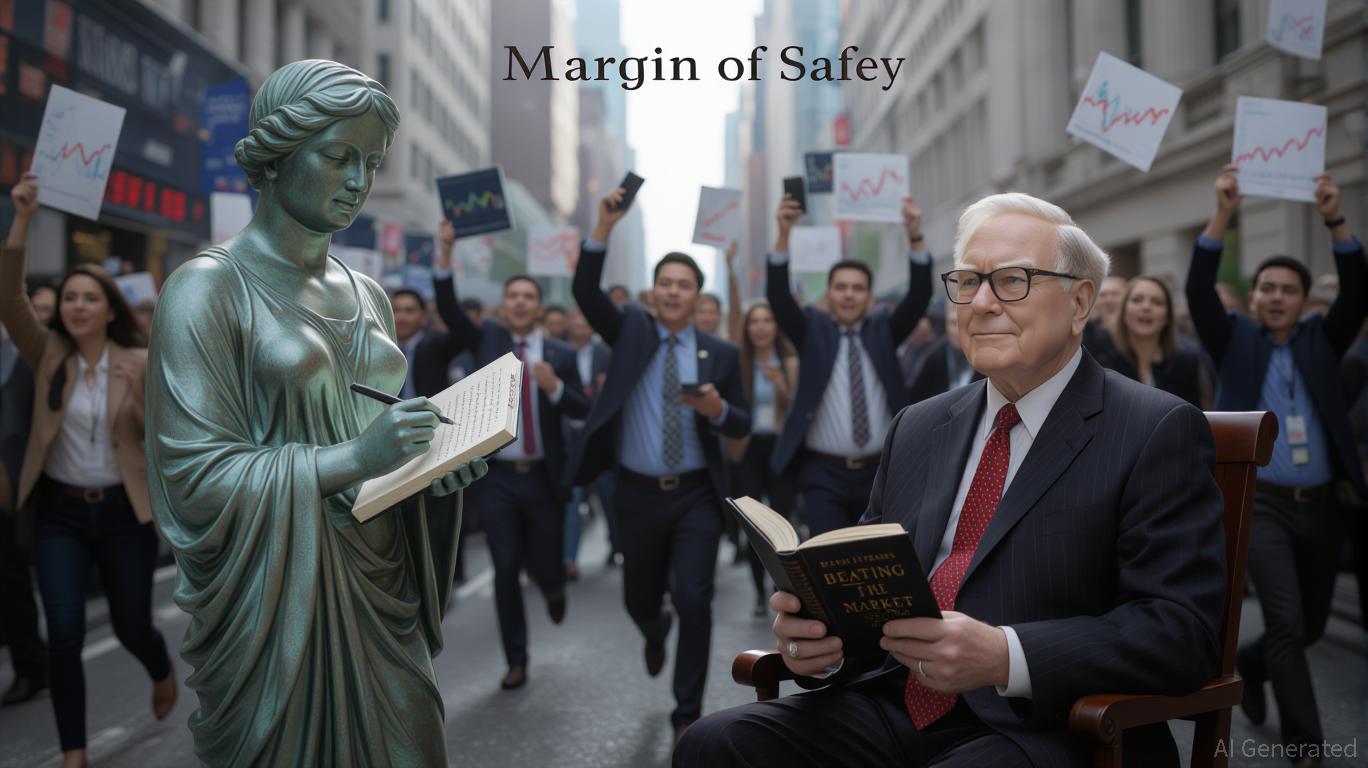
Recent behavioral finance research, including studies from 2025, continues to validate these timeless strategies. Investors who focus on intrinsic value are less likely to fall prey to common pitfalls such as the disposition effect—selling winners too soon and holding onto losing positions—or overconfidence. For example, a 2025 analysis of the MMT token surge demonstrated that speculative manias, often fueled by social media and airdrop hype, resulted in steep losses during corrections—exactly the kind of scenario McNeel and Buffett cautioned against.
Managing Market Swings: Lessons for Crypto and Stocks
These investment principles are especially relevant in today’s cryptocurrency markets, where volatility and speculation are ever-present. McNeel’s early encouragement to “believe in the American people” finds a modern counterpart in Buffett’s optimism about America’s future. Yet, applying this faith to crypto assets—many of which lack clear fundamentals—poses a unique challenge. Here, the focus on intrinsic value becomes a crucial filter: tokens with genuine utility, robust governance, and innovative technology stand apart from meme coins and speculative airdrops, which McNeel and Buffett would likely advise against.
Practical tools such as dollar-cost averaging and stop-loss orders, which align with the patience and risk management advocated by both McNeel and Buffett, have proven effective in curbing impulsive decisions. According to a 2025 report by Phemex, investors who adopted these strategies saw their losses during downturns reduced by an average of 37% compared to those driven by FOMO. This evidence reinforces the behavioral finance principle that emotional discipline is closely linked to long-term investment success.
The Power of Temperament Over Intelligence
Warren Buffett has consistently emphasized that temperament, rather than technical expertise, is the most important trait for successful investing. This view is supported by behavioral finance findings, which show that individuals with greater emotional intelligence are better equipped to resist herd mentality and manage overconfidence. For instance, Schwab’s Biagnostics™ program, designed to identify and address cognitive biases, has demonstrated that targeted behavioral interventions can boost portfolio performance by as much as 22% in volatile markets.
McNeel’s nearly century-old assertion that “temperament outweighs knowledge” is more relevant than ever in 2025, as algorithmic trading and AI have made information widely accessible. The real differentiator is the ability to act—or to hold back—based on rational analysis rather than emotional reactions. Buffett’s skepticism toward assets like Bitcoin, which he famously called “rat poison squared” due to their lack of intrinsic value, perfectly illustrates this disciplined mindset.
Lasting Principles for Modern Investors
Even as financial markets continue to transform, the fundamental pillars of value investing—emotional steadiness, intrinsic valuation, and a focus on the long term—remain as vital as ever. The insights first articulated by McNeel and later refined by Buffett offer a reliable guide for navigating both the psychological and structural complexities of today’s investment landscape. Whether dealing with stocks or digital assets, the key takeaway is clear: true success comes not from chasing the latest trend, but from mastering one’s own behavior.
In a world where social media and algorithmic noise amplify behavioral biases, the enduring wisdom of McNeel and Buffett provides much-needed clarity. Their message is timeless: the greatest investment returns are achieved not by trying to time the market, but by cultivating self-mastery.
Disclaimer: The content of this article solely reflects the author's opinion and does not represent the platform in any capacity. This article is not intended to serve as a reference for making investment decisions.
You may also like
HYPE Token Experiences Rapid Growth in December 2025: Evaluating Authenticity and Investment Opportunities Amidst an Unstable Post-ETF Cryptocurrency Landscape
- HYPE token surged in Dec 2025 amid post-Bitcoin ETF crypto optimism , raising questions about its investment legitimacy. - Hyperliquid's 72.7% decentralized trading volume share and $106M monthly revenue highlight its DeFi infrastructure strength. - Institutional backing from Paradigm and a $1B DAT fund signals confidence, though major exchange listings remain pending. - Price volatility, token unlocks, and mixed expert opinions underscore risks, with potential $53–$71 targets contingent on market condit
LUNA Falls by 5.77% Over 24 Hours Despite Fluctuating Medium-Term Performance
- LUNA fell 5.77% in 24 hours to $0.1512, but rose 47.52% in 7 days and 105.96% in 30 days. - However, it still faces a 64.14% annual loss, highlighting crypto market volatility and long-term risks for investors. - The price swing reflects sensitivity to macroeconomic shifts and sentiment, with analysts noting ongoing uncertainty in forecasts. - Investors are weighing recent resilience against regulatory challenges and institutional behavior shifts, monitoring if the drop signals a bearish trend or tempora

The Downfall of ChainOpera AI Token: An Alert for AI-Based Cryptocurrency Investments
- ChainOpera AI (COAI) token's 96% collapse in late 2025 highlights systemic risks in AI-driven crypto assets, prompting reevaluation of governance and regulatory frameworks. - Centralized ownership (88% by top 10 holders) and governance flaws at C3.ai exacerbated volatility, undermining decentralization and investor trust. - The crisis triggered sector-wide sell-offs, shifting capital to meme coins, while 2025 regulatory penalties rose 417% to $1.23B, intensifying scrutiny. - Experts warn speculative AI-c

Top 5 Utility-Backed Crypto Projects: Real-World Integrations Surge as Institutional Interest Climbs 48% This Quarter