
Strategic Property Investment in the Revitalization of the Former Xerox Campus: Infrastructure-Led Renewal in Webster, NY
- Webster , NY, is transforming its post-Xerox campus via $14.3M in state infrastructure grants for industrial upgrades and public-private partnerships. - Road, sewer, and electrical improvements reduced industrial vacancy to 2%, attracting $650M fairlife® dairy plant and 250 jobs. - Residential values rose 10.1% annually as NEAT corridor targets $1B in development by 2026 with $283M public-private investment. - Strategic infrastructure funding de-risks development, creating a scalable model for post-indus
Webster, NY: A Model of Transformation Through Infrastructure and Real Estate Innovation
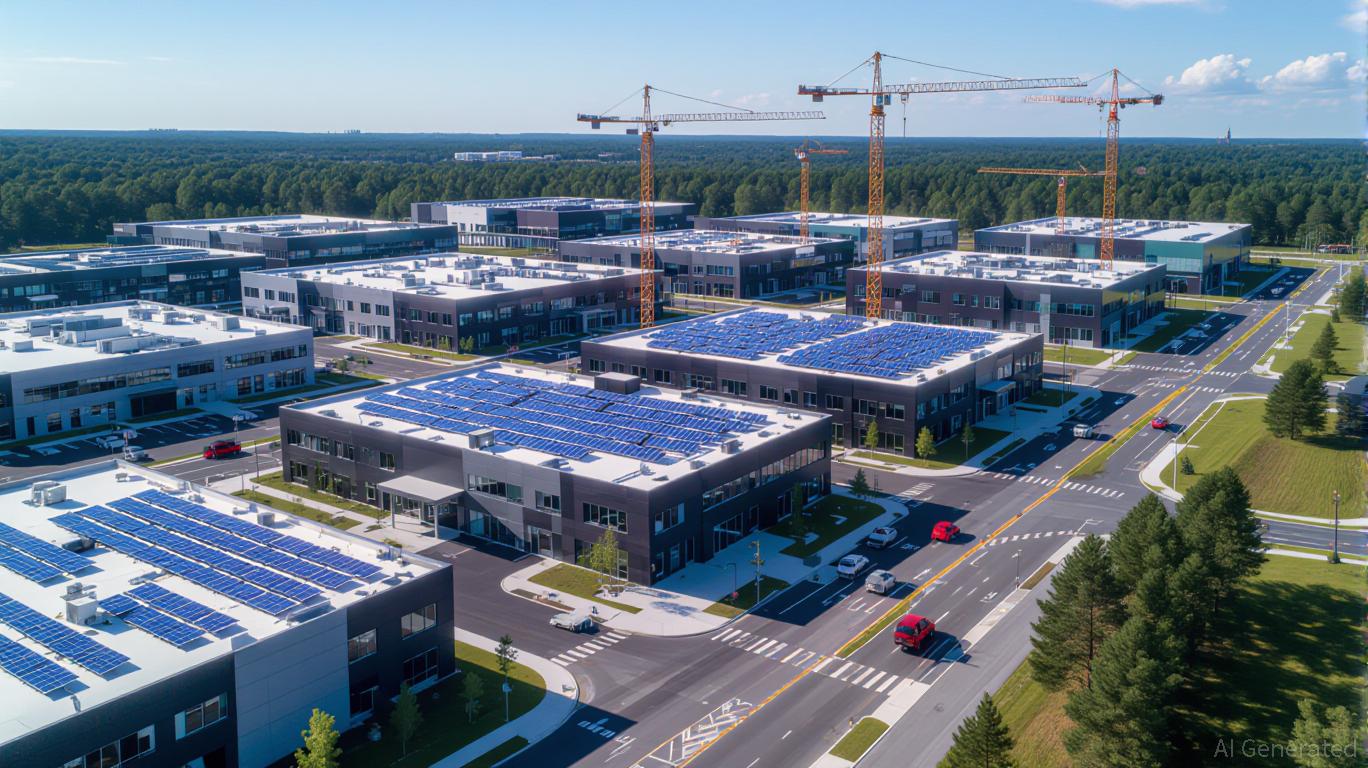
Webster, New York, is experiencing a remarkable transformation fueled by a blend of public infrastructure investment and targeted real estate initiatives. Central to this evolution is the revitalization of the former Xerox campus, which has dramatically shifted the village’s economic outlook. The dynamic between government funding and private enterprise in Webster serves as a powerful example of how infrastructure improvements can drive both property values and industrial expansion.
Infrastructure: The Engine Behind Webster’s Renewal
A pivotal moment in Webster’s resurgence came with the allocation of a $9.8 million FAST NY grant in 2025, dedicated to preparing the old Xerox site for advanced manufacturing and industrial operations. This investment has supported essential upgrades—such as new roads, modernized sewer systems, and comprehensive electrical planning—transforming the area into a prime destination for manufacturing and logistics businesses.
Additionally, the Village of Webster secured $4.5 million from the NY Forward Program to support broader community revitalization. These efforts are guided by the Reimagine Webster Master Plan, completed in 2024, which envisions the Xerox campus as a collaborative public-private venture. Key thoroughfares like Orchard Street and Panama Road are being transitioned to public ownership, improving access and connectivity for future growth.
This focus on infrastructure goes beyond physical improvements; it’s about fostering an environment that encourages economic diversity. By resolving long-standing issues—such as outdated utilities and limited electrical capacity—Webster has become a magnet for high-tech manufacturers and logistics companies, slashing industrial vacancy rates to just 2% in 2024.
Emerging Real Estate Trends and Investment Potential
The area surrounding the former Xerox campus has quickly become a hotspot for both residential and commercial investment. A 2024 market study reported a 10.1% annual rise in home values, attributed to the district’s rebranding as the Northeast Area for Technology (NEAT) and its enhanced infrastructure. On the commercial side, the announcement of the $650 million fairlife® dairy plant in 2023 highlights the confidence of private investors, with the facility set to generate 250 new jobs and reinforce Webster’s reputation as a destination for large-scale industry.
The surge in infrastructure-driven development has also led to speculative projects. Developers are subdividing land for advanced manufacturing, while logistics firms are taking advantage of the area’s proximity to I-390 and Rochester International Airport. According to the Webster Economic Development Alliance (WEDA), the NEAT corridor is on track to become a $1 billion industrial hub by 2026, powered by a $283 million blend of public and private investment.
Development Success Stories
Two standout projects illustrate the synergy between infrastructure upgrades and real estate growth in Webster. First, the FAST NY-funded improvements have enabled the division of the Xerox Wilson Campus into parcels ideal for semiconductor suppliers and advanced manufacturers. Second, the fairlife® dairy plant’s $650 million investment has not only created jobs but also sparked additional commercial activity, including new retail and service businesses catering to plant employees.
The Reimagine Webster plan continues to build on this momentum by dedicating major roads to public use, ensuring ongoing accessibility for future projects. Construction on these routes is scheduled to begin in late 2025, further reducing investment risk by enhancing campus connectivity.
Why Invest in Webster? Balancing Opportunity and Security
For investors, Webster’s post-Xerox transformation offers a compelling blend of low risk and high reward. State-backed infrastructure upgrades reduce the need for private capital in foundational improvements, while the village’s strategic location—close to major highways and a growing workforce—makes it an attractive center for logistics and manufacturing.
Public-private partnerships, such as those enabled by the NY Forward Program and FAST NY grants, help limit financial risk for developers while supporting long-term value. The area’s 2% industrial vacancy rate and 10.1% growth in residential property values further demonstrate its resilience and appeal, even in uncertain markets.
Conclusion: A Blueprint for Future Growth
The revitalization of Webster’s former Xerox campus stands as a prime example of how municipal infrastructure investment can unlock new real estate opportunities. By aligning public resources with private sector vision, Webster has created a cycle of sustainable growth. For those seeking strategic real estate investments, Webster’s story offers a scalable model for success in the modern, post-industrial landscape.
Disclaimer: The content of this article solely reflects the author's opinion and does not represent the platform in any capacity. This article is not intended to serve as a reference for making investment decisions.
You may also like
ICP Network Expansion: Ushering in a New Chapter for Web3 Infrastructure?
- ICP 2.0's Caffeine and Chain Fusion upgrades enhance cross-chain interoperability and developer tools, attracting Microsoft , Google, and SWIFT partnerships. - Daily active addresses surged 35% in Nov 2025, with DEX volumes hitting $843.5M, but token transfers fell 91% during market corrections. - Institutional validation contrasts with speculative retail-driven growth, as ICP faces Ethereum/Solana competition and uncertain adoption timelines. - Analysts project $11.15-$31.89 price targets by 2026 if inf
Investing in AI-Powered Learning and Legal Transformation: Where Innovation Meets Societal Progress
- AI is transforming education and legal systems by addressing inequities through adaptive learning tools and affordable justice platforms. - Impact investors prioritize legal tech startups (e.g., Clio, Clearbox) and edtech innovators aligning with UN SDGs and $7.8T impact markets. - Social impact funds scale AI solutions while navigating regulatory fragmentation, with 33 U.S. states forming AI policy committees. - Clean energy-AI hybrids optimize grids and emissions tracking, though cleantech VC funding f

The Federal Reserve's Change in Policy and Its Impact on Rapidly Growing Cryptocurrencies Such as Solana
- U.S. Fed's 2025 rate cuts and dovish pivot boosted risk-on sentiment, driving capital into high-growth crypto assets like Solana . - Solana's technical upgrades (Firedancer, Alpenglow) and institutional partnerships (Visa, Western Union) enhanced scalability and real-world adoption. - $2B+ inflows into Solana ETFs and regulatory clarity (GENIUS Act, OCC guidance) solidified its role in macro-driven crypto portfolios. - Despite short-term volatility, Solana's $10.2B TVL and 869 TPS throughput position it

The Increasing Expenses of Law School and Public Interest Incentives as Opportunities in the Market
- Rising legal education costs and public interest law demand create investment opportunities in legal tech and education platforms. - AI-driven legal tech (e.g., Bench IQ) reduces costs while addressing systemic barriers, with market growth projected at 9.14% CAGR to $65.5B by 2034. - Racial disparities in public interest scholarships (70% vs. 6% for Black students) drive institutional reforms like UC Berkeley's tuition relief and Harvard's ESG-aligned funding shifts. - Education platforms (Legora, Eudia)






